
By 2030, the value of assets backed by blockchain-stocks, bonds, real estate, even commodities-could hit $30 trillion. That’s not a guess. It’s a projection from researchers tracking the rapid shift from paper certificates to digital tokens. This isn’t science fiction. It’s happening now, led by giants like BlackRock and Franklin Templeton, who are quietly moving billions onto blockchains. And if you think this is just another crypto fad, you’re missing the real story: security token markets are rebuilding finance from the ground up.
What Exactly Are Security Tokens?
Security tokens aren’t like Bitcoin or Dogecoin. They don’t exist to be traded for memes or speculative gains. They represent real ownership in something tangible: a share of a company, a slice of a skyscraper, a bond paying interest. Think of them as digital versions of the stock certificates your grandparents kept in a safe. But instead of paper, they’re coded on a blockchain. And instead of waiting weeks to sell, you can trade them 24/7, anywhere in the world, in minutes.What makes them different from regular crypto? Regulation. Security tokens are legally classified as securities. That means they follow rules set by the SEC and other global regulators. You can’t just launch one without filing paperwork, disclosing risks, and proving the underlying asset is real. That’s why they’re called security tokens-not because they’re secure (though they are), but because they’re regulated like stocks and bonds.
Why Is This Growing So Fast?
The numbers tell a clear story. In 2024, the total value of tokenized assets-real estate, stocks, bonds, commodities-was over $250 billion. By 2030, that could be $30 trillion. That’s not a typo. That’s a 120-fold increase in six years. Why? Three reasons: regulation, institutions, and technology.First, regulation is no longer a roadblock-it’s a runway. The U.S. Securities and Exchange Commission has drawn a line: if a token represents ownership in an asset, it’s a security. That clarity lets companies know exactly what they need to do. No more guessing. No more ICO scams. Just clean, legal, compliant offerings called STOs-Security Token Offerings.
Second, institutions are moving in. BlackRock launched its first on-chain liquidity fund. Franklin Templeton tokenized a bond fund and sold it to investors in under 24 hours. These aren’t experiments. They’re infrastructure builds. Institutional investors controlled nearly 70% of all capital in tokenized assets in 2024. Retail investors? Still mostly on the sidelines. This is Wall Street rewriting its playbook.
Third, the tech is finally ready. Blockchain networks now talk to each other. Smart contracts automatically handle dividends, voting rights, and compliance checks. Interoperability means a tokenized share of a German company can be bought by a pension fund in Singapore without middlemen, delays, or fees. Permissionless blockchains-like Ethereum-are winning over private, restricted ones because they offer open access and deeper liquidity.
Real Estate Is Leading the Charge
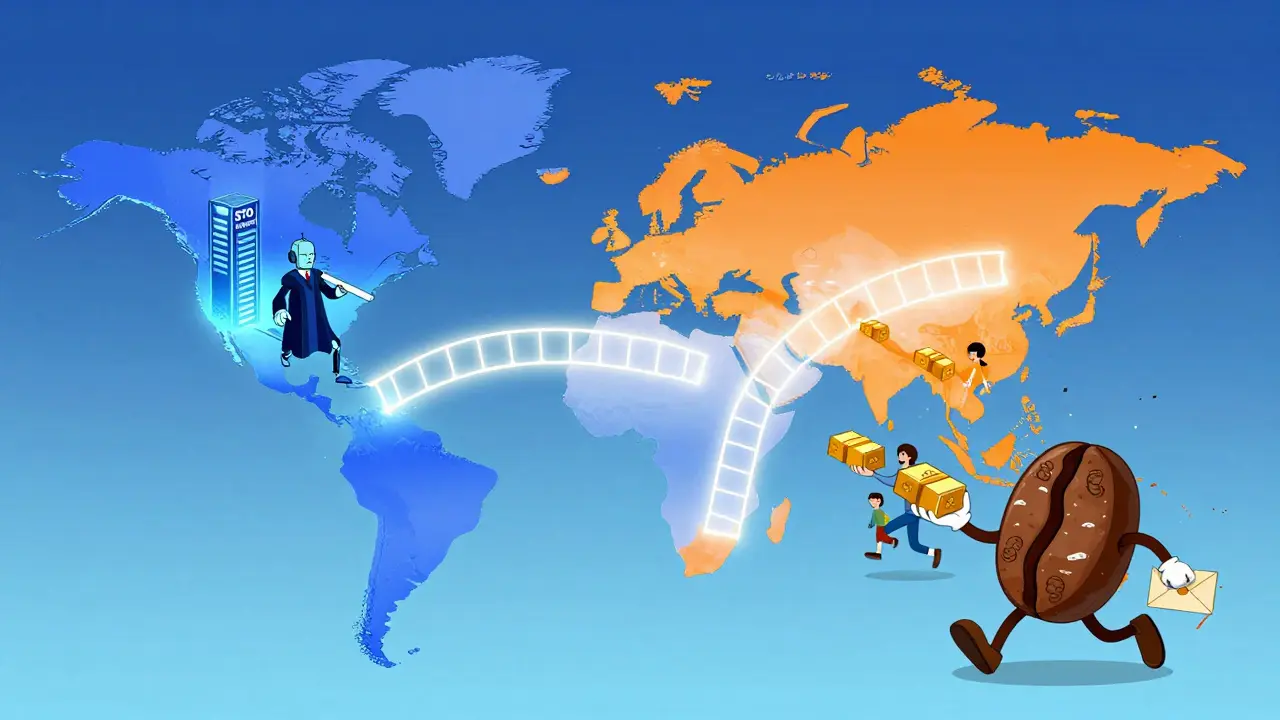
Right now, real estate makes up over 30% of all tokenized assets. Why? Because it’s illiquid. Selling a building used to take months. Now, you can tokenize a $10 million office tower and sell 1% shares to 1,000 investors globally. A teacher in Manila can own a piece of a Manhattan building. A retiree in Brazil can earn rent from a warehouse in Texas-all without a realtor, lawyer, or bank approval.Commodities are growing even faster. Gold, oil, and agricultural products are being tokenized at a 50% annual growth rate. Imagine buying a fraction of a barrel of oil that automatically pays you when prices rise. Or owning a share of a coffee farm in Colombia that sends you dividends every harvest. That’s not fantasy. It’s already live on platforms like Securitize and Polymarket.
Who’s Winning? North America and Asia
North America leads with 36% of the market share, thanks to clear SEC rules and deep institutional pockets. But the fastest growth? Asia Pacific. Countries like India are tokenizing payment systems-RuPay cards now use tokenization to protect user data. Japan and Singapore are building regulatory sandboxes for asset tokens. The Middle East and Africa are catching up fast, with projected growth hitting 27.5% annually.This isn’t a global race with one winner. It’s a split system: the U.S. and Europe focus on compliance and investor protection. Asia and the Middle East prioritize speed, scale, and financial inclusion. Both paths are valid. Both are expanding.
How Retail Investors Can Get Involved
You don’t need to be a hedge fund to participate. Platforms like tZERO, Harbor, and Maple Finance let individuals buy fractional shares of tokenized real estate, private equity, and even music royalties. Minimum investments? As low as $10. You can track your holdings on a wallet app, get dividends automatically, and sell when you want-no broker calls, no paperwork.But here’s the catch: not all platforms are equal. Some are fully regulated. Others are gray-area operations. Always check if the issuer is registered with the SEC or equivalent. Look for audit reports. Read the whitepaper. If it sounds too good to be true-like a 20% monthly return on a condo token-it probably is.
What’s Holding This Back?
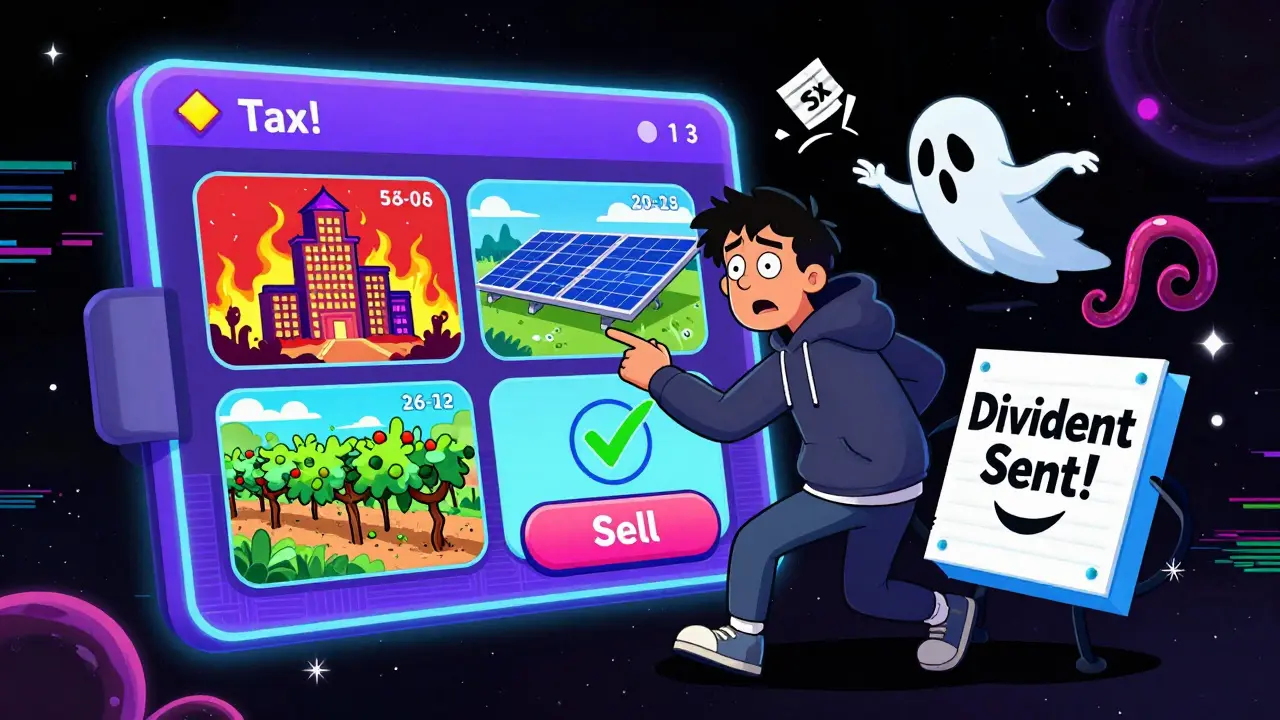
There are still hurdles. Tax rules for tokenized assets aren’t standardized. Cross-border transfers can still face compliance delays. Not every country recognizes these tokens as legal property. And if the underlying asset fails-say, a building burns down-the token loses value, just like a stock.Also, infrastructure isn’t perfect. Wallets can be hacked. Smart contracts can have bugs. The technology is robust, but the human layer isn’t. Most users still don’t know how to manage private keys. Education is lagging behind innovation.
Still, these are growing pains, not deal-breakers. Every major financial shift-from paper checks to online banking-had them. The difference this time? The tools are built to scale.
The Bigger Picture: Finance Without Middlemen
Security tokens aren’t just about better trading. They’re about rethinking who controls money. Right now, banks, brokers, and clearinghouses take fees at every step. They slow things down. They make access expensive.Tokenization removes most of that. A bond pays interest directly to your wallet. A dividend is distributed by code, not a human clerk. A property sale closes in hours, not weeks. The cost of ownership drops. The speed of access rises. The barriers to entry vanish.
This isn’t about replacing Wall Street. It’s about upgrading it. The future isn’t crypto replacing banks. It’s banks using crypto to do their jobs better, faster, and cheaper.
What Comes Next?
By 2027, expect to see tokenized government bonds. By 2028, pension funds will hold entire portfolios of tokenized assets. By 2030, your retirement account might include shares of a solar farm in Spain, a patent portfolio in Germany, and a vineyard in California-all managed in one app.The $30 trillion projection isn’t wild. It’s conservative. If just 10% of global real estate, private equity, and bonds get tokenized, we hit that number. And that’s without factoring in new asset classes-carbon credits, intellectual property, even future earnings from influencers.
The security token market isn’t coming. It’s already here. The question isn’t whether it will grow. It’s whether you’ll be ready when it does.




Rajappa Manohar
Tokenization is big, but can we even trust the platforms? My cousin lost money on some app that said it had real estate tokens. Turned out the building never existed.