Kuma Inu Fake Airdrop: How to Spot and Avoid Crypto Scams
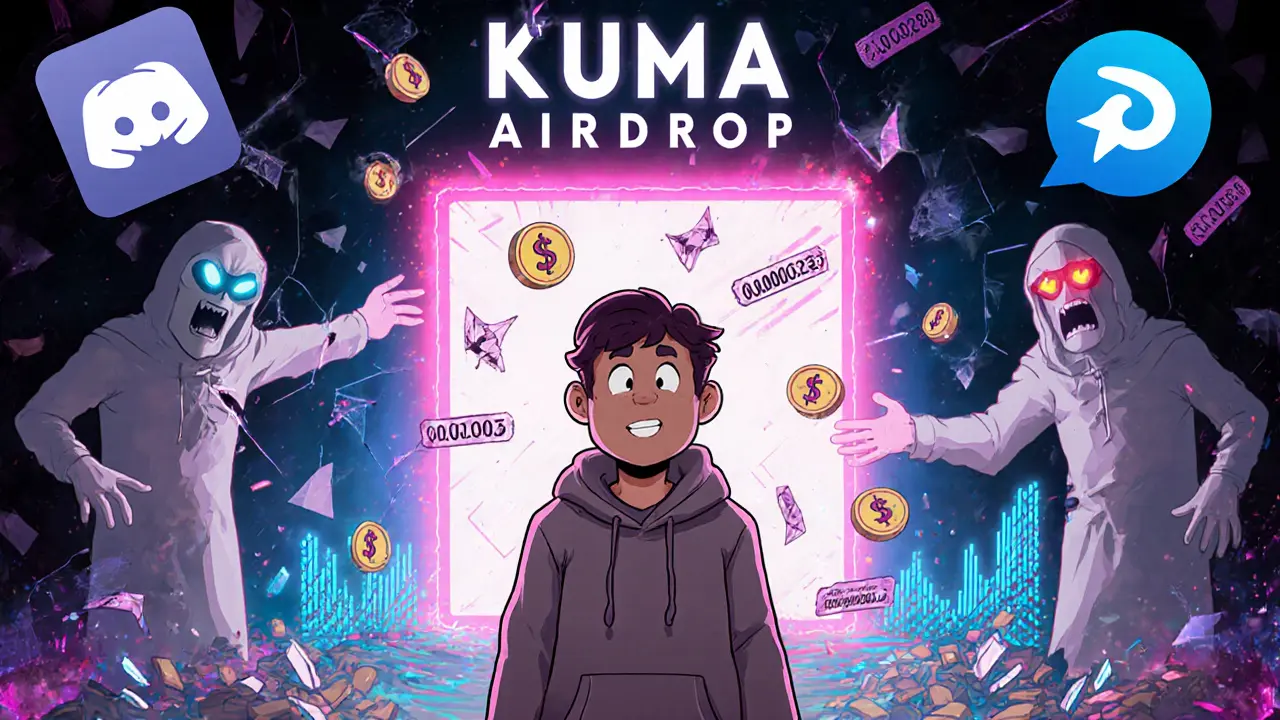
When you hear about a Kuma Inu fake airdrop, a deceptive promotion pretending to give away free tokens tied to a meme coin with no real project behind it. It’s not a giveaway—it’s a trap designed to steal your wallet info or trick you into paying gas fees for nothing. These scams copy the names of real tokens like Kuma Inu, use fake websites, and push you to connect your wallet before you even know what you’re signing. Once you do, your funds vanish. This isn’t rare—it’s the new normal in crypto.
Scammers don’t just target Kuma Inu. They copy SoccerHub (SCH), a real play-to-earn game that had a legitimate airdrop in 2025, and turn it into a fake version. They do the same with BinaryX (BNX), a project that didn’t do an airdrop at all—it did a mandatory token swap. Fake airdrops thrive on confusion. They mix real names with fake promises: "Claim your free Kuma Inu tokens now!" But if there’s no official website, no team, no social media history, and no wallet address listed on a verified exchange, it’s a lie. Real airdrops don’t ask for your private key. They don’t send you links from Twitter DMs. They’re announced on official channels, and you claim them through a simple, transparent process—no upfront payment, no wallet connection until the final step.
Look at DSG token airdrop, a project with zero trading volume and no circulating supply. Even that had more transparency than most fake Kuma Inu offers. Real projects don’t hide behind vague promises. They show you the contract address, the distribution schedule, and the team behind it. Fake ones? They vanish after the first wave of victims. You’ll find them on Telegram groups with 50,000 members, all reposting the same link. They use fake screenshots of wallets filled with tokens that don’t exist. They copy the logos of real exchanges like MEXC or Bitget to look legit. But if you check the actual exchange, you won’t find the token listed. If you search the token on Etherscan or BscScan and see no transactions, no liquidity pool, and no dev wallet—it’s dead before it started.
And it’s not just about losing money. Connecting your wallet to a fake airdrop can let scammers drain every asset you own—even if you don’t send any crypto. That’s how bad these scams are. You don’t need to be an expert to avoid them. Just ask: Is this too good to be true? Is there a real reason this token exists? Who’s behind it? If you can’t answer those questions, walk away. The crypto space has real opportunities—like the AdEx Network (ADX) airdrop, which gave out tokens fairly in 2021 and later built a tool to help users find real future airdrops. But those come from trusted sources, not random links. Below, you’ll find real reviews of fake platforms, broken airdrops, and how to spot the next scam before it hits your wallet.