Market Manipulation in Crypto: How Scams, Fake Volumes, and Pump-and-Dumps Trick Traders
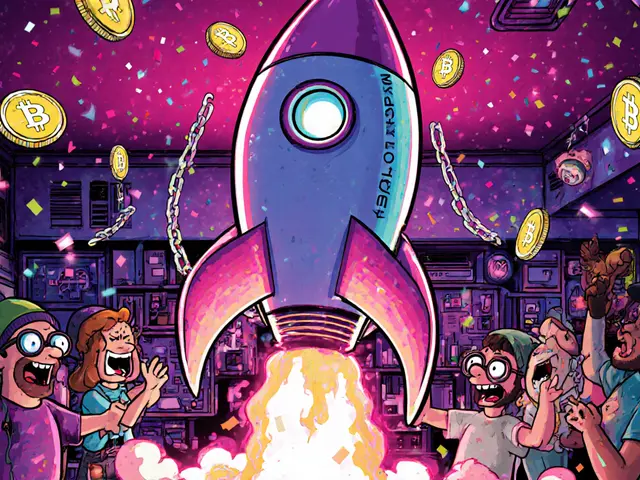
When you see a coin spike 300% in a day with no news, it’s rarely luck—it’s market manipulation, the deliberate act of misleading traders to influence price for profit. Also known as price manipulation, it’s one of the most common ways new investors lose money in crypto. Unlike stock markets, crypto has little oversight, making it a playground for bad actors who use fake volume, bot-driven trades, and coordinated hype to lure people in.
One of the most dangerous forms is the pump and dump, a scheme where a group artificially inflates a low-cap coin’s price through fake social media buzz, then sells off before the crash. You’ve seen it: Telegram groups screaming "100x ALERT!" just before a coin crashes 90%. These aren’t tips—they’re traps. The same tactic shows up in fake trading volume, exchanges that inflate numbers using bots to make a platform look active and trustworthy. Many "top" exchanges on listing sites have zero real users—just automated trades between wallets they control.
Then there’s wash trading, when the same person buys and sells their own asset to create the illusion of demand. This is how projects like Flowmatic ($FM) and TajCoin (TAJ) trick people into thinking they’re trending. No real buyers? No problem—just have bots trade with each other. These tricks are everywhere in low-liquidity tokens, especially in airdrops like DSG or Project Quantum (QBIT), where the token has no trading volume, no team, and zero utility—but the charts look perfect.
Even exchanges get in on it. CreekEx, Woof Finance, and Armoney aren’t just scams—they’re designed to look like real platforms so you’ll deposit funds, then vanish. These aren’t isolated cases. They’re part of a system where manipulation is baked into how some projects raise money: create hype, attract buyers, exit with the cash. And because crypto is global and mostly unregulated, victims have little recourse.
But you don’t have to be the next victim. Spotting manipulation is simple once you know what to look for. If a coin has a 420-trillion supply and trades for $0.000000001, it’s not a bargain—it’s a trap. If an exchange has no KYC, no support, and zero reviews outside of paid testimonials, walk away. If an airdrop asks for your private key or a small fee to "claim" tokens, it’s a scam. Real projects don’t need to trick you—they build value. The ones that rely on hype, urgency, and fake numbers? They’re counting on you to ignore the red flags.
The posts below break down real cases of market manipulation—from the fake exchange Armoney to the abandoned Flowmatic token, from the zero-volume KCCSwap to the outright scam CreekEx. You’ll see how these schemes work, who they target, and how to protect yourself before you lose your money. This isn’t theory. It’s what’s happening right now.