Music NFTs: What They Are, How They Work, and Why They Matter
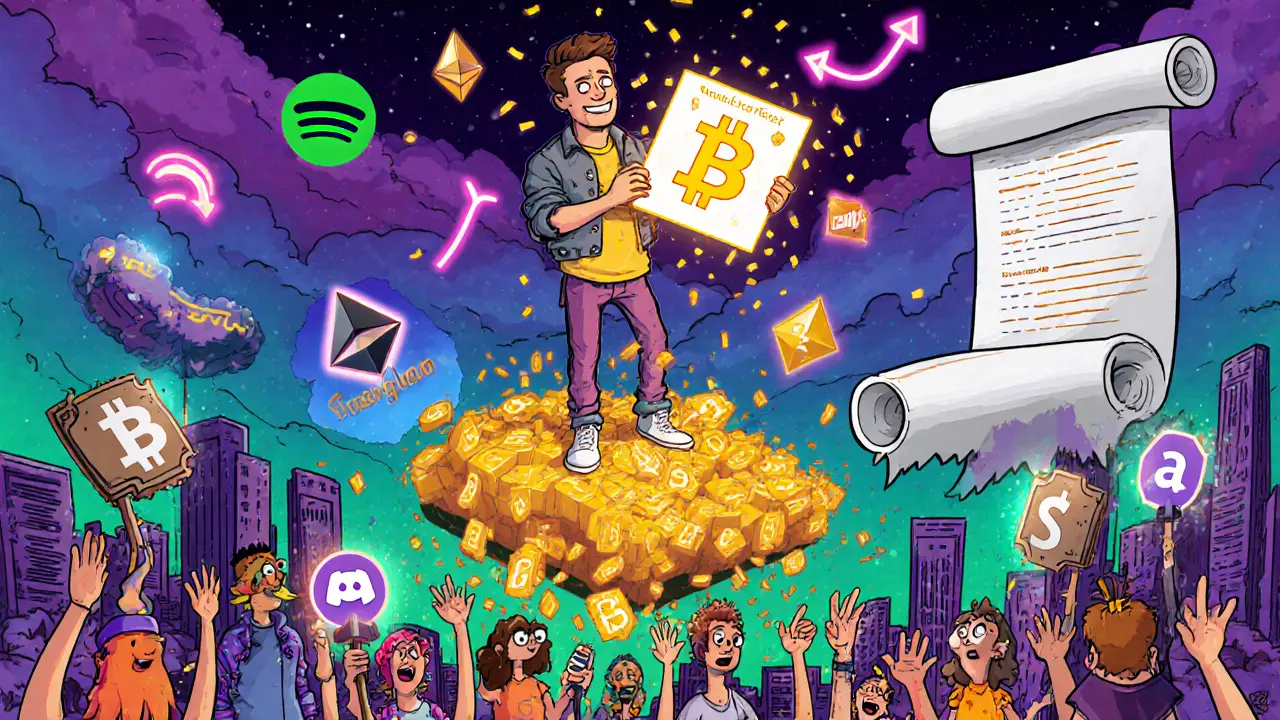
When you buy a music NFT, a unique digital token on a blockchain that proves you own a specific song, album, or audio piece. Also known as audio NFTs, it lets artists sell their work directly to fans without labels or middlemen taking a cut. Unlike streaming, where you pay for access but never own anything, a music NFT gives you verifiable ownership—like owning a rare vinyl, but digital and impossible to copy.
Music NFTs aren’t just about buying a track. They often include extras: behind-the-scenes footage, exclusive concert access, or even a share of future royalties. Artists like 3LAU and Steve Aoki have sold NFT albums for hundreds of thousands, letting fans invest in their career. But it’s not just for famous musicians. Independent artists on platforms like Sound.xyz and Catalog use music NFTs to fund their next project without loans or sponsorships. This shifts power from record labels to creators—and to the people who actually support them.
Behind every music NFT is blockchain music, a system where every sale, transfer, and royalty payment is recorded on a public ledger. This means you can track exactly how many times a song changed hands and who got paid when. Smart contracts handle the money automatically—no lawyers, no delays. If your NFT resells for $5,000, the original artist might get 10% right away, no paperwork needed. That’s the real innovation: ownership that pays back over time. But not all music NFTs are equal. Some are just JPEGs of album art with a sound file attached. Others are full experiences: limited editions, unlockable content, or even collaborative tracks where fans help shape the music.
There’s also digital music ownership, the idea that you can truly own a piece of music, not just license it. This matters because streaming services pay pennies per play, and most artists never see fair compensation. With NFTs, you’re not just listening—you’re participating. You own a piece of the art, and your ownership can grow in value as the artist does. That’s why collectors aren’t just buying songs—they’re betting on talent. A music NFT from a rising artist today could be worth ten times more in a year. But it’s risky. Many projects vanish. Platforms shut down. The tech is still new.
And then there’s NFT royalties, the automatic payments artists receive every time their NFT is resold. This is the biggest shift in music finance since radio. Traditionally, artists got paid once—when the album sold. Now, they keep earning every time it changes hands. Some NFTs offer 5%, others 25%. Some even let fans vote on how royalty funds are used—funding tours, merch, or new releases. It’s not perfect. Some marketplaces ignore royalty rules. Some artists don’t set them up right. But the potential is real: a system where creators never stop getting paid for their work.
What you’ll find in the posts below aren’t hype pieces or vague promises. These are real breakdowns of music NFT projects that worked, ones that failed, and the tools artists actually use to make them. You’ll see who’s making money, who got burned, and how to tell the difference between a genuine audio NFT and a empty token with a beat. No fluff. Just what’s happening now—with names, platforms, and outcomes.