Woof Finance Crypto Exchange Review: Is This Platform Legit or a Scam?
Woof Finance is not a real crypto exchange - it's a scam. Learn how the WOOF token骗局 works, red flags to spot, and safe alternatives to protect your funds in 2025.
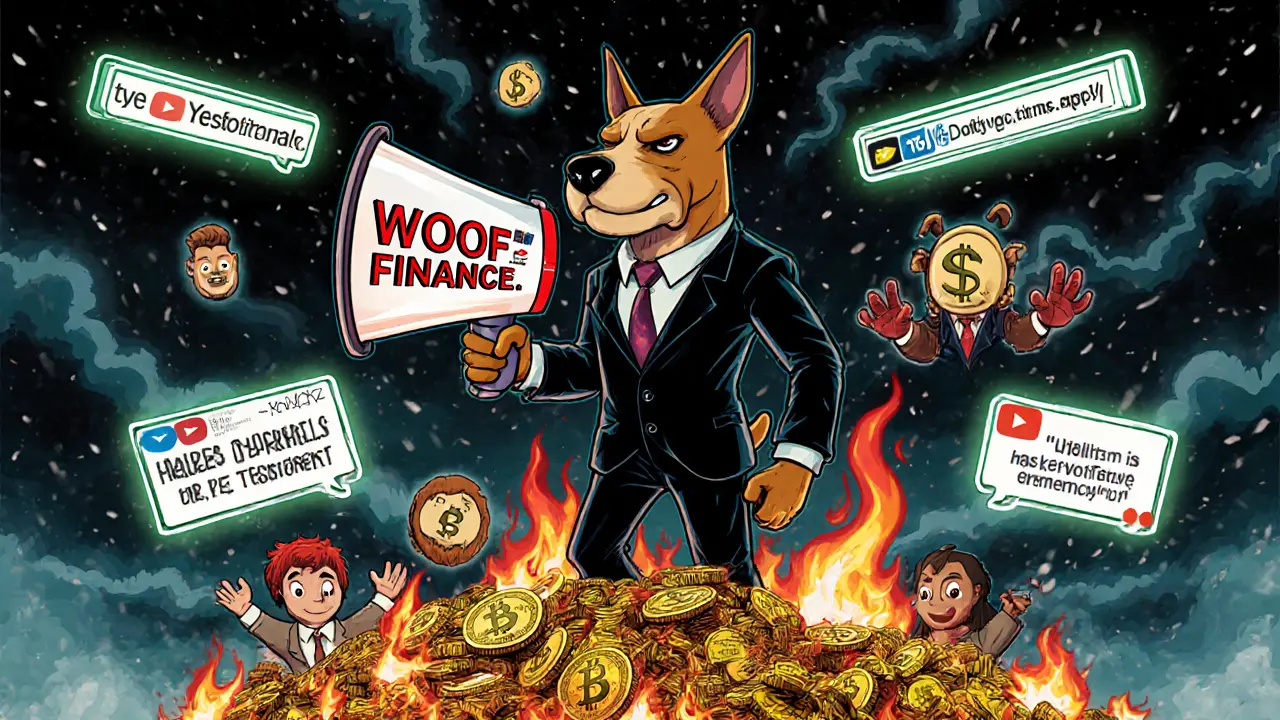
When you hear Woof Finance, a decentralized finance project built on the Binance Smart Chain that blended meme culture with yield farming. Also known as WOOF, it wasn’t just another token—it was a social experiment wrapped in dog-themed hype. Launched in 2021, it rode the same wave as Dogecoin and Shiba Inu, promising high returns through staking and liquidity pools. But unlike those projects, Woof Finance never built real utility. No app. No team roadmap. No long-term plan. Just a token, a website, and a community that showed up for the meme—and left when the rewards dried up.
What made Woof Finance stand out wasn’t its technology. It was how fast it spread. People joined not because they understood yield compounding, but because they saw friends making quick cash. It’s a classic case of meme coin, a cryptocurrency driven by internet culture rather than technical innovation. Also known as dog coin, it thrives on viral energy, not fundamentals. The token’s supply was massive, the price per unit tiny, and the trading volume spiked only during hype cycles. That’s typical for this kind of project. But here’s the catch: most meme coins don’t survive the first bear market. Woof Finance didn’t just fade—it vanished. The liquidity pool was drained. The website went silent. Even the Discord server went quiet. And that’s not unusual. In crypto, hundreds of projects like this launch every year. Most die within months. Only a handful survive because they actually solve a problem.
Woof Finance didn’t solve anything. It didn’t improve DeFi. It didn’t lower fees. It didn’t make trading easier. It just gave people a reason to gamble. And that’s why the posts you’ll find below focus on similar cases: DeFi token, a digital asset designed to power decentralized financial applications. Also known as yield token, it’s meant to be used in protocols like lending, swapping, or staking. You’ll read about projects that promised big returns but collapsed—like Flowmatic and Project Quantum. You’ll see how airdrops turned into traps, how token swaps erased holdings, and how exchanges like KCCSwap and OpenSwap went from hot to ghosted. These aren’t random stories. They’re all connected. They all show the same pattern: hype first, substance later—if ever.
What you’re about to read isn’t a list of failed coins. It’s a guide to spotting the difference between a fun gamble and a real project. You’ll learn how to check if a token has real liquidity, whether a team is real, and why zero trading volume is a red flag. You’ll see how people got burned by tokens like DSG, ZEUS, and METANIA—and how they could’ve avoided it. This isn’t about fear. It’s about awareness. If you’ve ever wondered why some crypto projects vanish overnight, the answer is here. And if you’re thinking about jumping into the next big meme coin? You should read this first.
9 October
Woof Finance is not a real crypto exchange - it's a scam. Learn how the WOOF token骗局 works, red flags to spot, and safe alternatives to protect your funds in 2025.