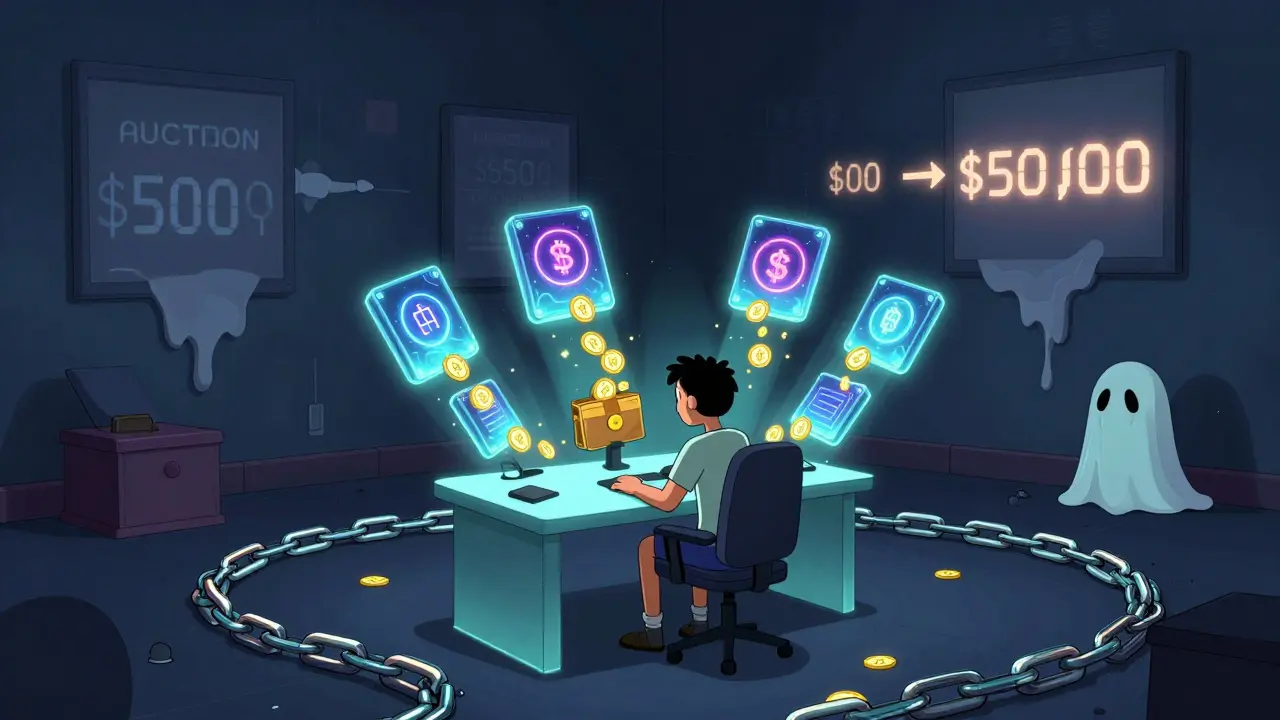
For decades, artists have sold their work once-and then watched others profit off it. A painting might sell for $500 at a local gallery, but years later, it flips for $50,000 at auction. The artist? Nothing. No cut. No thanks. Just silence.
That’s changing with NFTs. Not because they make art more valuable. But because they make sure artists get paid every time their work moves hands. That’s the power of NFT royalties.
How NFT Royalties Actually Work
NFTs are digital certificates of ownership stored on a blockchain-usually Ethereum. When you mint an NFT, you can program it to pay you a percentage every time someone resells it. That’s the royalty. It’s not optional. It’s built into the code.
Let’s say you create a digital painting and set a 7% royalty. Someone buys it for 2 ETH. Later, they sell it for 5 ETH. The smart contract automatically sends 0.35 ETH (7% of 5 ETH) straight to your wallet. No paperwork. No middleman. No waiting.
This isn’t theoretical. In 2022 alone, over $1.8 billion in royalties flowed to artists on Ethereum. One artist, Jacques Greene, earned $16,000 in royalties from a 6-second audio loop. That’s more than he made from 7 million Spotify streams. Another creator, selling NFTs from the World of Women collection, made up to $10,000 a month just from resales.
Why This Changes Everything for Digital Artists
Before NFTs, digital art was a dead end financially. Copy-paste a JPEG. Upload it to Instagram. Get likes. Get nothing. There was no way to prove you owned the original, and no way to get paid when it spread.
NFT royalties fix that. They turn your art into a living asset. Every time someone flips it, you get a slice. It’s like owning a song that earns you money every time it’s played on the radio-except it’s your painting, your animation, your music, your poem.
And it’s not just for painters. Musicians, animators, game designers, writers-they all benefit. A photographer sold a series of 100 NFTs. Each sale paid them 8%. Three months later, one of those NFTs resold for $12,000. They got $960. No promotion. No ad spend. Just the code doing its job.
Transparency You Can’t Fake
Traditional art markets are messy. Galleries take 50%. Auction houses charge fees. Royalty statements arrive months late-if at all. And good luck proving you’re owed anything.
NFT royalties are public. Every transaction is on the blockchain. You can see exactly who bought your art, when they sold it, and how much you earned. No guessing. No disputes. No hidden cuts.
Artists who used to rely on sporadic commissions or Patreon donations now have a steady stream. One digital illustrator in Austin went from $300 a month to $4,200 a month after launching a royalty-enabled NFT collection. She didn’t post more often. She didn’t run ads. She just coded a 7% royalty and let the market do the rest.
Real Numbers, Real Impact
Some collections made headlines for their royalty payouts:
- Bored Ape Yacht Club: $147 million in royalties paid to creators
- Art Blocks: Over $90 million distributed to generative artists
- VeeFriends: Creator Verge earned millions from secondary sales
These aren’t outliers. They’re proof of a new economic model. Even smaller creators benefit. A TikTok artist who sold 50 NFTs for $200 each set a 10% royalty. One of those NFTs later sold for $5,000. She got $500. That’s more than her monthly rent.
The math is simple: If your art holds value, you keep earning. No expiration date. No end of contract. Just ongoing returns.
Where It Falls Short
It’s not perfect.
Some marketplaces, like Magic Eden, let buyers opt out of paying royalties. That means if your NFT ends up there, you might get nothing-even if you coded a 10% royalty. It’s a loophole, and it’s being used.
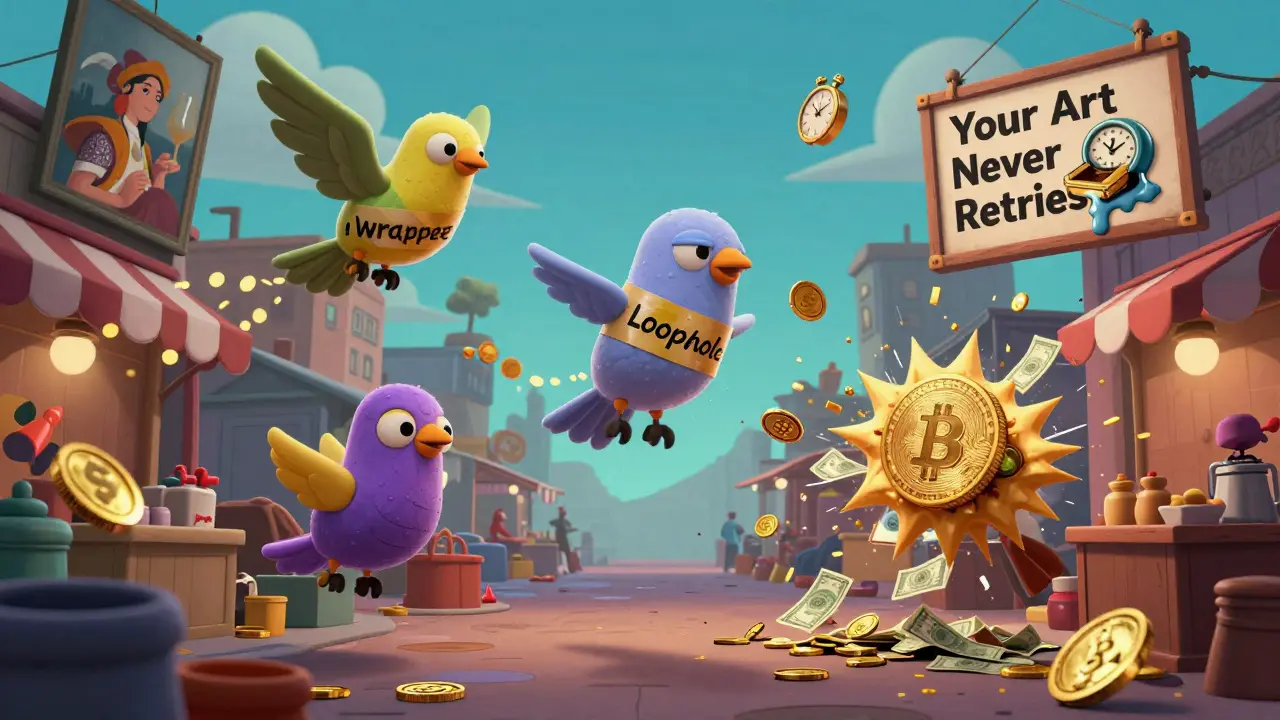
Then there’s “NFT wrapping.” Tech-savvy buyers bundle your NFT into a new contract, stripping away the royalty clause. It’s legal, but it feels like theft. And it’s getting easier.
High royalty rates can scare off buyers. A 15% royalty sounds great to you-but to someone buying as an investment, it cuts into their profit. Most creators now stick to 5-7%. That’s the sweet spot: enough to matter, not so much it kills demand.
And if you’re not tech-savvy? Platforms like OpenSea, Blur, and Foundation make it easy. You just slide a toggle during minting. No coding needed. But if you’re on a niche platform? You might need help. Join a Discord group. Ask questions. Don’t guess.
What’s Next?
More platforms are starting to enforce royalties by default. The industry is pushing for standards. Some governments are looking at making royalties mandatory, like how music royalties are protected by law.
Future versions could let you set tiered royalties-say, 10% on the first resale, 5% on the second, 2% after that. Or split royalties between multiple creators: the artist, the animator, the sound designer. All paid automatically.
Imagine writing a novel and selling it as an NFT. Every time someone resells it, you get paid. Same for a video game asset, a 3D model, or a logo you designed. The potential isn’t just art. It’s all digital IP.
Should You Try It?
If you create digital work-whether it’s a sketch, a song, a GIF, or a 3D sculpture-yes. Start small. Mint one piece. Set a 7% royalty. List it on OpenSea or Foundation. See what happens.
You don’t need to go viral. You don’t need a big following. You just need one person to believe in your work enough to buy it. Then, if it grows in value, you get paid. Again. And again.
This isn’t a get-rich-quick scheme. It’s a get-paid-forever system. And for artists who’ve spent years being ignored by the old system, that’s everything.
How to Set Up NFT Royalties (Simple Steps)
- Choose a platform: OpenSea, Foundation, or Blur are beginner-friendly.
- Connect your crypto wallet (MetaMask or Phantom).
- Upload your digital file (PNG, MP3, MP4, etc.).
- Fill in details: title, description, collection name.
- Set your royalty percentage (5-7% recommended).
- Pay the gas fee to mint (usually under $10).
- List it for sale.
That’s it. No lawyers. No contracts. Just code.
What to Avoid
- Don’t set royalties above 10%-it kills buyer interest.
- Don’t mint on platforms that don’t enforce royalties (check their terms).
- Don’t expect instant sales. Build a community first. Tweet. Post. Engage.
- Don’t think this replaces your day job. It supplements it.
Do NFT royalties work on all platforms?
No. Some marketplaces, like Magic Eden and LooksRare, allow buyers to bypass royalties. Stick to platforms that enforce them by default-OpenSea, Foundation, and Blur are the most reliable. Always check the platform’s royalty policy before minting.
Can I change my royalty percentage after minting?
No. Once an NFT is minted, the royalty is locked into the smart contract. You can’t change it. That’s why it’s important to choose wisely before minting. Most creators start with 5-7% and stick with it.
How much can I realistically earn from NFT royalties?
It depends on your art’s popularity. Most artists earn $100-$500 a month. But if your NFTs gain traction-like those from top collections-you could earn thousands. One artist made $16,000 from a 6-second audio clip. The key is creating something unique that people want to own and resell.
Do I need to pay taxes on NFT royalties?
Yes. In the U.S., NFT royalties are treated as ordinary income. You’ll owe income tax on every payment you receive. Keep records of all transactions. Use crypto tax tools like Koinly or TokenTax to track earnings and file correctly.
Can I earn royalties on physical art tied to NFTs?
Yes. Some artists sell physical paintings with an NFT that proves ownership and unlocks digital content. If the NFT resells, you still earn your royalty-even if the physical piece stays with the buyer. The NFT is the revenue engine, not the canvas.


Kevin Pivko
NFT royalties? More like NFT delusions. Artists think they're getting rich off a JPEG, but 98% of these things are worthless trash. The only ones making money are the middlemen selling gas fees.