If you're in Europe and tired of waiting days for your crypto to turn into euros-or worse, getting blocked by banks because you traded Bitcoin-Bxlend might be the solution you’ve been looking for. Unlike global giants like Binance or Coinbase, Bxlend isn’t trying to be everything to everyone. It’s built for one thing: making crypto work smoothly within Europe’s strict financial rules. And that’s a big deal right now.
What Exactly Is Bxlend?
Bxlend is a crypto exchange based in Vilnius, Lithuania, but it’s not just another trading platform. It calls itself a hybrid exchange and banking platform, which means it blends the speed of centralized exchanges with some of the transparency of DeFi-while staying fully licensed under European law. That’s rare. Most crypto platforms either ignore regulations or get shut down in Europe. Bxlend says it doesn’t want to fight the system. It wants to work inside it.
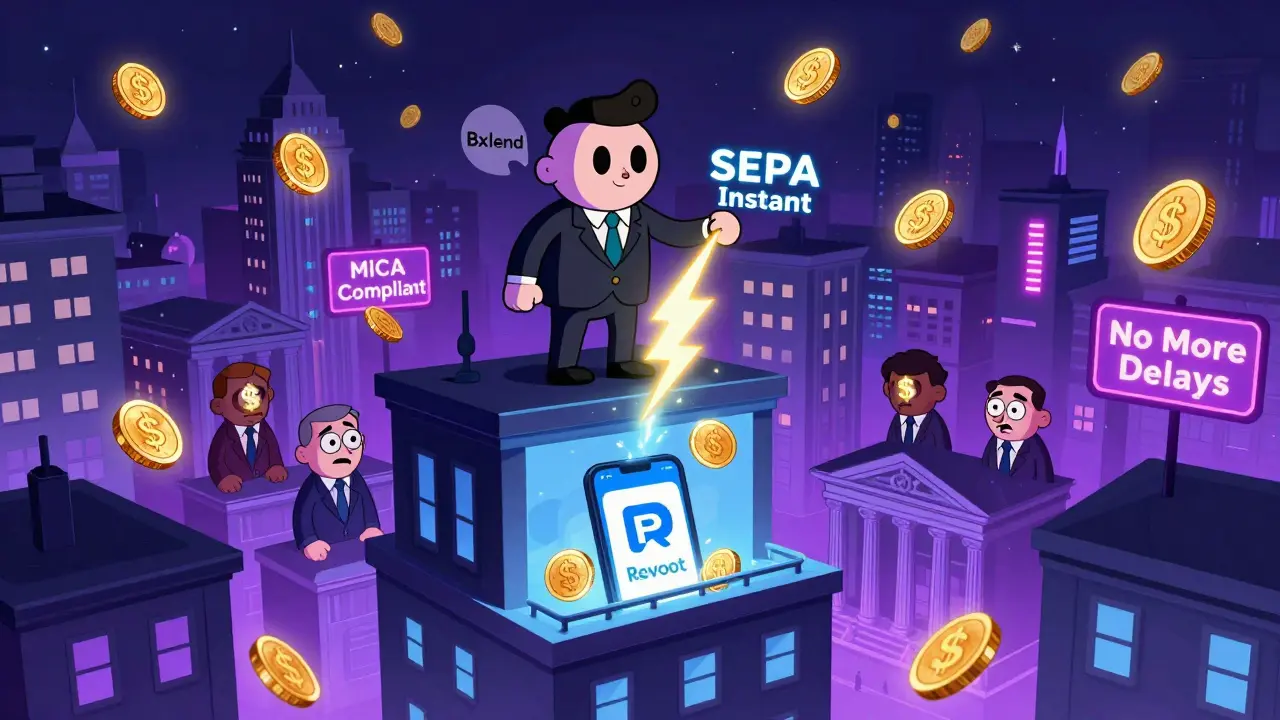
Launched with a clear mission-to fix the broken link between crypto and traditional banking-it offers real-time conversions between cryptocurrencies and euros using SEPA Instant. No more 2-5 day waits for bank transfers. If you sell 0.5 BTC, your euros show up in your EU bank account in under a minute. That’s not marketing fluff. It’s a technical feature built into their infrastructure.
They support over 100 cryptocurrencies, including Bitcoin, Ethereum, Solana, and smaller altcoins that matter to European traders. Their native token, BXL, has a fixed supply of 1.5 million units. It’s not just a speculative asset-it’s meant to be used for lower trading fees, staking rewards, and access to premium features within the platform.
Why Bxlend Stands Out in Europe
Europe isn’t like the U.S. or Asia when it comes to crypto. The EU’s MiCA regulations (Markets in Crypto-Assets) came into full effect in 2024, forcing exchanges to get licensed, disclose their reserves, and protect user funds. Many global exchanges pulled back or restricted services. Bxlend didn’t just adapt-they built their entire model around compliance.
Compare that to Bitpanda or Kraken. Both are solid, but Bitpanda’s crypto-to-EUR flow still uses slower bank rails. Kraken is regulated, but their SEPA transfers aren’t instant. Bxlend’s edge? Real-time conversion. You click “Sell ETH,” and within 30 seconds, your EUR lands in your Revolut, N26, or Deutsche Bank account. That’s the kind of frictionless experience most European users have been waiting for.
They also target institutional-grade liquidity. That means even if you trade 50,000 euros worth of Bitcoin, you won’t get hammered by slippage. Their order books are deep enough to handle large orders without price swings. That’s something smaller exchanges can’t promise.
How Safe Is Bxlend?
This is the million-dollar question. Bxlend says they’re “100% committed to keeping your crypto funds safe.” But what does that actually mean?
They don’t publish third-party audit reports. No CertiK, no Hacken, no PeckShield. That’s a red flag for experienced users. Most reputable exchanges-Coinbase, Kraken, Bitstamp-make their security audits public. Bxlend doesn’t. Their whitepaper mentions “immutable ledger records through consensus mechanisms,” but that’s vague. It doesn’t tell you if they use cold storage, multi-sig wallets, or insurance coverage.
They claim to use “enhanced security measures,” but there’s no detail. No two-factor authentication breakdown. No info on withdrawal limits or whitelisting. No mention of whether they’re covered by Lithuania’s investor protection schemes.
On the flip side, they’re registered with Lithuania’s financial regulator (Lietuvos bankas), which is a good sign. That means they’re legally required to follow AML and KYC rules. You’ll need to upload ID, proof of address, and possibly a selfie. It’s a hassle-but it also means they’re not a fly-by-night operation.
Bottom line: Bxlend is safer than an unregulated exchange, but not as transparent as the top-tier platforms. If you’re putting in $10,000, you’ll want to wait for independent security reviews. If you’re trading smaller amounts and value speed over perfect security, it’s a reasonable risk.

Who Is Bxlend Really For?
Bxlend isn’t for day traders chasing 100x memecoins. It’s not for people who want futures, leveraged tokens, or complex derivatives. You won’t find grid bots or copy-trading here.
It’s perfect for:
- European residents who want to convert crypto to EUR quickly and legally
- People tired of bank blocks or delays with traditional exchanges
- Users who prioritize compliance over flashy features
- Those who want to hold crypto but need easy access to euros for bills, rent, or savings
If you’re a student in Berlin, a freelancer in Barcelona, or a small business owner in Milan who gets paid in crypto-Bxlend makes your life easier. No more begging your bank to unblock your account. No more paying 3% in hidden fees to use a third-party fiat gateway.
But if you’re a high-volume trader, a DeFi power user, or someone who needs 500+ trading pairs, Bxlend will feel limiting. You’ll miss the depth of Binance or the advanced charting of Bybit.
What’s Missing? The Big Gaps
Here’s the truth: Bxlend’s website is polished. Their whitepaper sounds smart. Their litepaper has numbers. But there’s almost no independent verification.
- No Trustpilot reviews. No Reddit threads. No YouTube tutorials from real users.
- No news about funding rounds, partnerships, or user growth numbers.
- No customer support details-phone? live chat? email response time?
- No clear info on withdrawal times for non-SEPA users (e.g., if you’re in the UK post-Brexit).
That’s not normal. Even new platforms like Bitget or KuCoin have hundreds of user reviews within months. Bxlend has almost none. That could mean they’re too new. Or it could mean they’re not attracting real users yet.
Also, their mobile app? Not mentioned anywhere. If you’re using a phone to trade, you’ll need to check if one exists. Most competitors have apps. Bxlend’s website doesn’t say.

How Does It Compare to the Competition?
Here’s how Bxlend stacks up against key rivals:
| Feature | Bxlend | Bitpanda | Kraken | Bybit |
|---|---|---|---|---|
| Regulated in EU | Yes (Lithuania) | Yes (Austria) | Yes (Germany, EU) | No (non-EU) |
| SEPA Instant | Yes | No (1-3 days) | No (1-2 days) | No |
| Trading Pairs | 100+ | 50+ | 300+ | 500+ |
| Derivatives/Futures | No | No | Yes | Yes |
| Native Token | BXL (1.5M supply) | BAND | None | BYBIT |
| Third-Party Audits | Not published | Published | Published | Published |
| User Reviews | Very limited | Thousands | Thousands | Thousands |
Bitpanda is easier for beginners. Kraken has more assets and better security proof. Bybit has more trading tools. But only Bxlend offers instant EUR conversions with full EU compliance.
Final Verdict: Should You Use Bxlend?
If you’re in the EU and you need to turn crypto into euros quickly, legally, and without bank drama-Bxlend is one of the few options that actually delivers.
It’s not perfect. The lack of audits and user feedback is worrying. The feature set is limited. The app might not even exist.
But for its niche? It’s groundbreaking. It solves a real problem that bigger exchanges ignore. It’s not trying to be the biggest. It’s trying to be the most reliable for Europeans.
Start small. Deposit 100 euros worth of crypto. Test the withdrawal. See how fast the euros arrive. Check if customer support responds. If it works smoothly, you’ve found a tool that makes crypto feel like real money-something most platforms still fail at.
Don’t put your life savings in yet. But if you’re looking for a clean, compliant, fast way to move between crypto and EUR? Bxlend deserves a look.
Is Bxlend regulated in the EU?
Yes. Bxlend is registered with Lithuania’s financial regulator, Lietuvos bankas, and operates under the EU’s MiCA regulations. This means it must follow strict rules on KYC, AML, and fund protection-unlike many global exchanges that restrict EU users.
Can I use Bxlend if I’m not in Europe?
Bxlend is designed for EU residents. While you might be able to sign up from outside Europe, SEPA Instant banking won’t work without a European bank account. Withdrawals to non-EU banks may be delayed or blocked. The platform’s entire infrastructure is built for the European market.
Does Bxlend have a mobile app?
There’s no official confirmation of a mobile app on Bxlend’s website or documentation. The platform appears to be web-based only. If you need to trade on the go, you’ll need to use a browser on your phone. That’s a gap compared to competitors like Kraken or Bitpanda, which offer full native apps.
Are there hidden fees on Bxlend?
Bxlend doesn’t publish a detailed fee schedule publicly. Trading fees are likely tiered based on volume, and SEPA deposits/withdrawals are probably free. However, currency conversion spreads (the difference between buy and sell prices) may add hidden costs. Always check the price before confirming a trade.
Is Bxlend’s native token (BXL) worth buying?
BXL has a fixed supply of 1.5 million tokens and is designed for utility-like reduced trading fees and staking rewards. But without clear tokenomics, use cases beyond discounts, or a roadmap for its growth, it’s speculative. Don’t buy it expecting to get rich. Buy it only if you plan to use the platform regularly and want to save on fees.
How long does it take to withdraw euros from Bxlend?
For SEPA Instant transfers within the EU, withdrawals are typically completed in under a minute. This is Bxlend’s key advantage. For non-SEPA transfers (e.g., to the UK or Switzerland), timing is unclear and may take 1-3 business days, depending on the receiving bank.
What cryptocurrencies does Bxlend support?
Bxlend supports over 100 cryptocurrencies, including major ones like Bitcoin (BTC), Ethereum (ETH), Solana (SOL), Cardano (ADA), and Polkadot (DOT). It focuses on assets with strong adoption and regulatory clarity, avoiding high-risk memecoins or unverified tokens.