
Remember when swapping tokens felt like waiting for a dial-up connection to load? That was the early days of decentralized finance. Today, speed and cost are everything. If you have been hearing about LFJ, formerly known as Trader Joe, and wondering if it is worth your time in 2026, you are not alone. This platform has grown from a single-chain experiment on Avalanche into a complex multi-chain ecosystem. But does it actually work well for regular traders, or is it just another DeFi project with a flashy name?
In this review, we will cut through the hype. We will look at the real costs, the supported networks, and whether LFJ can compete with giants like Uniswap or PancakeSwap. You will learn exactly who should use this exchange and who should steer clear.
What Is LFJ and Where Did It Come From?
LFJ stands for "Let's F***ing Joe." Yes, the name is provocative, but the technology behind it is serious. Originally launched in 2021 as Trader Joe, the platform started exclusively on the Avalanche blockchain. Back then, it was one of the few places where you could trade AVAX-based tokens without paying Ethereum’s sky-high gas fees.
In late 2023, the team rebranded to LFJ. Why? To reflect its evolution from a simple Avalanche DEX into a broader multi-chain aggregator. Today, LFJ acts as a hub that connects liquidity across eight different blockchains. It uses an Automated Market Maker (AMM) model, which means you trade against pools of liquidity rather than a traditional order book managed by a central company. This keeps your funds in your own wallet, making it non-custodial. You control your keys; LFJ just facilitates the swap.
| Feature | Details |
|---|---|
| Launch Year | 2021 (as Trader Joe) |
| Type | Non-Custodial Decentralized Exchange (DEX) |
| Native Token | JOE |
| Primary Chain | Avalanche C-Chain |
| Regulatory Status | Restricted in US and China |
Supported Blockchains and Assets
The biggest selling point of LFJ right now is its reach. While it started on Avalanche, it has expanded significantly. As of late 2025 and moving into 2026, LFJ supports swaps across eight major networks:
- Avalanche: The home turf, offering sub-second finality.
- Ethereum: Access to the largest liquidity pools, though gas fees apply.
- BNB Smart Chain: Popular for low-cost meme coin trading.
- Arbitrum One: A leading Layer 2 solution for fast ETH transactions.
- Base: Coinbase’s Layer 2 network, growing rapidly in adoption.
- Solana: High-throughput chain for rapid trades.
- Berachain: An emerging EVM-compatible chain.
- Sonic: Another high-performance network integrated recently.
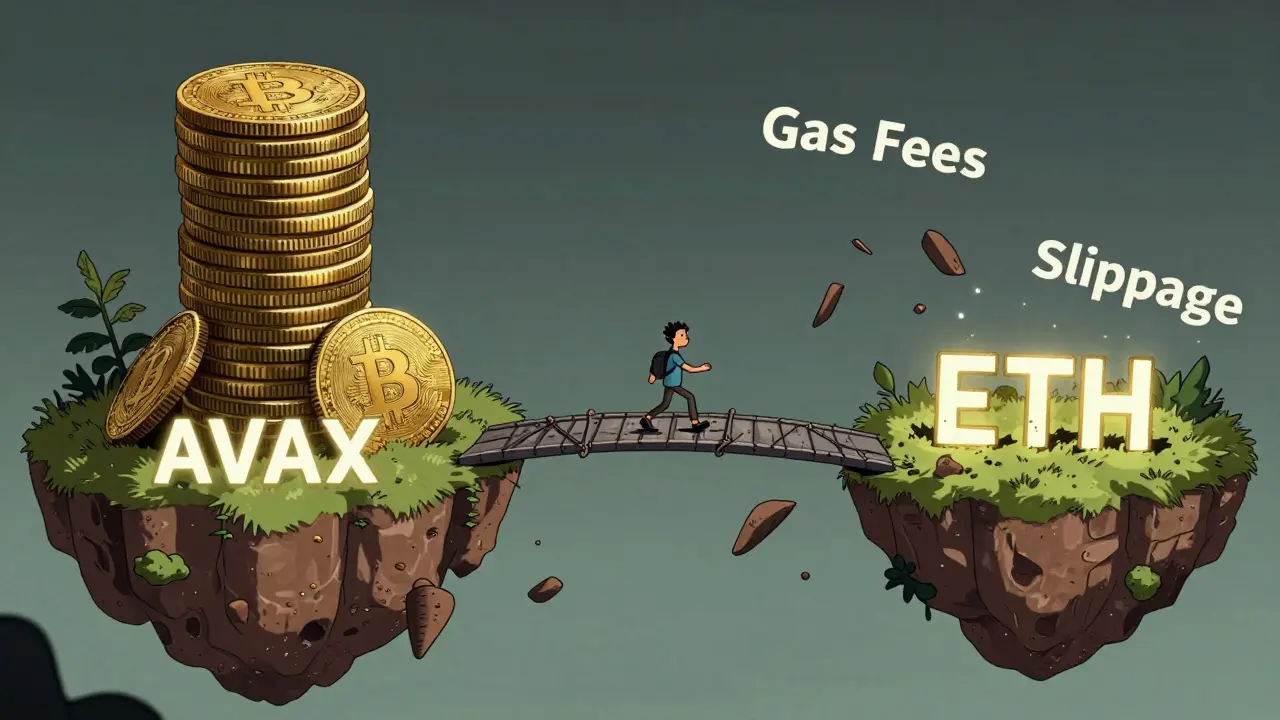
This multi-chain approach allows you to hold assets on different networks and swap them without manually bridging them first. LFJ handles the routing in the background. However, keep in mind that while the interface is unified, the underlying transaction still happens on the specific blockchain you select. If you are swapping on Ethereum, you pay Ethereum gas. If you are on Avalanche, you pay Avalanche gas.
In terms of volume, LFJ lists over 1,135 cryptocurrencies. This is impressive compared to older DEXs that might only support a few hundred pairs. However, liquidity varies wildly. Major pairs like WETH-USDC or AVAX-USDT have deep liquidity, meaning your price won’t slip much. Obscure new tokens might have thin pools, leading to higher slippage.
Fees: What Will You Actually Pay?
Let’s talk money. In crypto, fees eat into profits faster than anything else. LFJ has a straightforward fee structure, but there are nuances you need to know.
For standard swaps, LFJ charges a flat 0.3% fee. This is industry standard-Uniswap also charges 0.3% on most pools, while PancakeSwap often charges 0.25%. So, you are not getting a discount here, but you are not being gouged either.
If you prefer limit orders, the fee drops to 0.2%. This is a rare feature for a DEX. Most decentralized exchanges only offer instant market swaps. Being able to set a target price and wait for it to hit is a huge advantage for strategic traders.
Here is where it gets interesting: Fee Sharing. LFJ distributes 16.66% of all swap fees back to users who stake their JOE tokens. If you are a heavy trader, holding and staking JOE can offset some of your trading costs. However, this introduces risk. The value of JOE is volatile. During the May 2024 market correction, JOE dropped 62% in just 72 hours. If your token holdings crash, the fee rebates might not cover the loss in asset value.
Finally, remember gas fees. These are paid to the network validators, not LFJ. On Avalanche, a swap might cost you $0.01. On Ethereum during peak congestion, that same swap could cost $15 or more. LFJ cannot control these external costs.
User Experience and Interface
I have tested LFJ extensively, and my honest take is this: it is powerful but not beginner-friendly. If you have never used MetaMask or Trust Wallet before, LFJ will frustrate you. The learning curve is steep.
The interface is clean, dark-mode by default, and looks professional. However, navigating between chains can be confusing. You have to manually select the correct network in your wallet before initiating a swap. If you forget, the transaction fails, and you still pay gas. I saw this happen repeatedly in user forums. Reddit users reported spending hours trying to figure out why their swaps were failing due to network mismatches.
Customer support is virtually non-existent because it is a decentralized protocol. There is no help desk email. Your only recourse is the Discord community, which has over 15,000 members. Sometimes helpful users answer questions, but don’t expect official support agents to resolve your issues. Documentation exists, but it is rated average by users. It covers basic swaps well but lacks depth on advanced features like liquidity pool management.
Security and Risks
Since LFJ is non-custodial, you are responsible for your own security. LFJ never holds your funds. This eliminates the risk of the exchange going bankrupt or getting hacked in the traditional sense (like FTX). However, smart contract risks remain.
LFJ’s code has undergone audits, but no system is perfect. The platform relies on third-party bridges for cross-chain functionality, specifically using LayerZero technology. Bridges are historically the weakest link in DeFi security. If a bridge is exploited, funds can be lost. While LFJ itself may be secure, the infrastructure it relies on carries inherent risks.
Another major risk is regulatory. LFJ explicitly blocks users from the United States and China. They use IP detection to enforce this. If you are in the US, you likely cannot access the platform legally or technically. For users in other regions, this restriction suggests the team is cautious about compliance, which can be seen as a positive sign of responsibility.

How Does LFJ Compare to Competitors?
To understand where LFJ fits, we need to compare it to the big players. Here is how it stacks up against Uniswap and PancakeSwap.
| Feature | LFJ (Trader Joe) | Uniswap | PancakeSwap |
|---|---|---|---|
| Primary Chain | Multi-chain (8 networks) | Ethereum (primarily) | BNB Chain |
| Swap Fee | 0.3% | 0.3% | 0.25% |
| Limit Orders | Yes (0.2% fee) | No (native) | Limited |
| Cross-Chain Ease | High (Unified UI) | Low (Requires bridges) | Medium |
| Fiat On-Ramp | No | No | No |
| Best For | Multi-chain DeFi users | Ethereum natives | BNB Chain users |
Uniswap is the king of Ethereum liquidity but struggles with high gas fees and lack of native cross-chain tools. PancakeSwap offers lower fees on BNB Chain but is less versatile outside that ecosystem. LFJ wins on versatility. If you trade across Avalanche, Arbitrum, and Base regularly, LFJ saves you from juggling multiple apps. However, if you only care about Ethereum, Uniswap likely has deeper liquidity for niche tokens.
Who Should Use LFJ?
LFJ is not for everyone. Here is who benefits most:
- Multi-Chain Traders: If you hold assets on Avalanche, Solana, and Ethereum simultaneously, LFJ’s unified interface simplifies your workflow.
- DeFi Savvy Users: You understand wallets, gas fees, and slippage. You don’t need hand-holding.
- JOE Stakers: If you believe in the JOE token long-term, the fee share mechanism adds value to your holdings.
- Limit Order Enthusiasts: Those who want to set precise entry/exit points in a decentralized environment.
Who should avoid it?
- Beginners: If you are new to crypto, start with a centralized exchange like Coinbase or Binance. The complexity of wallets and gas fees on LFJ will overwhelm you.
- US Residents: Due to restrictions, you likely cannot use it.
- Fiat Converters: LFJ has no option to buy crypto with USD or EUR directly. You must already have crypto in your wallet.
Final Verdict
LFJ has successfully transformed from a niche Avalanche tool into a robust multi-chain DEX. Its strength lies in its ability to connect disparate blockchains through a single interface, offering competitive fees and unique features like limit orders. For experienced DeFi users who operate across multiple networks, it is a valuable tool that saves time and reduces friction.
However, it is not a magic bullet. It lacks fiat on-ramps, has a steep learning curve, and carries the standard risks of smart contracts and bridge dependencies. If you are looking for a simple, one-click investment platform, look elsewhere. But if you are ready to dive deep into decentralized trading and manage your own keys, LFJ is a strong contender in the 2026 landscape.
Is LFJ safe to use in 2026?
LFJ is generally considered safe because it is non-custodial, meaning you retain control of your private keys. However, like all DeFi platforms, it carries smart contract risks. Always verify contract addresses and be cautious when interacting with new tokens. The platform has undergone audits, but no system is 100% immune to exploits.
Can I use LFJ if I live in the United States?
No. LFJ explicitly restricts access for users in the United States and China due to regulatory compliance. The platform uses IP geolocation to block these regions. Attempting to bypass these restrictions may violate terms of service and local laws.
What are the fees for trading on LFJ?
Standard swaps incur a 0.3% fee. Limit orders have a lower fee of 0.2%. Additionally, you must pay network gas fees, which vary by blockchain. For example, gas on Avalanche is typically under $0.01, while Ethereum gas can range from $1 to $15+ depending on congestion.
Does LFJ support buying crypto with USD?
No, LFJ is a decentralized exchange and does not offer fiat on-ramps. You must already possess cryptocurrency in a compatible wallet (like MetaMask or Trust Wallet) to use the platform. To buy crypto with USD, you would need to use a centralized exchange first.
Which blockchains does LFJ support?
As of 2026, LFJ supports eight blockchains: Avalanche, Ethereum, BNB Smart Chain, Arbitrum One, Base, Solana, Berachain, and Sonic. This multi-chain support allows for cross-chain swaps within the same interface.







Crystal Davis
you are missing the most critical point about LFJ which is that it is essentially a liquidity aggregator masquerading as an exchange and this distinction matters immensely for risk assessment because aggregators rely on third party routing protocols that introduce additional attack vectors beyond just the smart contract of the DEX itself so while the article mentions LayerZero it fails to emphasize that any cross chain interaction inherently increases your exposure to bridge exploits which have historically been the number one cause of massive DeFi losses in recent years