You’ve probably heard the buzz about Mangrove being the next big thing in decentralized finance. But if you’re a trader tired of high slippage or a liquidity provider frustrated by capital inefficiency, does this "programmable order book" actually solve your problems? It’s not just another clone of Uniswap. Mangrove is trying to fix the broken economics of on-chain trading by letting you code your own liquidity offers. Sounds powerful, right? But is it user-friendly enough for you, or is it strictly for developers? Let’s cut through the jargon and see if this French-founded platform deserves a spot in your portfolio.
What Exactly Is Mangrove?
Mangrove is a decentralized exchange (DEX) that uses a programmable order book model rather than the traditional Automated Market Maker (AMM) approach found in platforms like Uniswap. Founded in 2021 and based in France, it introduces a concept called "Offer is Code." In plain English, this means liquidity providers don’t just lock tokens into a pool; they post smart contracts that define exactly how they want to trade. These offers can be complex strategies, not just simple token swaps.
Why does this matter? Traditional AMMs force everyone to use the same pricing formula (like $x \cdot y = k$). If you want to do something different-like rebalancing based on external data-you’re out of luck unless you build your own protocol. Mangrove lets you plug custom logic directly into the order book. It’s a hybrid beast: it has the price discovery of an order book but the composability of DeFi protocols.
The Core Innovation: "Offer is Code"
The biggest selling point here is flexibility. On most DEXs, providing liquidity means locking up assets 24/7. If the market moves against you, you take losses (impermanent loss), and your capital sits idle when there are no trades. Mangrove changes the game by allowing "unprovisioned" offers.
- Capital Efficiency: You don’t need to have all the funds ready upfront. The order book lists promises. Funds are only sourced from other protocols or wallets when an offer is actually hit.
- Custom Strategies: You can write a smart contract that says, "Only sell ETH if the price is above $3,000 AND my risk score is low." No other major DEX lets you do this natively.
- Composability: Because offers are code, they can interact with other DeFi protocols. Your liquidity can live in Aave or Compound while still being visible and tradable on Mangrove.
This isn’t just theoretical. For professional market makers, this reduces the cost of maintaining tight spreads. Instead of paying huge gas fees to constantly update orders, you deploy one smart contract that handles the logic automatically.
Security and Custody: Who Holds Your Keys?
If you’re worried about hacks-a valid concern after seeing centralized exchanges collapse-Mangrove gets this right. It is a non-custodial platform. According to their official documentation at mangrove.ai, the exchange never takes custody of your assets. Your funds stay in your own wallet until a trade is executed.
This eliminates counterparty risk. If Mangrove’s frontend goes down, your money is still safe in your wallet. However, remember that smart contract risk remains. Since users can post arbitrary code as offers, a poorly written offer by a third-party market maker could theoretically fail during execution. Always check if the specific offer you’re trading against has been audited.

Mangrove vs. Traditional AMMs: A Comparison
To understand where Mangrove fits, let’s compare it to the giants you already know. This table breaks down the key differences in architecture and user experience.
| Feature | Mangrove | Uniswap V3 | Binance |
|---|---|---|---|
| Type | Programmable Order Book DEX | Automated Market Maker (AMM) | Centralized Exchange (CEX) |
| Custody | Self-Custody | Self-Custody | Custodial |
| Liquidity Model | Smart Contract Offers (Code) | Liquidity Pools (Locked Assets) | Order Book (Matching Engine) |
| Flexibility | High (Custom Logic) | Medium (Range Orders) | High (Limit/Stop/Limit) |
| User Skill Level | Advanced / Developer | Intermediate | Beginner Friendly |
| Gas Costs | Variable (Depends on strategy) | High (For frequent rebalancing) | Low (Off-chain matching) |
As you can see, Mangrove sits in a niche. It’s more flexible than Uniswap but requires more technical know-how. It’s less convenient than Binance because you’re managing on-chain transactions, but you keep control of your keys.
Who Should Use Mangrove?
Is this platform for you? Probably not if you’re just starting out. Here’s a quick filter:
- Professional Traders: Yes. If you run automated strategies and want to reduce capital requirements, this is a goldmine.
- Developers: Definitely. The ability to deploy custom smart contracts as liquidity offers opens up endless possibilities for yield generation.
- Passive Investors: Probably not. The interface and concepts are complex. If you just want to swap ETH for USDC without thinking, stick to Uniswap or Coinbase.
- Arbitrageurs: Yes. The order book structure allows for tighter spreads and better execution for large orders compared to AMMs.
Trust and Legitimacy: What Do Reviews Say?
Let’s talk trust. Independent validator Scam Detector gave mangrove.exchange a medium trust score of 61.2 out of 100. Don’t panic. This doesn’t mean it’s a scam. It reflects the fact that Mangrove is younger and smaller than industry veterans. It lacks the massive historical track record of platforms like Coinbase or even older DEXs.
However, its presence on CoinMarketCap and integration with major DeFi aggregators suggests real volume and activity. The team is transparent about their open-source nature, which allows for community auditing. Still, always start with small amounts to test the waters.
Potential Pitfalls to Watch Out For
No platform is perfect. Here are the downsides you need to know before depositing significant capital:
- Complexity Barrier: The "Offer is Code" model is brilliant but confusing for beginners. Understanding how to source liquidity from other protocols takes time.
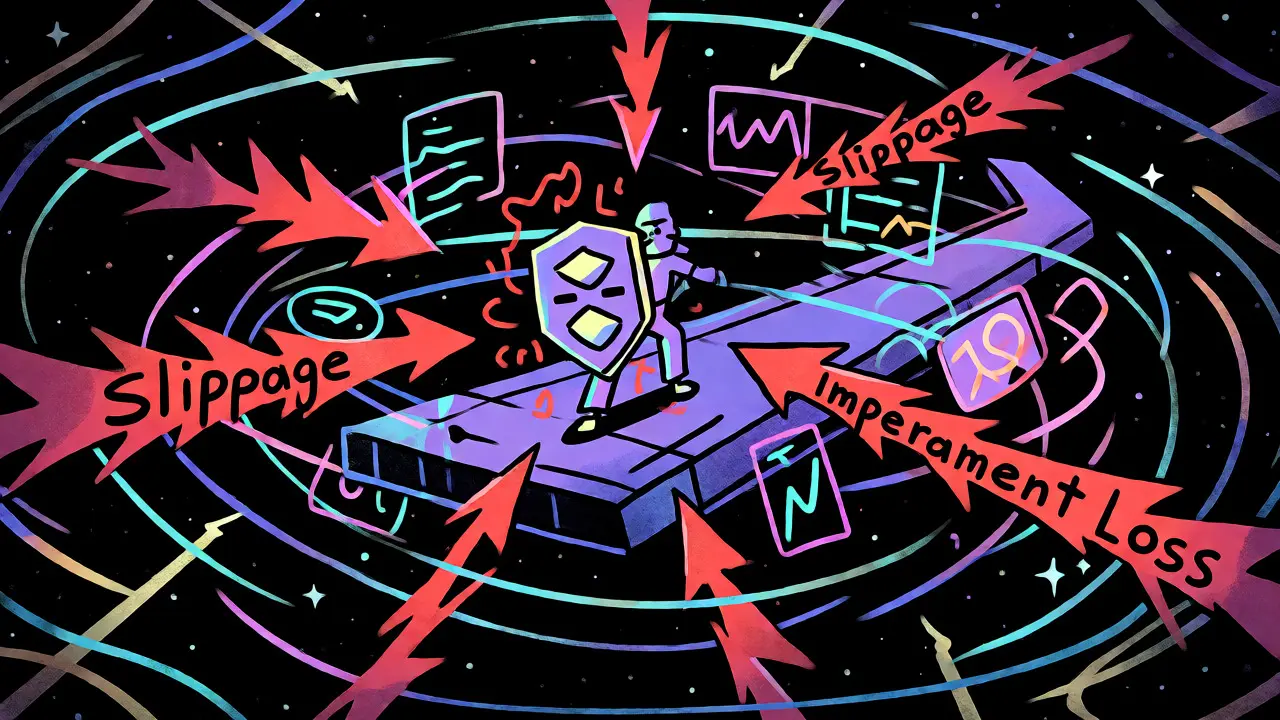
- Liquidity Depth: While growing, Mangrove’s total value locked (TVL) is lower than top-tier DEXs. This means larger trades might still face some slippage, though less than on thin AMM pools.
- Smart Contract Risk: Since anyone can post an offer, bad code exists. Trading against an unaudited, buggy offer could lead to failed transactions or unexpected costs.
Final Verdict: Is Mangrove Worth It?
Mangrove isn’t trying to replace every other exchange. It’s solving a specific problem: making on-chain liquidity efficient and customizable. If you’re a developer or a sophisticated trader who hates wasting capital in idle pools, Mangrove is a compelling option. It bridges the gap between the precision of centralized order books and the freedom of decentralized finance.
But if you value simplicity and broad asset selection over cutting-edge mechanics, you might find it frustrating. Test it with small trades first. Explore their GitHub repositories to see the code behind the offers. And remember, in DeFi, your research is your best security tool.
Is Mangrove a centralized or decentralized exchange?
Mangrove is a decentralized exchange (DEX). It operates on-chain, meaning trades are executed via smart contracts. Crucially, it is non-custodial, so users retain full control of their private keys and assets throughout the trading process.
How is Mangrove different from Uniswap?
Uniswap uses an Automated Market Maker (AMM) model where prices are determined by mathematical formulas and liquidity is locked in pools. Mangrove uses a programmable order book where liquidity providers can post smart contracts as offers. This allows for custom trading logic and capital efficiency, whereas Uniswap offers a simpler, standardized swapping experience.
Do I need coding skills to use Mangrove?
To simply trade (swap tokens), you do not need coding skills. The interface handles the execution. However, to provide liquidity effectively or create custom market-making strategies using the "Offer is Code" feature, a solid understanding of smart contracts and Solidity is highly beneficial.
Is Mangrove safe to use?
Mangrove employs a non-custodial model, reducing the risk of exchange-level hacks. The core protocol is open-source and has undergone audits. However, as with any DeFi platform, there is inherent smart contract risk. Users should verify the security of specific liquidity offers they interact with and start with small amounts.
What blockchains does Mangrove support?
Mangrove primarily operates on Ethereum Mainnet and Layer 2 solutions like Arbitrum. Support for other chains may expand as the ecosystem grows, so it is best to check their official documentation for the latest deployment status.