Crypto Exchange Ban: What Happens When Countries Crack Down on Trading
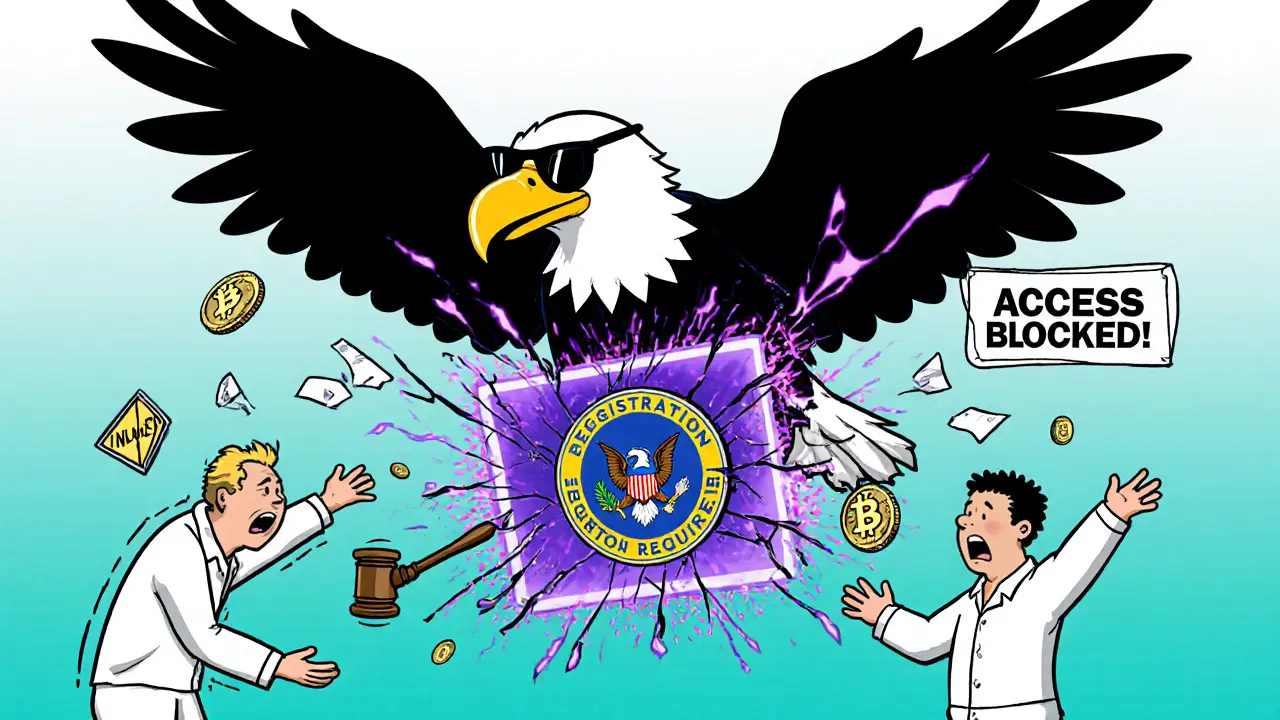
When a government enforces a crypto exchange ban, a legal restriction that prevents domestic platforms from offering cryptocurrency trading services. Also known as crypto trading restrictions, it doesn’t mean people stop buying Bitcoin—it just pushes them underground, offshore, or into risky workarounds. This isn’t about stopping technology. It’s about control. Who gets to handle money? Who pays taxes? Who’s accountable when things go wrong? Countries like Nigeria, Bangladesh, and Vietnam have all tried to ban or limit exchanges, but the results are messy, inconsistent, and often backfire.
Behind every crypto exchange ban, a legal restriction that prevents domestic platforms from offering cryptocurrency trading services. Also known as crypto trading restrictions, it doesn’t mean people stop buying Bitcoin—it just pushes them underground, offshore, or into risky workarounds. is a deeper battle between regulation and access. Take Nigeria, a country that lifted its crypto ban in 2025 but still struggles with uneven enforcement. Traders there now use licensed platforms—but only if they can prove their identity and link a local bank. Meanwhile, in Bangladesh, a nation where crypto is officially illegal but widely used via VPNs. people rely on tools like NordVPN and ExpressVPN to reach Binance, turning privacy into a survival tactic. And in Vietnam, a market with high retail adoption but zero licensed exchanges as of 2025. the central bank allows crypto as a "virtual asset" but won’t let anyone build a real exchange unless they have over $379 million in capital—something no private company can afford.
These aren’t just policy shifts. They’re real-life disruptions. When India shut down Koinex in 2018 after the RBI ban, thousands lost access overnight. When South Korea launched COREDAX, a regulated exchange built specifically for local users with Korean-language support and bank integration. it wasn’t just about convenience—it was about compliance. The same goes for the UK’s HM Treasury, the government body that brought crypto exchanges under FCA oversight in 2025. Their rules didn’t stop trading—they just forced platforms to prove they weren’t scams.
What you’ll find below isn’t a list of banned countries. It’s a collection of real stories—how people got around restrictions, how exchanges died or adapted, and how scams like CreekEx and Woof Finance rose up in the gaps. Some posts expose fake platforms pretending to fill the void. Others show how legal loopholes, like relocating for tax reasons or using DeFi protocols instead of centralized exchanges, became the new normal. This isn’t theory. It’s what’s happening right now, in living rooms, on VPNs, and in the quiet corners of the crypto world where rules are broken, bent, or ignored.