Crypto Whales: Who They Are, How They Move Markets, and What You Need to Know
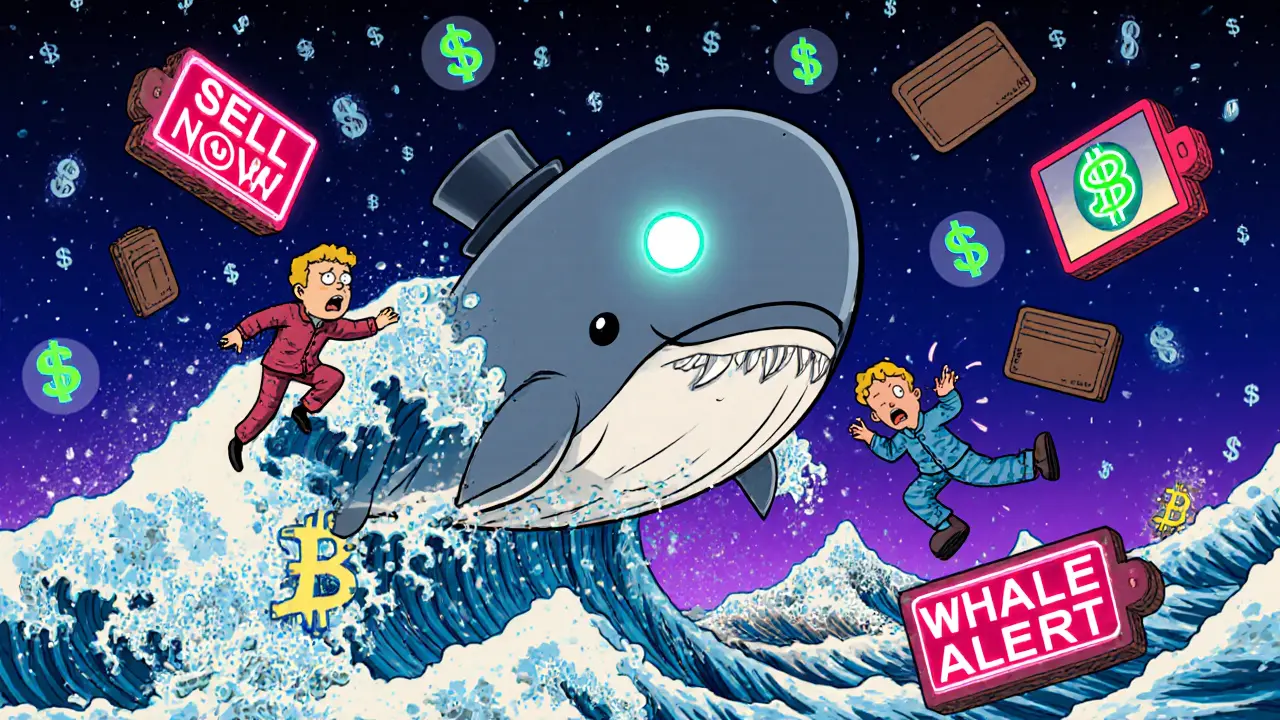
When we talk about crypto whales, large holders of cryptocurrency who control enough assets to influence market prices. Also known as large crypto holders, they’re the ones who buy or sell millions in a single transaction—often before most traders even notice the price moved. These aren’t just rich people with wallets full of Bitcoin. They’re institutions, early adopters, founders, and sometimes even anonymous entities with enough power to make or break a token’s momentum.
Crypto whales don’t just sit on their holdings—they actively shape the market. When a whale moves $50 million worth of ETH from an exchange to a private wallet, it signals confidence. When they dump the same amount onto a DEX, it can crash the price in seconds. This isn’t speculation—it’s documented behavior. In 2024, one wallet moved 78,000 BTC in under 12 hours, triggering a 12% drop across major exchanges. That’s not luck. That’s strategy. And it’s why tracking whale activity isn’t just for analysts—it’s a survival skill for retail traders.
Whales rely on whale wallets, public blockchain addresses that hold unusually large sums of crypto and are monitored by tracking tools to hide or reveal their moves. Tools like Whale Alert and Nansen track these wallets in real time, showing when big transfers happen. But here’s the catch: not all big wallets are whales. Some are exchanges, custodians, or staking pools. Real whales are the ones who move funds unpredictably, often before major news drops. That’s why watching crypto market manipulation, the practice of using large positions to artificially influence asset prices matters. Pump-and-dump schemes, spoofing, and wash trading often start with a whale’s move. And if you’re trading without knowing what they’re doing, you’re just feeding the machine.
The connection between crypto liquidity, the ease with which an asset can be bought or sold without affecting its price and whale activity is simple: low liquidity = easy manipulation. A token with $2 million in trading volume can be crushed by a $500,000 sell order from a whale. That’s why so many of the failed tokens in our posts—Flowmatic, TajCoin, Project Quantum—never had enough liquidity to survive a single big move. Whales don’t care about your roadmap or your community. They care about exit liquidity.
What you’ll find below isn’t a list of whale myths. It’s a collection of real cases: fake exchanges that vanished after whale withdrawals, airdrops that collapsed because whales dumped their tokens the second they were claimable, and exchanges that banned Nigerian traders not because of policy—but because whales were pulling out and leaving retail users holding the bag. This isn’t theory. It’s what’s happening right now. And if you want to trade smarter, you need to know who’s really running the game.