Donate with Blockchain: How to Give Crypto Safely and Effectively
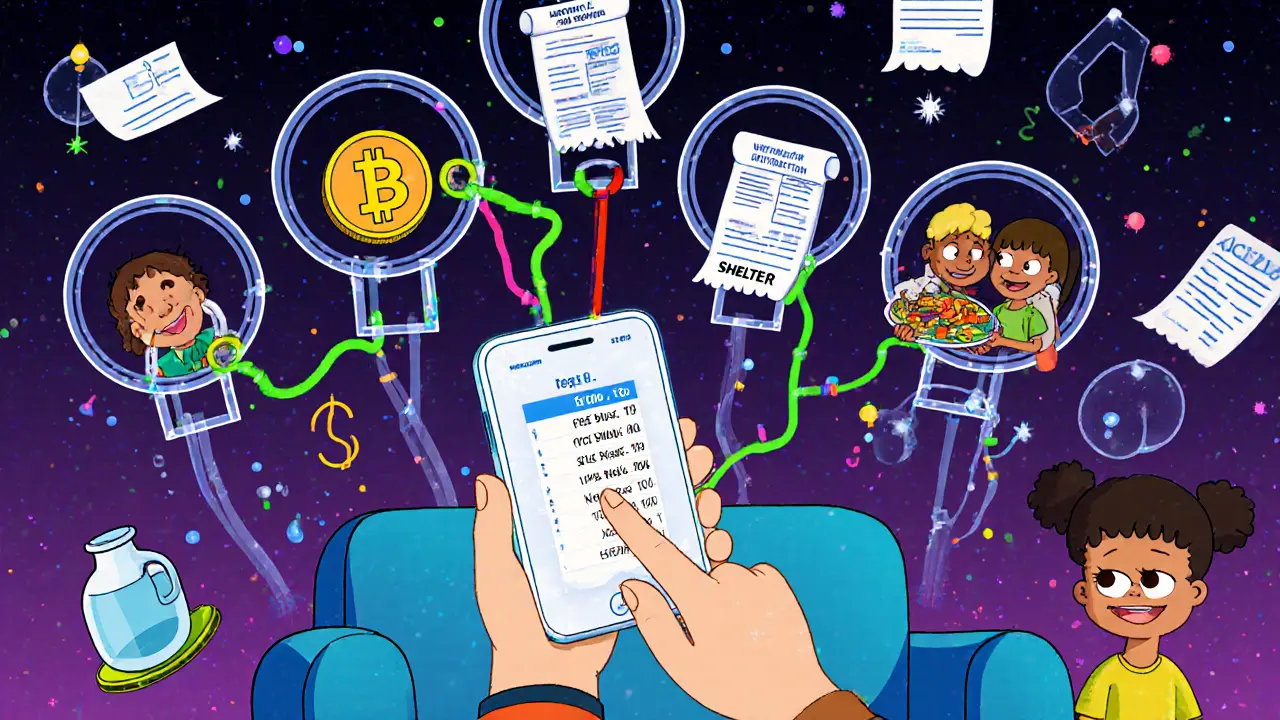
When you donate with blockchain, you send cryptocurrency directly to a cause without banks or middlemen. Also known as crypto philanthropy, it’s faster, cheaper, and more transparent than traditional donations. Unlike wire transfers that take days and charge fees, blockchain lets you send funds in minutes—even across borders—with almost no cost. This isn’t just tech talk; real charities like the Water Project and the Red Cross now accept Bitcoin and Ethereum because donors want control and proof that their money reached the right place.
But not all crypto donations are equal. Some projects pretend to be nonprofits while quietly siphoning funds. That’s why knowing the difference between a real DeFi charity, a nonprofit using smart contracts to automate donations and a fake wallet address matters. Platforms like The Giving Block and Gitcoin verify organizations before listing them. You can track every dollar on-chain—no guesswork. And if you’re giving to a small cause, you don’t need a big name; just check if they have a public wallet, a clear mission, and a history of on-chain activity. No anonymous addresses. No vague promises. If it looks like a scam, it probably is.
There’s also the question of what happens after you send the crypto. Some groups convert it to fiat immediately to pay bills. Others hold it as a reserve, letting it grow. Projects like Gitcoin use quadratic funding to match small donations, so your $10 might become $20. Meanwhile, token-based charities use governance tokens to let donors vote on how funds are spent. It’s not magic—it’s code. But code that’s open, auditable, and hard to manipulate. That’s the real power of blockchain philanthropy, a system where transparency isn’t optional—it’s built in.
What you’ll find below are real cases: some working, some failed, some outright scams. You’ll see how Nigerian traders used crypto to send aid during floods, how a fake airdrop pretended to be a charity, and why some crypto donations vanished without a trace. These aren’t theoretical stories—they’re lessons from people who gave their money and got nothing back. You’ll also learn how to verify a wallet, spot a fake nonprofit, and choose platforms that actually protect donors. No fluff. No hype. Just what works, what doesn’t, and how to make sure your next donation actually helps someone.