FLOOS Token: What It Is, Why It Matters, and What You Need to Know
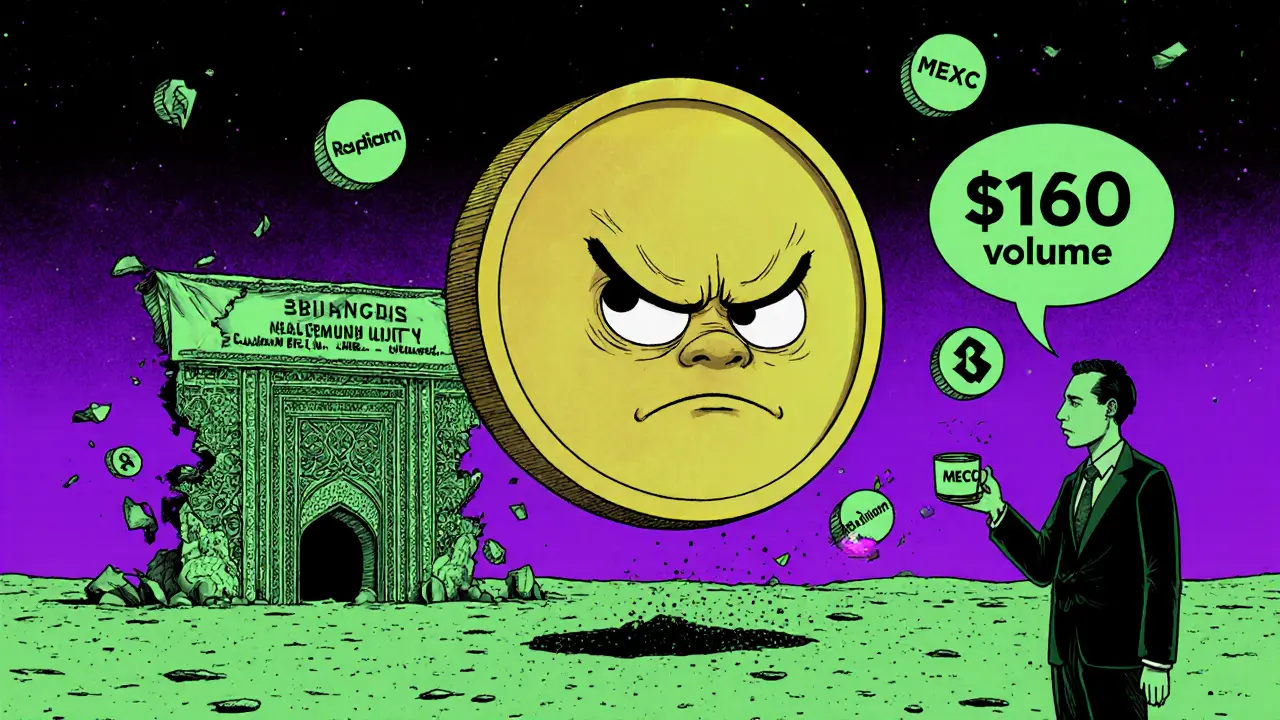
When you hear FLOOS token, a nearly forgotten crypto asset that briefly appeared on low-volume exchanges with no clear team or roadmap. Also known as FLOOS, it’s the kind of token that shows up in wallet histories, gets mentioned in forum threads, and then disappears—no announcement, no update, just silence. FLOOS isn’t a meme coin like Pepes Dog (ZEUS), nor is it a DeFi platform like Ref Finance (REF). It doesn’t have a game, a community, or even a whitepaper you can find anymore. It’s a ghost in the blockchain—once listed, now delisted, and rarely talked about.
What happened to FLOOS? It’s not alone. Tokens like Flowmatic ($FM), TajCoin (TAJ), and Project Quantum (QBIT) followed the same path: low liquidity, zero trading volume, and no team updates. These aren’t scams in the traditional sense—they were often launched by anonymous devs hoping for a quick pump. But without real use cases, they die fast. FLOOS didn’t fail because of regulation or a hack. It failed because nobody cared enough to keep it alive. That’s the quiet killer in crypto: indifference.
And here’s the thing—you’re probably not holding FLOOS on purpose. You might’ve gotten it in an airdrop you forgot about, or traded for it on a sketchy DEX that’s now offline. If you still have it, check its contract address. If it’s not on CoinGecko or CoinMarketCap, and no exchange lists it, then it’s worth close to zero. Don’t chase it. Don’t try to sell it. Just move on. The real lesson isn’t about FLOOS. It’s about how to avoid the next one. Look for tokens with active Discord channels, regular GitHub commits, and real trading volume. If it’s just a name on a chart with no story behind it, walk away.
Below, you’ll find a collection of posts that dig into similar cases—tokens that vanished, exchanges that disappeared, and airdrops that led nowhere. These aren’t just stories about failures. They’re warning signs you can use to protect your funds. Whether you’re chasing the next big airdrop or trying to avoid a dead token, the patterns are the same. Learn them here.