Best Transaction Fee Estimation Tools for Blockchain in 2025
Learn how transaction fee estimation tools help you pay the right amount on Bitcoin and Ethereum, avoid overpaying, and get your transactions confirmed fast-without guesswork.
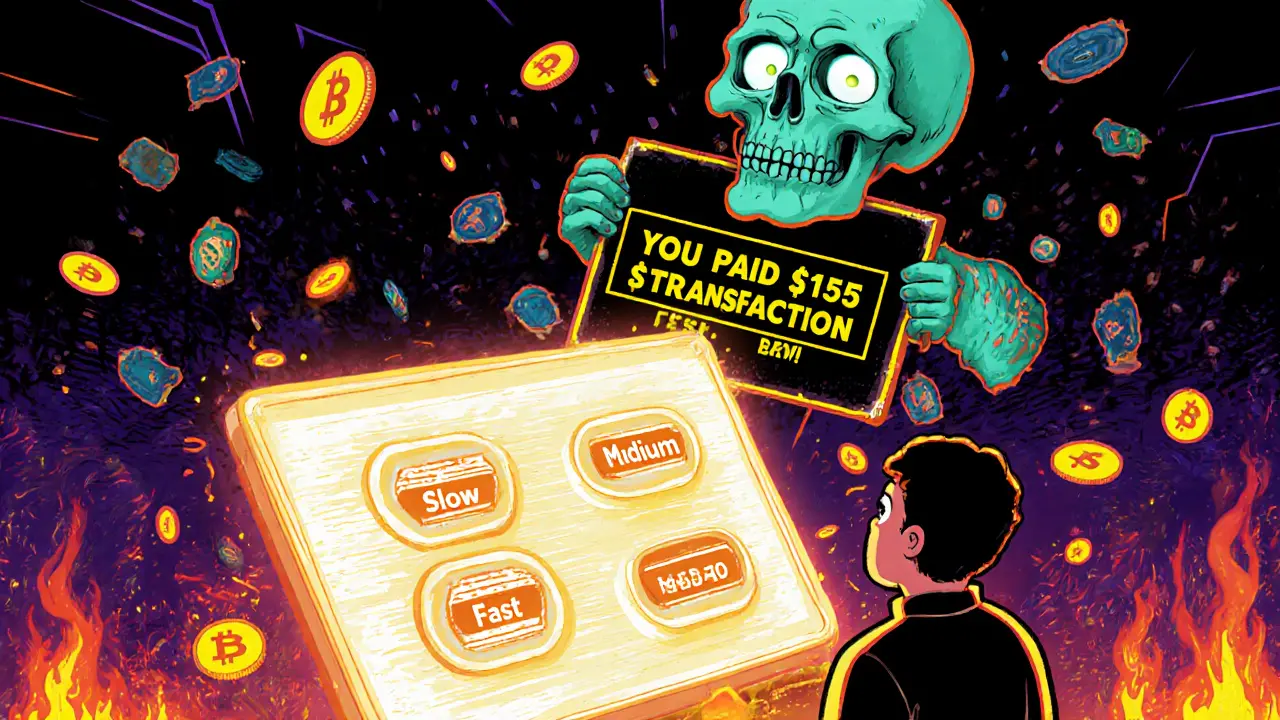
When you send crypto, you’re not just moving money—you’re paying for space on a blockchain. This cost is called a transaction fee estimation, the process of predicting how much you’ll pay to get your transaction confirmed on a blockchain network. It’s not a flat rate. It changes by network, traffic, and even the time of day. Also known as gas fees, it’s what keeps blockchains running but can also eat into your profits if you don’t understand it.
Every major chain handles this differently. On Ethereum, fees spike when everyone’s swapping tokens or minting NFTs. On Solana, they stay under a penny even during peak hours. On newer chains like NEAR or Arbitrum Nova, fees are low because they use different ways to process transactions. But here’s the catch: if you guess wrong, your transaction might sit for hours—or get dropped entirely. That’s why smart users check blockchain transaction costs, the actual amount paid to miners or validators to include a transaction in a block before hitting send. Tools like Etherscan or Solana FM show real-time estimates, but many traders still rely on guesswork—and lose money because of it.
Exchange fees are another layer. Platforms like Binance or COREDAX often charge their own withdrawal fees on top of the network fee. Some, like Ref Finance on NEAR, let you swap with fees under a penny because the underlying chain is cheap. Others, like SushiSwap on Arbitrum Nova, look cheap on paper but have zero liquidity—so even if the fee is low, you can’t trade without slippage. And don’t forget scams: fake exchanges like CreekEx or Woof Finance might hide fees in fine print or never process your withdrawal at all. Real crypto exchange fees, the charges imposed by centralized or decentralized platforms for deposits, withdrawals, or trades should be transparent, predictable, and listed upfront.
Why does this matter? Because in 2025, the difference between a $5 fee and a $50 fee isn’t just about cost—it’s about control. If you’re trading small amounts, high fees make it pointless. If you’re holding long-term, you might wait for a quiet window. If you’re doing DeFi, you need to know whether your swap will cost more than the profit. That’s why the posts below don’t just list exchanges or airdrops—they show you where fees are hidden, where they’re fair, and where you’re being taken for a ride. You’ll see how Nigeria’s traders navigate inconsistent rules, how Korean users pick regulated platforms with clear fee structures, and why projects like Flowmatic collapsed because no one could afford to use them. This isn’t theory. It’s what’s happening right now.
23 August
Learn how transaction fee estimation tools help you pay the right amount on Bitcoin and Ethereum, avoid overpaying, and get your transactions confirmed fast-without guesswork.