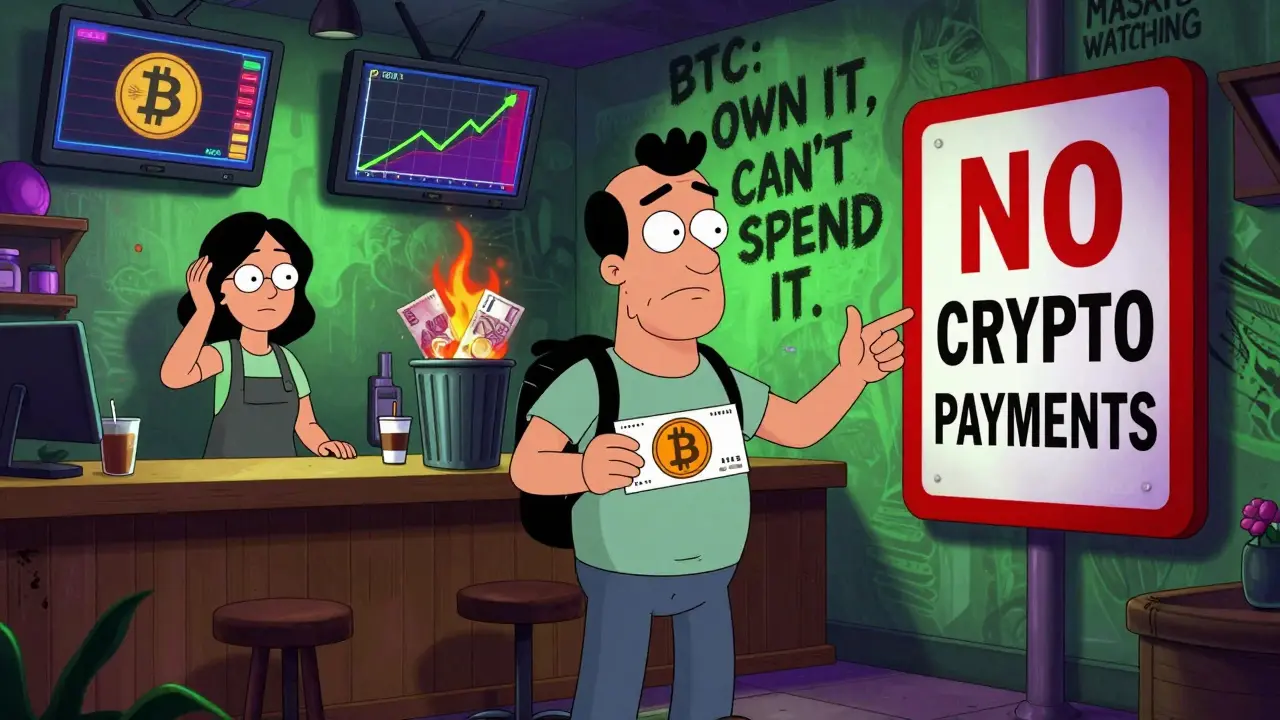
If you’re living in Turkey or trading Turkish lira-backed assets, you’ve probably noticed how strange it is to own crypto but not be able to use it to buy coffee. That’s the reality since April 2021: cryptocurrency trading is legal in Turkey, but using it to pay for anything is banned. And in February 2025, new rules kicked in that changed everything again - not by banning crypto, but by making it harder to trade, easier to track, and riskier to ignore.
Trading Is Fine. Paying Is Not.
Turkey doesn’t want you to use Bitcoin or Ethereum like cash. The Central Bank of Turkey (TCMB) made it clear: digital assets can’t be used for payments. You can’t pay your rent with Dogecoin. You can’t buy a phone with Litecoin. Even stablecoins like USDT or USDC are blocked from being used as currency. But here’s the twist - you’re still allowed to buy, sell, and hold them. You can trade Bitcoin on BTCTurk or Paribu all day long. You can even hold it as an investment. It’s not illegal. It’s just useless for daily life.This split makes Turkey unique. The EU lets regulated crypto payments happen under MiCA. The U.S. lets states decide. Turkey? It drew a hard line: crypto is an asset, not money. The goal? Stop capital flight and protect the Turkish lira. With inflation hitting 60% in 2023 and the lira losing over 70% of its value since 2020, the government doesn’t want people fleeing to crypto as a safe haven - at least not by spending it.
Who Can Even Trade Now?
Since July 2024, you can’t just open a crypto exchange in Turkey anymore. The Capital Markets Board (CMB) now requires every service provider to get a license. And the bar is high. Exchanges need at least 150 million Turkish lira - roughly $4.1 million - in capital. Custodians? They need 500 million lira ($13.7 million). That’s not just a rule. It’s a wall. Most small platforms couldn’t meet it. By late 2025, over 20 unlicensed platforms were shut down. PancakeSwap? Blocked. Smaller local exchanges? Gone. Only big players like BTCTurk and Paribu survived.The government didn’t stop there. Every licensed firm must now pass audits by TÜBİTAK, Turkey’s science and tech council. That means their entire trading system - from order matching to wallet security - gets inspected. They also need a full-time compliance team, real-time transaction monitoring, and logs of every canceled trade. If you’re running a crypto business in Turkey, you’re now running a financial institution.
Identity Checks Are Now Mandatory
If you’re trading more than 15,000 Turkish lira ($425) in a single transaction, you need to prove who you are. No exceptions. This isn’t just about KYC forms. The Financial Crimes Investigation Board (MASAK) now requires full identity verification for every user above that threshold. That means government-issued ID, proof of address, and biometric checks. And if you’re using an unregistered wallet? MASAK can demand you explain where the funds came from. Refuse? Your account gets frozen.Here’s where it gets intense. In early 2026, new legislation is being prepared for Turkey’s Grand National Assembly. If passed, MASAK will get the power to freeze crypto accounts outright - no court order needed. They can shut down wallets linked to money laundering, gambling, or fraud. They can blacklist entire addresses. And they’re specifically targeting something called “rented accounts”: people who let criminals use their wallets for a cut of the profit. This isn’t theoretical. MASAK already froze over 1,200 crypto wallets in late 2025 for suspicious activity.

Why This Matters for Everyday Users
Most Turkish crypto users aren’t traders. They’re people trying to protect their savings. The lira’s been crashing for years. So they buy Bitcoin or USDT to hold value. But they still need to pay bills. That’s why peer-to-peer trading exploded. People meet in cafes, swap cash for crypto, or use Telegram groups to trade. It’s risky. No protections. No recourse. But it’s the only way to get around the payment ban.Now, with mandatory identity checks, even P2P trading is getting harder. If you’re selling 500 lira worth of crypto to your neighbor, you’re still technically breaking the rules if you don’t report it. Many users are scared. They worry about privacy. Others are angry. “I bought crypto to escape inflation,” one Reddit user wrote. “Now I have to prove I didn’t steal it to even hold it.”
What’s Next? Taxes, Limits, and More
Right now, crypto profits aren’t taxed in Turkey. That’s changing. The Finance Ministry is drafting rules that will require exchanges to report every user’s gains. They’re also looking at capping stablecoin transfers - especially USDT - to stop people from moving money out of the country. Some experts think capital controls are coming next. Imagine limits on how much crypto you can sell per month. Or mandatory conversion to lira before withdrawal.And don’t forget: the government is watching. Every trade, every transfer, every wallet. The system is built to track everything. The goal isn’t to stop crypto. It’s to control it. To make sure it doesn’t weaken the lira. To make sure it doesn’t fund crime. And to make sure the state gets a cut someday soon.

How This Compares to the Rest of the World
Most countries are trying to integrate crypto into their financial systems. The EU is creating clear rules for payments. The U.S. is letting states experiment. Even China, with its digital yuan, is pushing toward digital currency use. Turkey is doing the opposite. It’s building a cage. Crypto can live inside it. But it can’t move freely. The capital requirements are higher than in Germany or France. The identity rules are stricter than in Japan. The freeze powers are more extreme than anywhere in the West. It’s not a ban. It’s a lockdown.Some say it’s smart. Others say it’s backward. But one thing’s clear: Turkey isn’t trying to lead the crypto world. It’s trying to contain it.
What Should You Do?
If you’re in Turkey:- Only use CMB-licensed exchanges. Unlicensed ones are gone - or getting shut down.
- Keep records of every trade. You might need them later.
- Don’t use unregistered wallets. MASAK can trace them.
- Avoid P2P trading unless you’re prepared for risk.
- Watch for tax announcements. Profits may be taxed by late 2026.
If you’re outside Turkey but trading Turkish lira or crypto linked to it:
- Be aware that withdrawals to Turkish banks are monitored.
- Don’t assume Turkish users can pay you in crypto. They can’t.
- Understand that the lira’s instability drives crypto demand - but regulation blocks real use.
Can I still buy and sell cryptocurrency in Turkey?
Yes. Buying, selling, and holding cryptocurrency is still legal in Turkey. You can trade on licensed platforms like BTCTurk and Paribu. But you can’t use crypto to pay for goods or services. The law separates ownership from payment - you can own Bitcoin, but you can’t spend it like money.
Why did Turkey ban crypto payments but allow trading?
Turkey’s central bank is trying to protect the Turkish lira from further depreciation. With inflation over 60% in 2023 and the lira losing value rapidly, many Turks turned to crypto to save money. The government didn’t want people using crypto to move money out of the country or avoid currency controls. So they allowed trading as an investment tool - but blocked its use as payment to keep demand for the lira stable.
What happens if I trade crypto without verifying my identity?
If you trade over 15,000 Turkish lira ($425) without ID verification, your account can be flagged by MASAK. If you’re found to be using an unregistered wallet or engaging in suspicious activity, your funds may be frozen. You could also face investigation for potential money laundering. The system now tracks every transaction above that threshold.
Are crypto profits taxed in Turkey right now?
As of early 2026, crypto profits are not taxed in Turkey. However, the Finance Ministry is preparing rules to require exchanges to report all user gains. A tax on capital gains from crypto is expected to be introduced by late 2026. Until then, no tax is collected - but that’s likely to change soon.
Can MASAK freeze my crypto wallet without a court order?
Yes - and this is new. As of early 2026, draft legislation grants MASAK the power to freeze crypto accounts without needing court approval. This applies to wallets linked to money laundering, fraud, or rented accounts. If MASAK flags your wallet, they can block transfers, close it, or blacklist it. This power is being finalized and is expected to become law in 2026.





Konakuze Christopher
They're not banning crypto-they're just making it a prison sentence with extra steps. You can own Bitcoin, but if you try to use it? MASAK shows up with a clipboard and a warrant. This isn't regulation. It's psychological warfare against your own citizens.