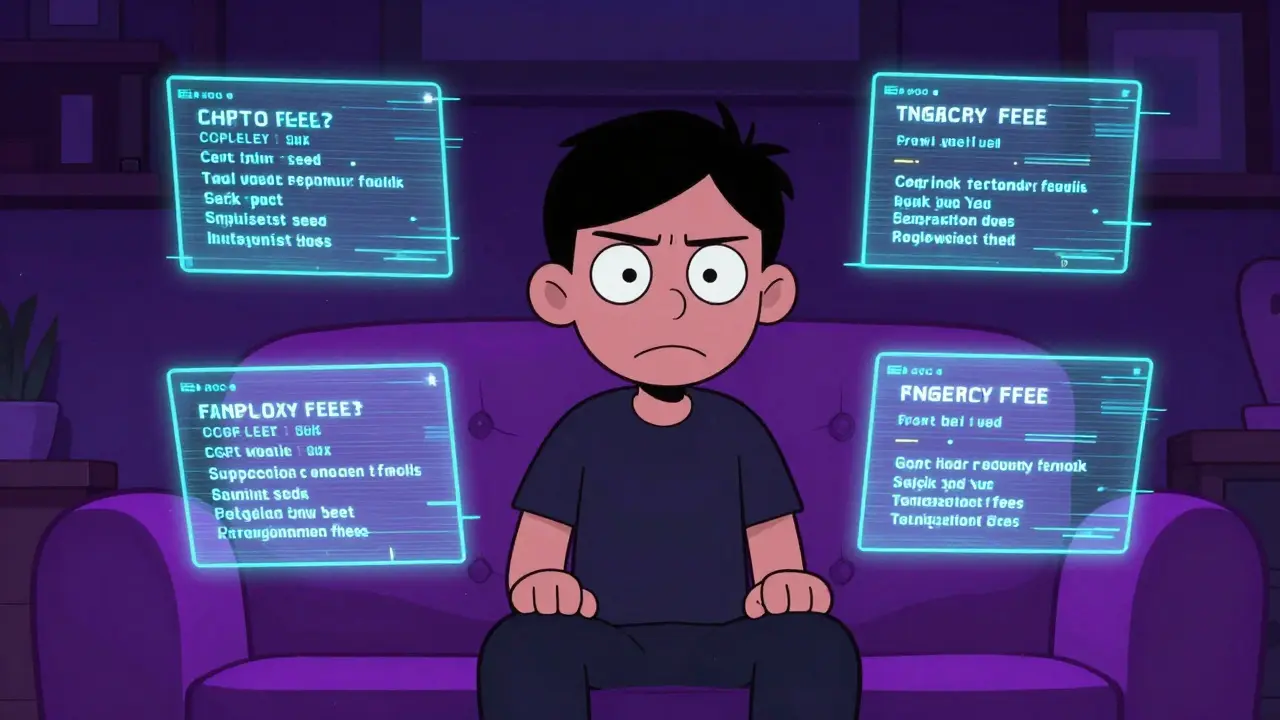
Imagine playing your favorite mobile game, earning rare items, and actually owning them as digital assets-all without ever knowing what a "seed phrase" is or worrying about paying a $10 transaction fee just to trade a sword. For years, blockchain gaming was stuck on desktops with clunky interfaces that scared away casual players. Unite is a Layer 3 (L3) blockchain solution built specifically for mobile Web3 gaming. It isn't just another network; it's the first L3 designed exclusively to break the barriers between traditional mobile apps and the decentralized web.
Quick Takeaways on UNITE
- Purpose: A dedicated Layer 3 for mobile games, removing the need for users to manage crypto wallets.
- Foundation: Built on top of Base (Coinbase's L2), inheriting the security of Ethereum.
- Key Advantage: App Store and Google Play compliance, allowing games to stay listed while using blockchain.
- Cost: Ultra-low gas fees, sometimes as low as $0.000000000084 per transaction.
- Adoption: Over 130 games already deployed on the mainnet.
Solving the Mobile Gaming Friction Problem
Most blockchain games fail on mobile because they ask users to do too much. They want you to download a wallet, buy ether, and sign a pop-up window every time you move an item. To a regular gamer, that's a nightmare. Unite changes this by handling the wallet functionality in the backend. The player just plays the game, while the blockchain works silently in the background.
Beyond the user experience, there is the "App Store hurdle." Apple and Google have strict rules about how digital goods are sold. Many Web3 projects were banned or restricted because they couldn't comply. Unite was architected from day one to be compliant with both the Apple App Store and Google Play Store, making it a safe bet for developers who want to reach millions of users without getting their accounts banned.
The Tech Under the Hood: How Layer 3 Works
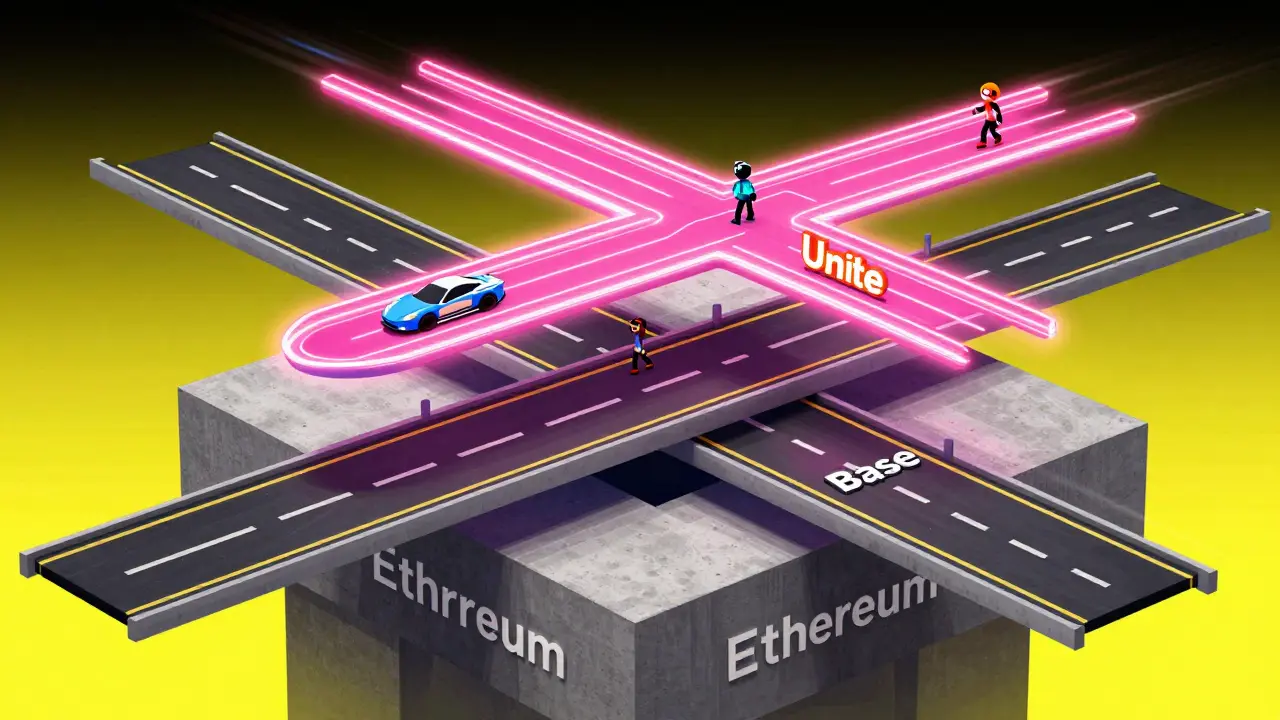
To understand Unite, you have to understand its position in the blockchain hierarchy. If Ethereum is the foundation (Layer 1) and Base is the highway (Layer 2), Unite is like a specialized high-speed lane reserved only for gaming (Layer 3). By using Optimistic Rollups, it bundles transactions together to keep costs nearly zero and speeds almost instant.
Because it is fully compatible with the Ethereum Virtual Machine (EVM), developers don't have to learn a new coding language. They can use the tools they already know but benefit from custom-tuned gas limits that make complex in-game actions economically viable. For example, in a traditional game, a developer might be afraid to put every single item on-chain because of the cost. On Unite, the fees are so low that every single achievement or item can be tokenized without breaking the bank.
| Feature | Standard L1/L2 Blockchain | Unite (L3) |
|---|---|---|
| Wallet Requirement | Mandatory for users | Backend-managed (Walletless) |
| Transaction Costs | Variable (Can be high) | Ultra-low (Near zero) |
| App Store Status | Often conflicting/blocked | Fully compliant |
| Optimization | General purpose | Mobile-gaming specific |
The UNITE Token: More Than Just a Currency
The UNITE token is the engine that powers this ecosystem. It's an ERC-20 token operating on the Base network. With a total supply of 30 billion tokens, the distribution is heavily weighted toward the community-30% is dedicated specifically to growth initiatives.
But what does the token actually do? It serves three main roles:
- Utility: It's the primary medium for in-game purchases, trading items between different games, and rewarding players for their achievements.
- Governance: Holders can vote on how the network evolves, effectively giving the community a say in the platform's future.
- Tokenized Identity: This is the most ambitious part. Unite aims to turn a gamer's entire history-their skill, time spent, and influence-into a tokenized asset. Instead of your achievements staying locked inside one game, they become a liquid asset you can carry across the entire Unite ecosystem.
Developer Ecosystem and Strategic Partnerships
A blockchain is only as good as the apps built on it. Unite has already seen massive traction with over 130 games on its mainnet. To make this happen, they've provided a specialized SDK (Software Development Kit) that allows developers to plug blockchain features into their games without rewriting their entire codebase.
They've also partnered with industry giants to smooth out the edges. By working with Alchemy and the RLY Network Association (RNA), Unite offers wallet-free sign-ins and deep analytics. This means a developer can see exactly how players are interacting with their tokenized economy without forcing the player to go through a complex onboarding process.
A real-world example of this success is a top 10 Google Play Pass game with over 5 million downloads that is currently migrating to the Unite platform. This proves that mainstream developers are finally seeing a viable path to integrate Web3 without alienating their existing user base.
The Big Picture: The Future of Gaming Ownership
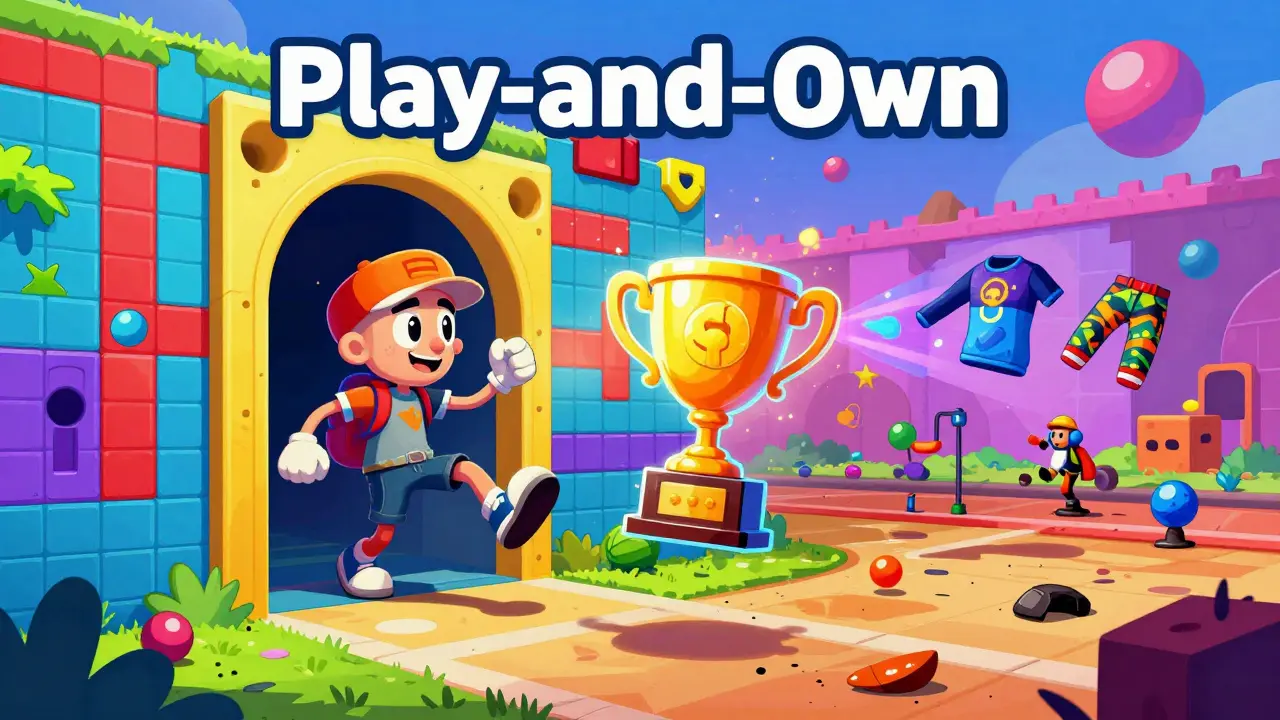
For a long time, the "Play-to-Earn" model felt like a job rather than a game. Unite is pushing toward a "Play-and-Own" model. The goal is to create a unified economy where value flows freely. If you earn a rare badge in a casual puzzle game, that badge could potentially give you a special status or a unique skin in a competitive battle royale game, provided both are on the Unite network.
By focusing on the mobile market-which dwarfs the PC and console markets in terms of sheer user numbers-Unite is positioning itself as the primary gateway for the next billion Web3 users. They aren't trying to change how people play games; they're changing how people own their experience within those games.
Do I need a crypto wallet to use Unite games?
No. One of Unite's main selling points is that it handles wallet functionality in the backend. You can play, earn, and trade assets without needing to set up or manage a traditional cryptocurrency wallet.
Is the UNITE token safe?
Unite is built on the Base Layer 2 blockchain, which means it inherits the security and decentralization of the Ethereum network. While all crypto assets carry risk, the underlying infrastructure is based on industry-standard security protocols.
How does Unite stay compliant with the Apple App Store?
Unlike many blockchain projects that clash with app store rules over payments and NFTs, Unite was designed specifically to adhere to Apple and Google's regulations, ensuring that games can be distributed normally through the stores.
What makes a Layer 3 different from a Layer 2?
A Layer 2 (like Base) scales the main chain for general use. A Layer 3 (like Unite) is a specialized layer built on top of an L2 to provide even more specific optimizations-in this case, ultra-low fees and custom contract limits tailored for mobile gaming.
How many games are currently on the Unite mainnet?
As of the latest deployment data, over 130 games have already been deployed to the Unite mainnet, including high-traffic titles from the Google Play Store.



Kathleen Bergin
Basically it is just a layer that hides the wallet. People act like this is new but it is just a custodial wrapper. Not that deep.