
When we talk about Native Tokens is the original cryptocurrency that operates on its own dedicated blockchain. For example, BTC on the Bitcoin network is a native token. It is the lifeblood of its own system, used to pay for transaction fees and secure the network through mining. However, native tokens are essentially trapped on their own home turf. A native Bitcoin token cannot simply "jump" over to the Ethereum network to be used in a lending app because the two blockchains speak different languages.
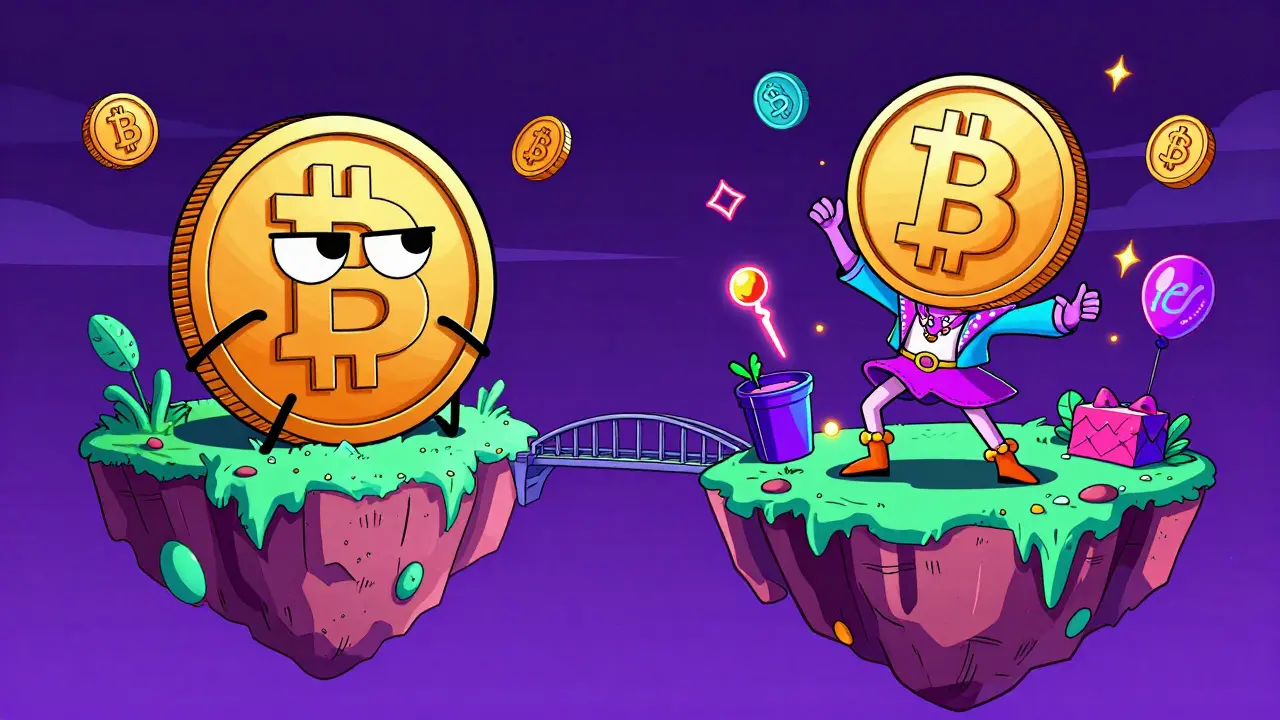
To solve this, we use Wrapped Tokens, which are digital assets that represent a cryptocurrency on a non-native blockchain. They act as a bridge, allowing you to take the value of one asset and use it in an entirely different ecosystem. The most famous example is Wrapped Bitcoin (WBTC), which lets you use the value of your Bitcoin on the Ethereum network. By doing this, you can participate in Wrapped Tokens and DeFi protocols without having to sell your original Bitcoin for another currency.
How Wrapping Actually Works
You might wonder how a token on one chain can "represent" an asset on another. It doesn't happen by magic; it happens through a process called minting and burning. To create a wrapped token, a native asset must be locked away. This is usually handled by a custodian or a decentralized organization. When you lock 1 BTC in a vault, the custodian mints 1 WBTC on the Ethereum chain. It is always a strict 1:1 ratio.
The full journey of a token usually follows these steps:
- You choose the asset you want to wrap and the destination blockchain.
- You transfer the native assets to a custodian.
- The custodian locks the asset and mints the wrapped version.
- The wrapped tokens are sent to your wallet.
- When you're done, you request a redemption.
- The custodian burns the wrapped tokens (destroys them).
- The original native asset is released from the vault and returned to you.
This mechanism allows for immense flexibility. For instance, Wrapped Ether (WETH) is a common tool. While ETH is native to Ethereum, many DeFi protocols require tokens to follow the ERC-20 standard. Since native ETH doesn't follow this standard, users "wrap" it into WETH to interact with decentralized exchanges and lending platforms like Aave.
Comparing the Two: The Trade-offs
Choosing between a native and wrapped asset usually comes down to a battle between utility and security. Native tokens are the gold standard for safety because they rely solely on the consensus mechanism of their own blockchain. There is no "middleman." If you hold BTC in a native wallet, you only need to worry about your private keys.
Wrapped tokens, however, introduce a "trust assumption." You are trusting the custodian to actually hold your Bitcoin. If the custodian is dishonest or gets hacked, your wrapped token could become worthless because there is no longer a real asset backing it. This was seen in the Nomad Bridge hack, where $190 million in wrapped assets were lost, proving that bridges and custodians are often the weakest link in the chain.
| Feature | Native Tokens | Wrapped Tokens |
|---|---|---|
| Blockchain Location | Origin chain only | Cross-chain |
| Security Model | Network Consensus | Custodians / Smart Contracts |
| Interoperability | Low (Isolated) | High (Universal) |
| Primary Risk | Private key loss | Custodial failure / Bridge hacks |
| Common Example | BTC, ETH, SOL | WBTC, WETH, WAVAX |
Why Does This Matter for DeFi?
If wrapped tokens are riskier, why do people use them? The answer is capital efficiency. In the traditional world, if you wanted to earn interest on your Bitcoin, you'd have to sell it for a stablecoin and lend that out. But selling means you might miss out on Bitcoin's price gains or trigger a taxable event.
With wrapped tokens, you keep your exposure to the price of Bitcoin while using it as collateral to borrow other assets. According to data from Dune Analytics, billions of dollars in Bitcoin are locked in Ethereum DeFi protocols via WBTC. This allows a Bitcoin holder to essentially "put their money to work" without leaving the Bitcoin ecosystem entirely.
However, not everyone is on board. Many users in the community still prefer native assets. A poll by DeFi researcher @DefiantIntel showed that nearly 68% of respondents preferred native assets when available. This reflects a growing sentiment that the convenience of cross-chain utility isn't worth the risk of a centralized custodian.

The Future: Can We Get Rid of the Middleman?
The industry is moving toward a future where we don't need to trust a single company to hold our keys. Projects like Chainlink are developing the Cross-Chain Interoperability Protocol (CCIP), which aims to standardize how tokens move between chains using decentralized security rather than a single vault.
Ethereum is also working on improvements like EIP-3668, which could allow native ETH to work more seamlessly with smart contracts. If these updates take hold, the need for things like WETH might drop significantly. Experts suggest we are in a "transitional period." We need wrapped tokens now because our blockchains are fragmented, but as native cross-chain communication matures, the "wrapped" part might become a relic of the past.
Is a wrapped token a new cryptocurrency?
No, it isn't a new currency. It's a representation of an existing one. For example, WBTC isn't a different coin than BTC; it's just BTC "wearing a costume" so it can function on the Ethereum blockchain. It maintains a 1:1 value parity with the original asset.
What happens if the custodian of a wrapped token goes bankrupt?
This is the primary risk of wrapped tokens. If the custodian loses the native assets or goes bankrupt, the wrapped tokens may lose their value because there is no longer a real asset to redeem them for. This is why decentralized wrapping solutions are being developed.
Can I convert wrapped tokens back to native tokens?
Yes, this process is called "unwrapping." You send the wrapped tokens back to the custodian, who "burns" the wrapped version and releases the original native asset back to your wallet.
Why is WETH necessary if ETH is already on Ethereum?
Native ETH doesn't follow the ERC-20 token standard, which most DeFi smart contracts require to "pull" tokens from a wallet. WETH is an ERC-20 compatible version of ETH, making it compatible with the automated systems used by decentralized exchanges and lending pools.
Which is safer: BTC or WBTC?
Native BTC is safer because it only relies on the Bitcoin network's security. WBTC is riskier because it relies on both the Bitcoin network AND the security and honesty of the custodian holding the assets.
What to do next
If you're new to this and want to try wrapping your first asset, start small. Use a well-known wallet like MetaMask and read the official documentation for the wrapping service you choose. If you are a long-term holder who doesn't plan on using DeFi, sticking with native tokens in a cold wallet is almost always the safer bet. For those looking to maximize their earnings, keep an eye on decentralized bridge protocols that remove the need for a central custodian, as these will likely become the standard by 2026.







Felix Eduardo Velasquez
The central risk here isn't just the custodian but the smart contract vulnerability of the bridge itself. Most people overlook that even if the custodian is honest, a bug in the mint/burn logic can lead to total loss of funds. This is why the push toward CCIP is so critical for the industry's maturity.