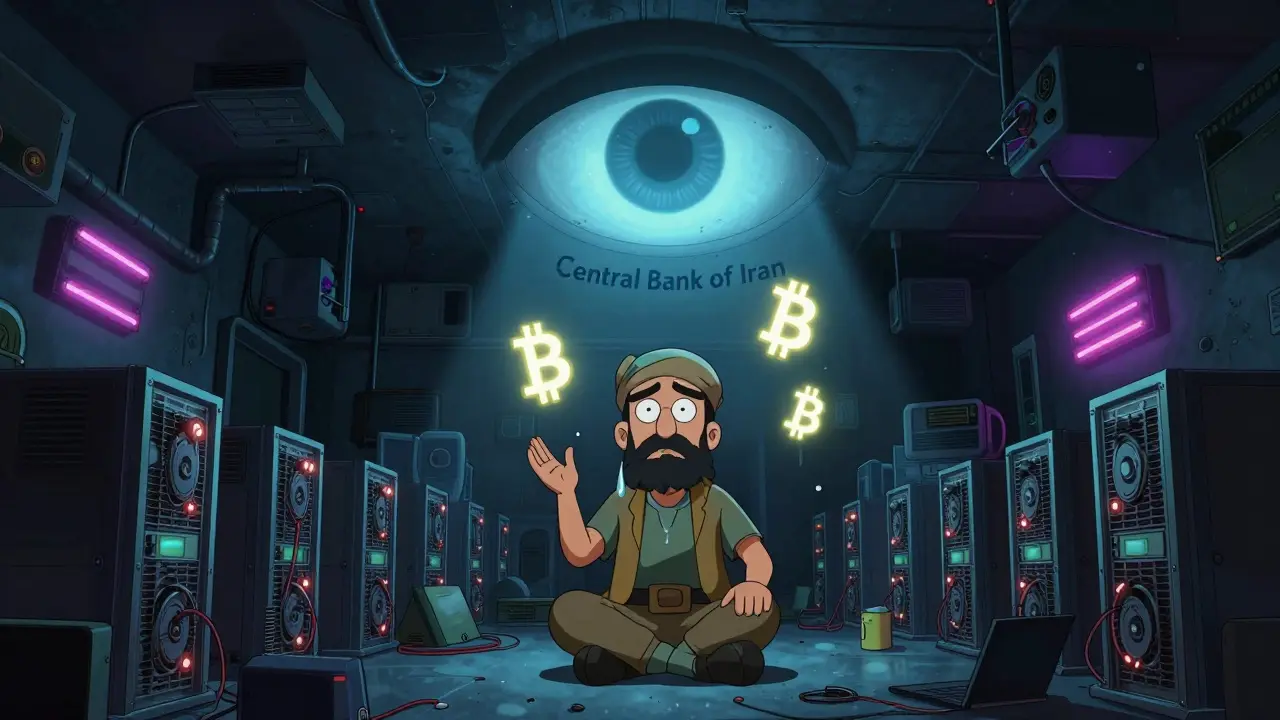
As of 2026, crypto payments in Iran are not outright banned-but they’re not truly allowed either. The government doesn’t say you can’t use Bitcoin or Ethereum to buy something online or pay a freelancer. But if you try, you’ll quickly hit walls. There’s no legal infrastructure. No trusted payment gateways. No protection. And if you slip up, you could be flagged by authorities. Iran’s approach to cryptocurrency isn’t about stopping it. It’s about controlling it. The state doesn’t want people bypassing sanctions or losing faith in the rial. But it also doesn’t want to lose the billions in mining revenue pouring in from cheap electricity. So it created a system where crypto exists-just not freely.
What’s Actually Legal?
Cryptocurrency mining is legal. But only if you follow the rules. Since 2019, Iran has allowed mining, recognizing that its low electricity prices (sometimes under 2 cents per kWh) make it one of the cheapest places on Earth to mine Bitcoin. The government even built special mining zones with subsidized power. But here’s the catch: you need a license from the Ministry of Industry, Mine and Trade. You must use approved hardware. And you’re required to sell all your mined coins directly to the Central Bank of Iran (CBI) at fixed prices. That’s not a market. It’s a state takeover. Miners don’t get to sell on exchanges or keep their coins. They get paid in rials, and the bank takes the crypto. In 2024, Iran was responsible for nearly 4.5% of global Bitcoin mining. But after rolling blackouts hit major cities in late 2024-blamed squarely on illegal mining operations-the government cracked down hard. Power usage caps were imposed. Unlicensed rigs were seized. Some miners were jailed.Can You Use Crypto to Pay for Goods or Services?
No. Not really. In December 2024, the Central Bank shut down every website and app that let Iranians convert rials into crypto or vice versa. That meant platforms like Nobitex, the country’s largest exchange, lost their payment channels. People couldn’t deposit rials to buy Bitcoin. They couldn’t cash out crypto into cash. Then, in January 2025, the CBI unblocked those gateways-but only if they connected directly to a government API. Now, every transaction flows through a state-controlled system. The bank sees your IP address, your ID, your transaction history, and the exact time you bought or sold. No anonymity. No privacy. No bypass. This isn’t about security. It’s about control. The government wants to track every crypto dollar moving in and out of the country. So while you technically can now trade crypto for rials, you can’t use that crypto to pay a merchant, buy a car, or tip a content creator. There’s no legal framework for that. No merchant accepts Bitcoin as payment. No app lets you pay your rent in Ethereum.Why Is Iran So Strict?
Iran has been under international sanctions since the 1970s, but they tightened dramatically after 2018, cutting the country off from SWIFT, global banks, and foreign currency reserves. Iranians started turning to crypto-not because they loved blockchain, but because they had no other way to send money abroad or protect their savings. Bitcoin became a lifeline. People used it to buy medicine from overseas, pay for online courses, or send money to family in Turkey or the UAE. By 2020, Iranians were trading $16-20 million daily across 12 different cryptocurrencies. But the rial kept crashing. Inflation hit 50% in 2023. By 2025, it was over 60%. The government saw crypto as a threat to its control over money. So they didn’t ban it. They captured it.
What About Advertising?
In February 2025, Iran imposed a nationwide ban on all cryptocurrency advertising. No more YouTube videos. No more billboards. No more Instagram ads. No more sponsored posts on Telegram. Even crypto-themed memes were removed from public forums. This is one of the strictest advertising bans in the world. It’s not meant to educate people. It’s meant to scare them away. The government doesn’t want new users joining the market. They want only the existing miners-and the ones who already trade through the approved, monitored channels.The Digital Rial: Iran’s Answer to Crypto
While cracking down on Bitcoin, Iran is quietly building its own digital currency: the Digital Rial. Unlike Bitcoin, the Digital Rial isn’t decentralized. It’s not mined. It’s issued and controlled entirely by the Central Bank. It’s designed to replace cash, not compete with crypto. The government says it will make payments faster and reduce reliance on the U.S. dollar. But in reality, it’s a tool for surveillance. Every Digital Rial transaction will be recorded. Every purchase tracked. Every transfer monitored. There’s no anonymity. No privacy. And unlike crypto, you can’t send it outside Iran. It’s meant to keep money inside the system-under state control.How Do Iranians Still Use Crypto?
Despite all the restrictions, crypto use hasn’t disappeared. It’s just gone underground. Most Iranians who still trade crypto use VPNs to access foreign exchanges like Binance or Kraken. They buy crypto abroad, store it in wallets they control, and use peer-to-peer networks to trade with others. Some use local Telegram groups to swap crypto for cash. Others pay for services via crypto-to-crypto trades-like sending USDT to a freelancer in Turkey, who then sends rials to a local middleman in Iran. It’s messy. It’s risky. And it’s not legal. But for many, it’s the only way to protect their savings from inflation or send money to relatives abroad.






Felicia Eriksson
Honestly? I'm just impressed Iranians are finding ways to make it work despite everything. Crypto isn't perfect, but it's giving people real agency when the system's rigged against them.
We take financial freedom for granted.