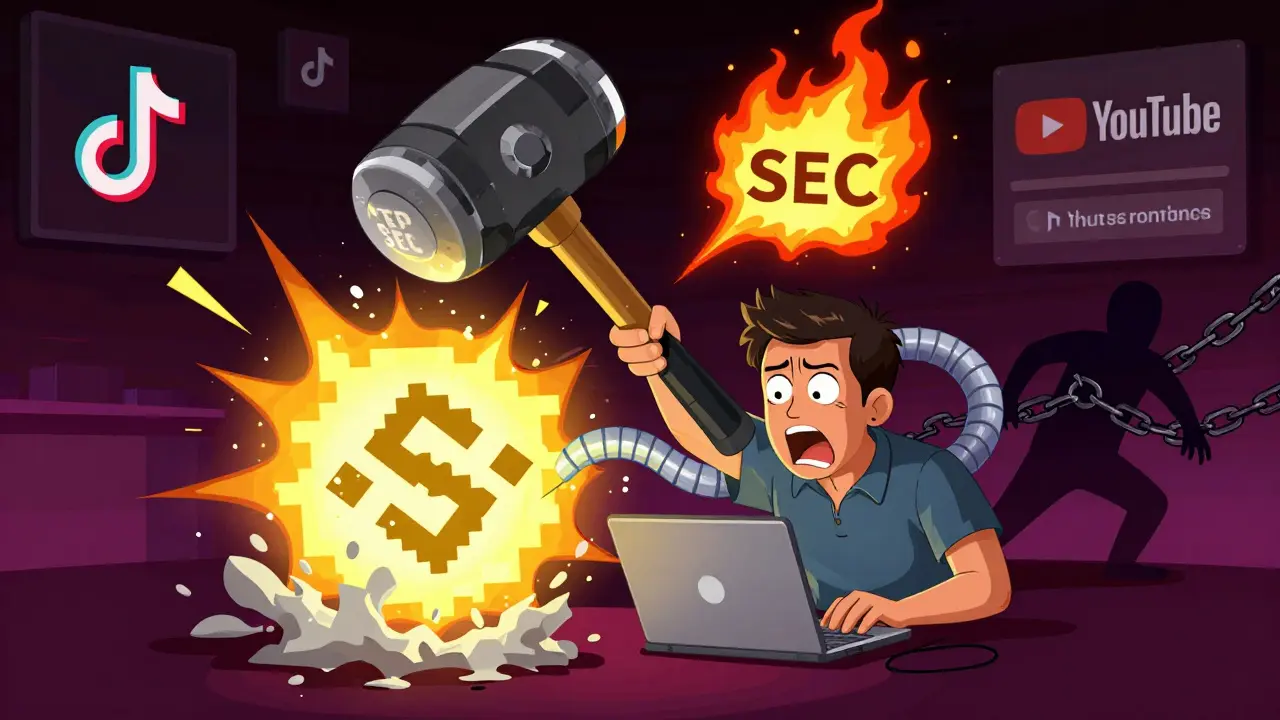
By early 2026, if you're in the Philippines and trying to trade on Binance or Bitget, you're already operating outside the law. The Binance platform has been completely blocked since March 2024, and while Bitget hasn't been named in official enforcement notices, it's under the same regulatory hammer. The Philippines Securities and Exchange Commission (SEC) is no longer issuing warnings - it's issuing penalties.
Why Binance Got Blocked
Binance didn't get banned because it was shady - it got banned because it refused to play by the rules. In November 2023, the SEC sent a clear message: register or get blocked. Binance ignored it. By March 2024, the National Telecommunication Commission (NTC) cut off access to Binance's website and app for all users in the Philippines. The reason? Binance was offering investment products without a license. That’s not just risky - it’s illegal under Philippine law.
The SEC didn’t stop there. They found that Binance was still running ads on Facebook, TikTok, and YouTube, with influencers pushing trading accounts to Filipinos. The regulator made it clear: anyone promoting Binance - even as a content creator - could be held criminally liable. That’s not a threat. That’s a legal fact.
Bitget Is Next in Line
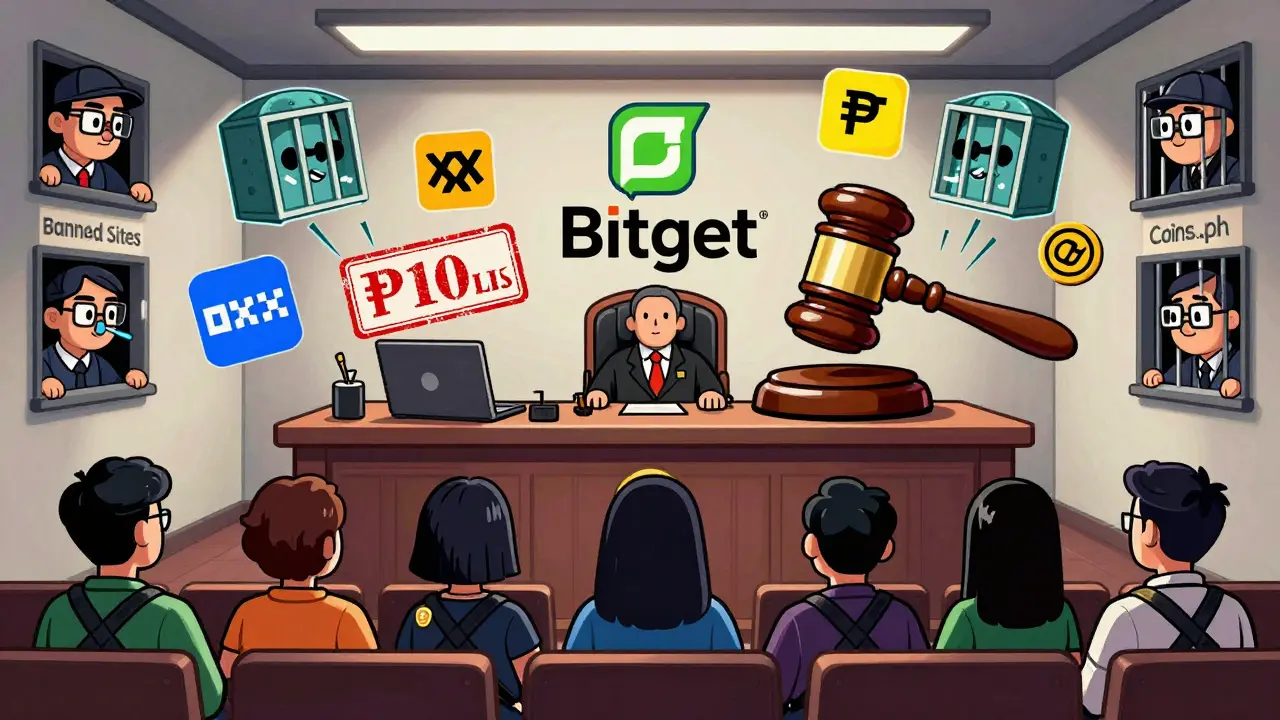
Bitget hasn’t been named in the August 2025 enforcement list - but that doesn’t mean it’s safe. The SEC’s new rules, laid out in Memorandum Circular No. 4 and No. 5 in May 2025, apply to every cryptocurrency exchange serving Filipino users. There’s no exception for size, popularity, or location. If you’re a crypto exchange and you have Filipinos trading on your platform without registering, you’re breaking the law.
Bitget operates exactly like Binance: no physical office in the Philippines, no local license, no monthly financial reporting to regulators. Under the new rules, that’s enough to get you blocked. The SEC’s pattern is clear: warn → ignore → block → fine. OKX, Bybit, KuCoin, and Kraken were all named in August 2025. Bitget is just one step behind.
The New Rules: What Exchanges Must Do
The Crypto Asset Service Provider (CASP) framework, which took effect on July 5, 2025, changed everything. Here’s what any exchange needs to legally operate in the Philippines:
- Register as a domestic corporation in the Philippines
- Have a physical office with staff on the ground
- Maintain a minimum capital of ₱100 million (about $1.8 million USD)
- Keep customer funds completely separate from company funds
- Submit detailed financial reports every month
Violations? Fines start at ₱50,000 and can go up to ₱10 million per offense. If you keep operating illegally, you pay ₱10,000 per day - until you stop. That’s not a warning. That’s a countdown.
What Happens to Users?
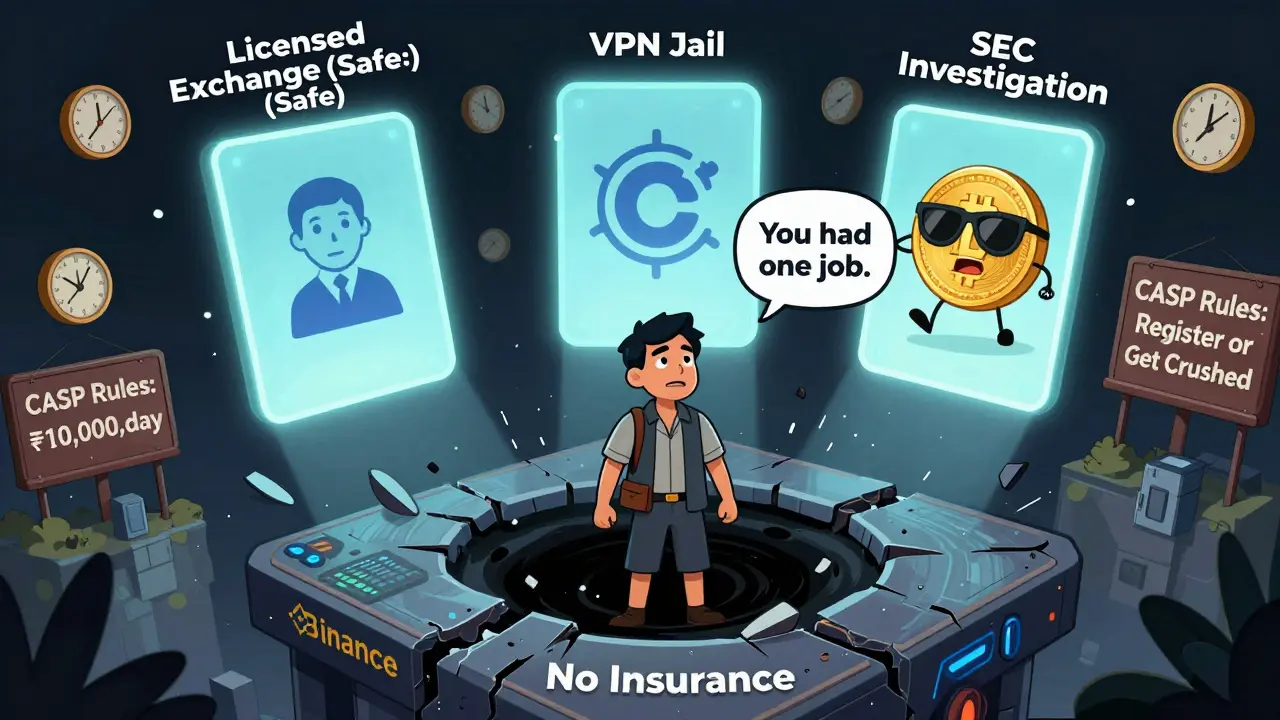
Most Filipinos didn’t stop trading just because Binance was blocked. Many switched to VPNs - apps that hide your real location and let you connect to servers in countries where Binance still works. It’s common. It’s easy. And it’s risky.
VPN providers now advertise services like "Binance Access Philippines" or "Trade Binance Securely in PH." But here’s the catch: the SEC says using these tools to access banned platforms could make you complicit in illegal activity. You’re not just bypassing a website - you’re bypassing a court-ordered ban. If the government decides to go after users (and they have the legal power to), you could face investigation.
There’s also the risk of losing your money. Binance and Bitget aren’t regulated here. If either platform collapses, freezes funds, or gets hacked, you have zero legal recourse. No deposit insurance. No government protection. Just a digital wallet with no safety net.
What Are the Alternatives?
There are licensed crypto platforms operating legally in the Philippines. One of them is PesoNet, a local exchange registered under the CASP framework. Others include Coins.ph and PDAX - both fully compliant, with physical offices, regulated custody, and real customer support.
These platforms don’t offer the same trading pairs or leverage as Binance. But they offer something more valuable: safety. Your funds are protected. Your trades are reported. And if something goes wrong, you can file a complaint with the SEC.
Regional Trends: It’s Not Just the Philippines
Thailand blocked five exchanges in May 2025. Indonesia raised taxes on offshore crypto trades to 1%. Singapore tightened licensing rules. The Philippines isn’t alone - it’s leading the charge in Southeast Asia. The message is the same: if you’re a global exchange and you want to serve customers here, you must become local.
Binance’s global troubles mirror this. It’s banned in the U.S., the UK, Canada, the Netherlands, Nigeria, and Belgium. It’s fined $4.3 billion by the U.S. Treasury. The pattern isn’t random. It’s a global reckoning. Exchanges that refuse to comply with local laws are being pushed out.
What Should You Do?
If you’re still using Binance or Bitget in the Philippines:
- Withdraw your funds now - don’t wait for a sudden block.
- Move to a licensed local exchange like Coins.ph or PDAX.
- Stop using VPNs to access banned platforms - it’s not worth the risk.
- Report any influencer or promoter pushing Binance - they’re breaking the law too.
The window to act quietly is closing. The SEC is watching. The penalties are real. And the legal framework is no longer a suggestion - it’s the law.
Is Binance completely blocked in the Philippines?
Yes. Since March 2024, Binance’s website and app have been blocked by the National Telecommunication Commission at the request of the Philippines SEC. Accessing it via VPN is technically possible but violates local law and exposes users to legal risk.
Is Bitget banned in the Philippines?
Bitget hasn’t been officially named in enforcement notices yet, but it operates without a CASP license. Under the May 2025 regulations, all unregistered exchanges serving Filipino users are subject to the same penalties as Binance. A block is likely if Bitget doesn’t register soon.
Can I use a VPN to access Binance in the Philippines?
Technically yes, but legally risky. The SEC has warned that using tools to bypass bans may make users liable for aiding illegal activity. There’s no guarantee of safety, and your funds remain unprotected if the platform fails.
What happens if I don’t withdraw from Binance?
Your funds are at risk. Binance is not regulated in the Philippines, so there’s no insurance, no legal recourse, and no protection if the platform freezes withdrawals, gets hacked, or shuts down. The SEC advises users to move assets to licensed platforms immediately.
Are there any legal crypto exchanges in the Philippines?
Yes. Coins.ph, PDAX, and PesoNet are fully licensed under the CASP framework. They have local offices, comply with reporting rules, and protect customer funds. They don’t offer high-leverage trading, but they offer safety and legal protection.
What are the penalties for unlicensed exchanges?
Fines range from ₱50,000 to ₱10 million per violation. Daily penalties of ₱10,000 apply for ongoing violations. Exchanges may also face criminal charges, asset freezes, and permanent bans.
Why did the Philippines create the CASP framework?
To protect Filipinos from losses caused by unregulated exchanges. After multiple global crypto collapses, the SEC designed the CASP rules to ensure exchanges hold customer funds separately, report finances monthly, and maintain real physical operations in the country - not just digital servers.
Can influencers get in trouble for promoting Binance?
Yes. The SEC explicitly states that anyone promoting, recruiting, or endorsing Binance - including social media influencers - can be held criminally liable. This includes paid ads, affiliate links, and even casual recommendations.
How many countries have banned Binance?
Binance is banned or restricted in at least 17 countries, including the U.S., UK, Canada, Netherlands, Nigeria, and Belgium. It also operates under sanctions in Cuba, Iran, Syria, and North Korea.
What should I do if I lost money on Binance?
There is no official recourse in the Philippines. Binance is not licensed, so the SEC cannot help recover funds. Your best option is to move remaining assets to a licensed exchange and avoid further use of unregulated platforms.


AJITH AERO
Lmao so the SEC is finally doing something. Took long enough. Filipinos still using Binance like it's a church and VPNs are their holy water. Classic.