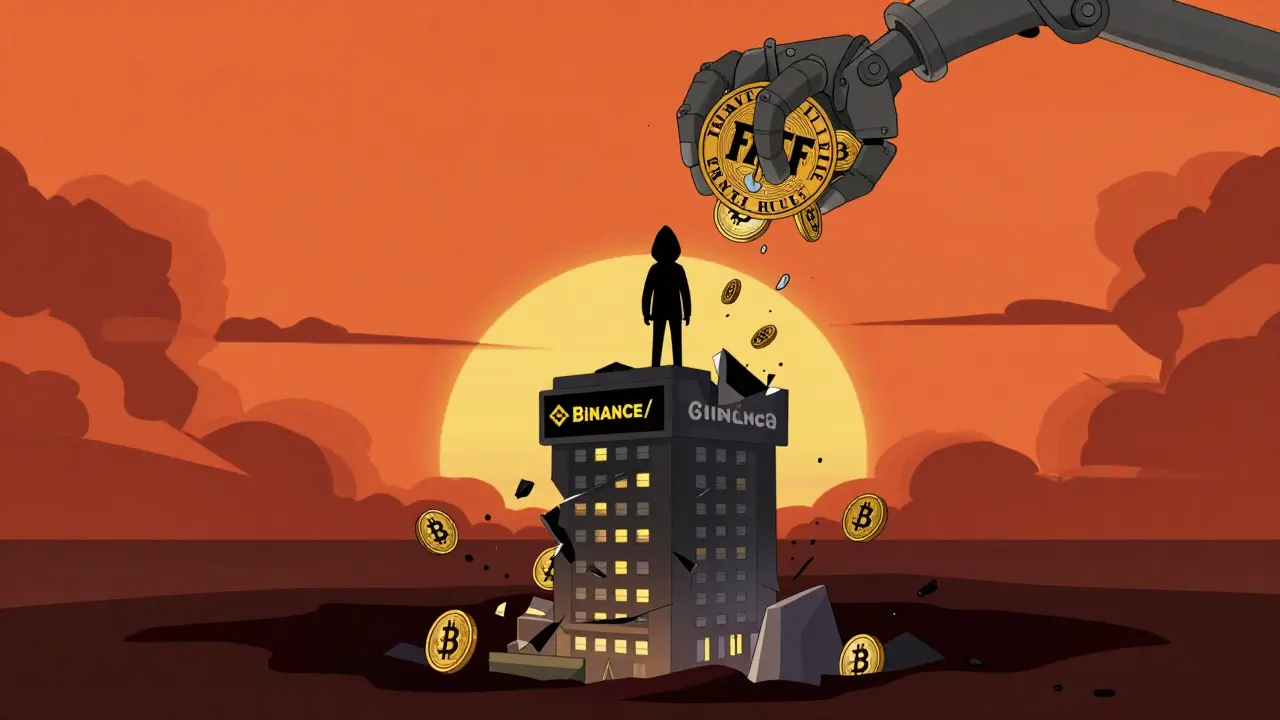
By 2025, Monero and Zcash were handling over $250 billion in transactions globally. But for users who rely on these coins for true financial privacy, the landscape has changed dramatically. Governments aren’t just watching-they’re shutting down access. Exchanges are delisting them. Regulators are labeling them as high-risk. And in many places, using them is no longer just risky-it’s becoming impossible.
Why Monero and Zcash Are Targeted
Monero doesn’t give you a choice. Every transaction is private. Ring signatures mix your transaction with others. Stealth addresses hide where the money went. RingCT hides the amount. There’s no opt-out. That’s why regulators see it as a threat. If you can’t trace where money came from or where it’s going, you can’t enforce taxes, stop drug sales, or block terrorist funding. And that’s exactly what Monero does-by design. Zcash is different. It lets you choose: public or private. You can send a transparent transaction like Bitcoin, or use zk-SNARKs to fully shield it. But here’s the catch: most users don’t use shielding. They stick with public addresses because they’re easier, faster, and compatible with wallets and exchanges. That means even though Zcash has the tech to be fully private, its real-world anonymity is weak. Regulators know this. They see Zcash as a hybrid-partially compliant, partially dangerous. And that makes it a target for partial bans.What’s Actually Being Done
Over 97 countries have tightened rules around privacy coins since 2024. The biggest driver? The Financial Action Task Force (FATF) Travel Rule. Originally meant for traditional banks, it now requires crypto platforms to track and report transfers over $1,000. For Monero? Impossible. For Zcash? Only if you use transparent addresses. So exchanges had to choose: comply or lose access to global banking systems. Binance and Kraken both removed Monero and Zcash from their platforms in early 2025. That wasn’t a coincidence. It was a legal necessity. Banks refused to process deposits from exchanges that still listed these coins. So the exchanges cut them loose. The result? A 19% spike in peer-to-peer (P2P) trading, especially in countries like Nigeria, Argentina, and Venezuela. People aren’t giving up-they’re just moving underground. The European Union’s MiCA regulation made things worse. It requires all crypto assets to be traceable. Privacy coins don’t fit. So EU-based exchanges can’t list them. Even if a user wants to trade Monero, they can’t do it legally through a regulated platform in Germany, France, or Spain. That’s not a suggestion-it’s a legal ban.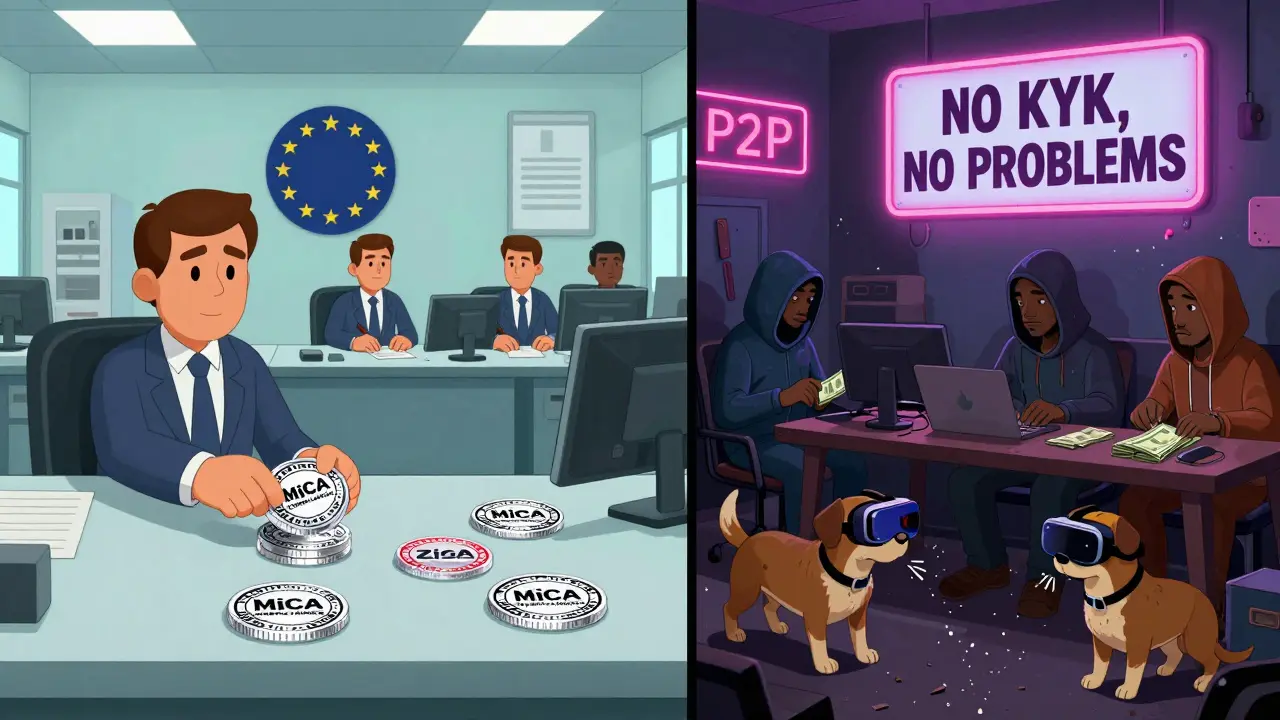
The Real-World Impact
Darknet markets still use Monero. Fentanyl sellers on Abacus Market? They use it. Why? Because law enforcement can’t follow the money. That’s not theoretical-it’s documented. U.S. Treasury reports show Monero transactions linked to over 60% of crypto-related drug sales in 2024. That’s why the DEA and IRS are pushing for outright bans. Zcash isn’t immune. Even though it offers transparency, its shielded transactions still show up on blockchain analysis tools. Researchers found that just 8% of Zcash addresses are shielded. That means 92% are public-and traceable. So when regulators demand KYC, users who care about privacy just stop using Zcash. That’s why Zcash’s active addresses dropped 8% in 2025. The tool exists, but the people aren’t using it.Where Privacy Coins Still Survive
Not all countries are banning them. Singapore and Switzerland are running regulated sandboxes. These aren’t free-for-alls. They’re controlled environments where privacy coin developers can test new compliance tools under supervision. One project in Zurich is testing a version of Zcash that lets regulators decrypt specific transactions with a court order-without seeing all others. Think of it like a backdoor, but only usable by courts, not police. These sandboxes aren’t loopholes-they’re experiments. If they work, they could become global models. If they fail, they’ll be shut down. But right now, they’re the only places where privacy coin innovation is still legal.
The Future: Compliance or Collapse?
The industry is trying to adapt. Some developers are working on selective disclosure-a way to prove you’re not laundering money without revealing your entire transaction history. Imagine showing a regulator: “Here’s proof this money came from a legal source,” but not showing where you got it from originally. It’s possible with advanced zero-knowledge proofs. But it’s not ready. And it’s expensive to run. Most exchanges won’t adopt it. Too slow. Too costly. Too risky. So the pressure keeps building. Analysts predict another 20% drop in privacy coin listings by the end of 2026. Monero will likely stay on fewer than 10 major exchanges globally. Zcash might survive as a hybrid asset-mostly public, rarely private. The real question isn’t whether privacy coins will disappear. It’s whether users will find new ways to use them. P2P markets, decentralized exchanges, and local cash trades are growing fast. In places where banking is unstable or corrupt, privacy coins aren’t a luxury-they’re a necessity.What This Means for You
If you’re holding Monero or Zcash: you’re not alone. But you’re also not safe. Regulators are watching. Exchanges are removing support. Banks are cutting ties. Your wallet isn’t illegal-but moving money through regulated channels might be. If you’re trading: avoid centralized exchanges. Use P2P platforms like LocalMonero or Bisq. They don’t require KYC. They don’t report to banks. But they come with risks: scams, no chargebacks, no customer service. If you’re developing or investing: pay attention to Singapore and Switzerland. They’re the only places where privacy coin tech is still being built legally. Everything else is a holding pattern. Privacy isn’t dead. But it’s been pushed to the edges. And the edges are getting narrower.Can I still buy Monero or Zcash legally?
In most countries, you can still buy them on peer-to-peer platforms or non-compliant exchanges. But if you use a regulated exchange like Coinbase or Binance, you likely can’t anymore. They were removed in 2025. In the EU, U.S., UK, Canada, and Australia, buying these coins through licensed platforms is effectively banned. In Singapore and Switzerland, you can trade them under strict oversight in sandbox environments.
Why is Zcash being treated differently than Monero?
Zcash offers optional privacy, meaning most users don’t use it. Regulators see this as a loophole-they can monitor the public transactions and ignore the shielded ones. Monero, on the other hand, makes privacy mandatory. Every transaction is hidden, so there’s no way to comply. That’s why Monero faces total delisting, while Zcash is often restricted but not fully banned.
Do privacy coins actually help criminals?
Yes, but not as much as people think. While Monero is used on darknet markets, most criminal crypto activity still happens on Bitcoin and Ethereum because they’re more widely used. Privacy coins account for about 11% of all crypto transactions. That means 89% of illicit activity happens on public chains. But because privacy coins are harder to trace, regulators focus on them. It’s easier to ban Monero than to track millions of Bitcoin transfers.
Is there any way to use privacy coins without getting flagged?
Not through regulated services. If you want to avoid detection, you need to use decentralized or P2P methods: local cash trades, decentralized exchanges (like Uniswap with privacy bridges), or privacy-focused wallets that don’t connect to KYC systems. But these methods come with higher risk of fraud, loss, or technical failure. There’s no safe, legal, fully private way to use these coins in countries with strict crypto laws.
Will privacy coins be banned completely?
Not outright-yet. But they’re being pushed out of the mainstream. Exchanges, banks, and payment processors are dropping them. Governments are making it illegal to list them. The future of privacy coins lies in underground networks, decentralized systems, and countries with weak enforcement. In places like the U.S. or Germany, they’re becoming financial relics. In places like Nigeria or Venezuela, they’re becoming lifelines.




george chehwane
Let’s be real-regulators don’t hate privacy coins because they’re used by criminals. They hate them because they expose the fundamental lie of modern finance: that transparency equals security. Monero isn’t a tool for drug lords; it’s a mirror held up to the banking system’s naked emperor. Every time a government bans it, they’re admitting they can’t control the narrative. And that’s terrifying for institutions built on opacity. We’re not fighting for anonymity-we’re fighting for epistemic autonomy. The state wants to know where every dollar goes? Fine. But let’s not pretend it’s about crime. It’s about power. And power hates being questioned.
Also, Zcash’s ‘optional privacy’ is a corporate trap. Like offering a bulletproof vest that only works if you remember to zip it. No wonder 92% of users don’t bother. They’re not stupid. They just don’t trust the system enough to play along.