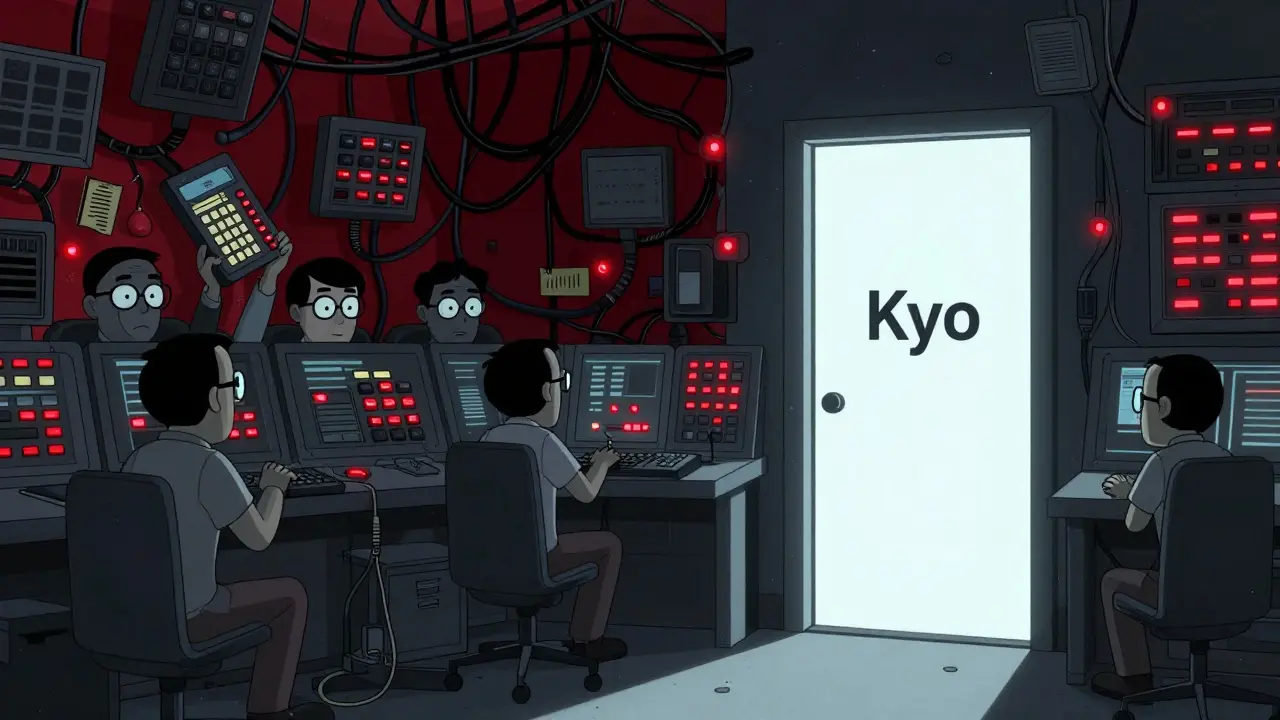
Most decentralized exchanges (DEXs) feel like they were built by engineers for engineers. You have to calculate voting power, wait for epochs to end, mint NFTs just to stake tokens, and pray you didn’t miss a deadline. Kyo Finance V3 is a decentralized exchange operating on the Soneium blockchain that attempts to strip away this complexity with a simplified vote-escrowed tokenomics model. It promises real-time staking without the usual headache of traditional ve-tokenomics.
But does it actually work? Or is it just another niche protocol riding the coattails of the Astar Network ecosystem? If you are looking to provide liquidity or trade on Soneium, you need to know what you are getting into. Here is the honest breakdown of Kyo Finance V3 as we move through 2026.
What Is Kyo Finance V3?
Kyo Finance V3 is an automated market maker (AMM) built specifically for the Soneium blockchain. Soneium is closely tied to the Astar Network community, positioning itself as part of a broader "superchain" vision. The platform launched its current iteration in early 2024, aiming to be the representative DEX for this ecosystem.
The core selling point is its approach to ve-tokenomics. In most DEXs like Curve Finance, you lock tokens for months to get voting power, which you then use to direct emissions. It is slow, clunky, and requires constant monitoring. Kyo Finance claims to simplify this by removing epochs, complex voting calculations, and NFT requirements. Instead, it uses a real-time staking-like mechanism. The goal is simple: optimize until you can’t optimize anymore.
However, simplicity often comes with trade-offs. While the interface might be cleaner, the underlying economic model relies heavily on the health of the Soneium ecosystem. If the network doesn’t grow, the incentives dry up.
Trading Volume and Liquidity: The Reality Check
This is where things get tricky. When reviewing any DEX, volume is king. Without volume, you face high slippage and low fees for liquidity providers. The data for Kyo Finance V3 is… inconsistent.
As of late 2025 and early 2026, different trackers show wildly different numbers. Some platforms report 24-hour volumes exceeding $72 million, suggesting a bustling marketplace. Others, like CoinGecko, show volumes closer to $900,000 with significant daily drops. This discrepancy is a red flag you should not ignore. It usually points to one of two things:
- Methodology differences: One tracker might count internal wash trading or bot activity as real volume, while another filters it out.
- Artificial inflation: Protocols sometimes incentivize bots to generate fake volume to attract users.
In reality, Kyo Finance V3 ranks around #248 globally by trading volume. That puts it far behind giants like Curve Finance or Aerodrome Finance. The platform lists only about 16 cryptocurrencies across 25 pairs. Most of the action happens in stablecoin pairs involving USDT, USDC.E, and WETH, or pairs involving the native ASTR token.
If you are trying to trade obscure altcoins, you will likely find yourself stuck. The liquidity is deep enough for major pairs but thin for anything else. For general crypto trading, this is not your go-to exchange. For specific Astar/Soneium ecosystem plays, it has a place.
| Feature | Kyo Finance V3 | Curve Finance | Aerodrome Finance |
|---|---|---|---|
| Blockchain | Soneium | Multi-chain (Ethereum, Arbitrum, etc.) | Base |
| Ve-Tokenomics Model | Simplified, Real-time | Complex, Epoch-based | Gauge Voting |
| Global Rank (Volume) | #248 | #18 | #92 |
| Token Selection | Limited (~16 tokens) | Extensive (350+) | Moderate |
| Best For | Astar/Soneium natives | Stablecoin arbitrage | Base ecosystem yield |
The "Sustainable LP Yield" Claim
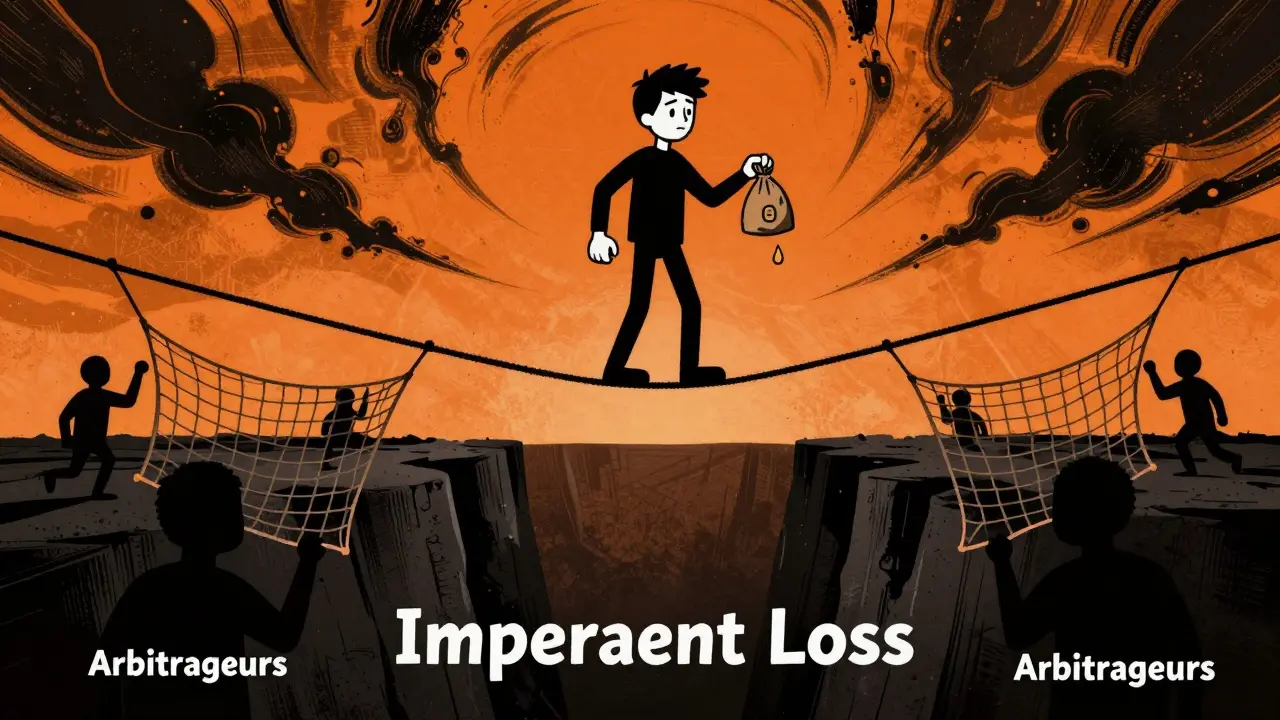
Kyo Finance makes a bold claim: it compensates liquidity providers for impermanent loss through cooperation with "aligned arbitrageurs." Impermanent loss is the bane of every LP’s existence. It happens when the price of assets in a pool diverges significantly from their entry price. Usually, you take the hit.
Kyo says it mitigates this risk. But here is the catch: the technical details of how this works are sparse. Independent analysts have raised eyebrows over this mechanism. Without seeing the actual contracts or revenue-sharing structures, it sounds more like marketing hype than a proven economic model. In DeFi, if it sounds too good to be true, it usually is. Proceed with caution and assume you could still suffer losses.

User Experience and Interface
On the surface, Kyo Finance V3 is clean. If you connect a Web3 wallet like MetaMask, you can swap tokens quickly. The transaction finality on Soneium is fast, which is a relief compared to congested networks like Ethereum mainnet. There are no mobile apps, so you are stuck using a browser extension or desktop wallet.
However, the "simplified" ve-tokenomics model still requires some knowledge. You need to understand how staking works in real-time versus locking periods. The platform provides basic tooltips, but there is no comprehensive help center or educational library. If you are new to DeFi, you might find yourself confused by the jargon. Support is limited to a Telegram link. There is no email support or ticketing system. If something goes wrong, you are on your own.
Security and Trust
Security in DeFi is never guaranteed. Kyo Finance operates on Soneium, which inherits security assumptions from the Astar Network ecosystem. However, the platform itself lacks extensive independent audits mentioned in public documentation. The trust score on aggregators is middling (around 5 out of an unspecified scale), which suggests average reliability at best.
Given the volume discrepancies and the niche nature of the project, smart money tends to stay away. Institutional adoption is non-existent. This is a retail-focused, community-driven project. That means higher risk. Always start with small amounts to test the waters before committing significant capital.
Who Should Use Kyo Finance V3?
This platform is not for everyone. Here is who fits the profile:
- Astar Network Believers: If you hold ASTR or vASTR and want to participate in the Soneium ecosystem, Kyo is the primary venue.
- Yield Farmers Seeking Simplicity: If you are tired of managing Curve gauges and want a simpler staking interface, Kyo offers a lighter touch.
- Soneium Early Adopters: Those betting on Soneium becoming a major "superchain" hub might find early opportunities here.
Who should avoid it? Anyone looking for broad altcoin exposure, deep liquidity for large trades, or robust customer support. If you need to move $100,000 worth of tokens instantly, Kyo will slip you hard.
Final Verdict
Kyo Finance V3 is an interesting experiment in simplifying ve-tokenomics. It removes the friction of epochs and NFTs, offering a smoother experience for liquidity providers on Soneium. However, it suffers from low global volume, limited token selection, and questionable transparency around its impermanent loss compensation claims.
It is a niche tool for a niche ecosystem. Use it if you are already invested in Astar Network and Soneium. Do not use it as your primary DEX for general trading. Keep your expectations realistic, watch the volume metrics closely, and never invest more than you can afford to lose in unproven protocols.
Is Kyo Finance V3 safe to use?
Like all decentralized exchanges, Kyo Finance V3 carries inherent risks. While it operates on the Soneium blockchain, which is linked to Astar Network, the platform lacks extensive public audit reports and has seen discrepancies in reported trading volumes. It is considered moderate-risk. Always verify contract addresses yourself and start with small transactions.
How does Kyo Finance V3 differ from Curve Finance?
The main difference lies in the ve-tokenomics model. Curve Finance uses a complex system involving epochs, voting power, and NFTs to manage liquidity incentives. Kyo Finance V3 simplifies this by removing epochs and NFTs, allowing for real-time staking-like mechanisms. Additionally, Kyo is focused exclusively on the Soneium/Astar ecosystem, whereas Curve operates across multiple major blockchains.
Why are the trading volume numbers for Kyo Finance so different across sites?
Discrepancies in DEX volume reporting are common. They often result from different methodologies in counting trades, such as whether wash trading or bot activity is included. Significant differences between platforms like CryptoMarketCap and CoinGecko can indicate artificial volume inflation or tracking errors. Users should look at consistent trends rather than single-day spikes.
Can I use Kyo Finance V3 on my mobile phone?
Currently, Kyo Finance V3 does not have a dedicated mobile application. You must access the platform via a web browser on your mobile device or desktop, connecting through a compatible Web3 wallet like MetaMask. Ensure your mobile wallet is properly configured to interact with the Soneium network.
What is the "Sustainable LP Yield" mechanism?
This is a claimed feature where Kyo Finance compensates liquidity providers for impermanent loss by cooperating with "aligned arbitrageurs." However, detailed technical documentation on how this works is limited. Independent analysts suggest treating this claim with skepticism until transparent proof of the economic model is provided.
Which tokens can I trade on Kyo Finance V3?
The platform supports a limited selection of approximately 16 cryptocurrencies. These primarily include stablecoins like USDT and USDC.E, wrapped ETH (WETH), and tokens native to the Astar Network ecosystem such as ASTR and vASTR. It is not suitable for trading a wide variety of altcoins.




Jan Gilmore
Look, I've been in DeFi since the DAO hack and let me tell you something about these 'simplified' models. They are never actually simple, they just hide the complexity until it explodes in your face. The real issue here is that Soneium is trying to be a superchain without having the liquidity depth to support it. You cannot build a sustainable DEX on thin air. The volume discrepancies aren't just methodology differences, they are a symptom of a dying ecosystem trying to look alive for one more quarter.