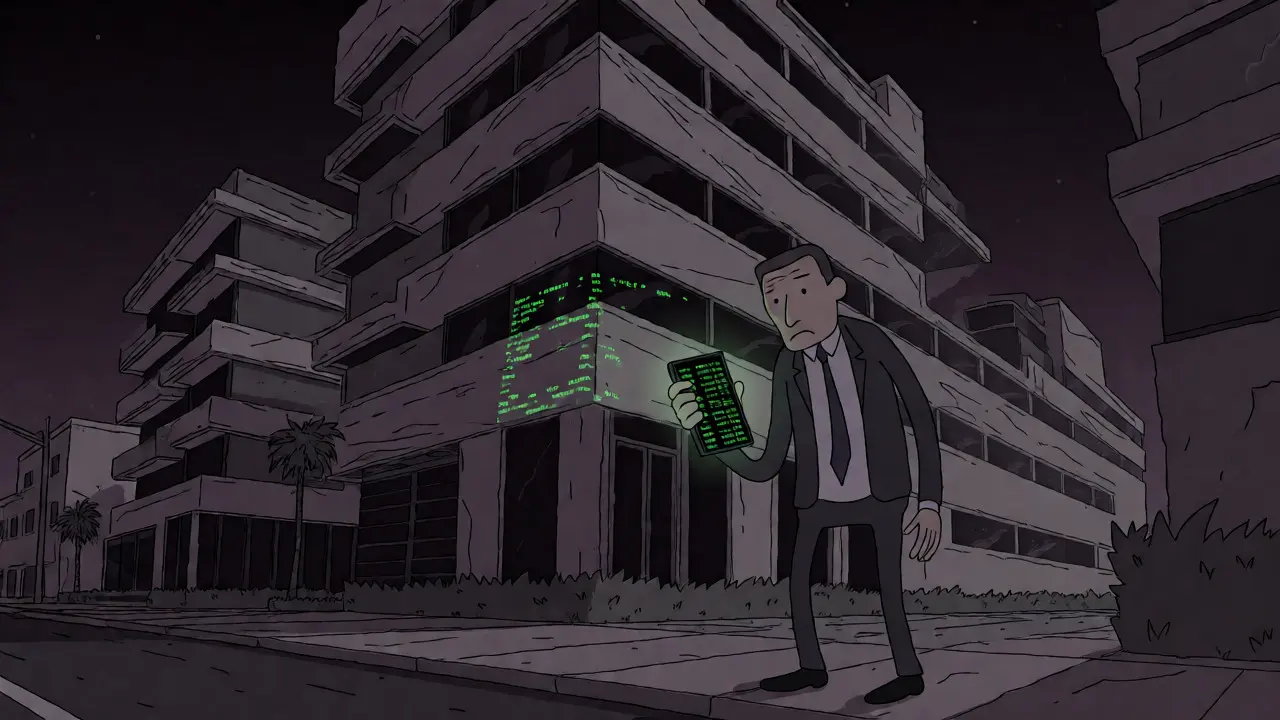
Imagine buying a penthouse in Miami with a single click, only to find out later that you own a digital receipt but not the actual bricks and mortar. This isn't a hypothetical scenario; it’s a real risk facing early adopters of Real Estate NFTs. These non-fungible tokens promise to revolutionize how we buy, sell, and manage property by using blockchain technology to record ownership. But here is the catch: owning an NFT doesn’t automatically mean you hold the legal title to the physical asset in many jurisdictions. The gap between cryptographic proof on a ledger and traditional property law is where most deals fall apart.
You might think this is just tech jargon, but the stakes are high. In 2021, a Miami penthouse sold for $654,000 via Propy’s platform, marking one of the first major real-world property sales through an NFT. Yet, as of late 2024, only three U.S. states-Wyoming, Vermont, and Ohio-have enacted specific laws recognizing blockchain-based property records. If you’re looking to invest or tokenize a property, you need to understand the complex web of securities laws, jurisdictional conflicts, and registry integration issues that define this space today.
The Core Legal Distinction: Token vs. Title
Let’s clear up the biggest misconception right away. An NFT is a digital certificate stored on a blockchain. It proves you control a specific token ID. It does not inherently prove you own the land, building, or condo unit represented by that token. This distinction is critical. The Law Commission of England and Wales clarified this in their 2023 consultation paper, stating that while crypto tokens can be recognized as personal property, this recognition applies to the token itself, not the underlying real-world asset. Owning the key doesn’t mean you own the house if the landlord hasn’t handed over the deed.
To bridge this gap, most legitimate projects use a Special Purpose Vehicle (SPV). Think of an SPV as a legal shell company, often a Delaware LLC in the United States, that actually holds the title to the property. The NFT then represents shares or membership interests in that SPV. According to a 2024 analysis by LegalNodes, 89% of tokenized real estate projects in the U.S. used this structure. Why? Because it allows the project to comply with existing corporate and property laws while still offering the benefits of blockchain transparency. Without this wrapper, you’re essentially holding a IOU that has no enforceable claim against the physical asset in court.
Securities Law: The Regulatory Minefield
Here is where things get tricky for investors. If your NFT promises profit from rental income or property appreciation, regulators like the U.S. Securities and Exchange Commission (SEC) likely classify it as a security. This triggers strict compliance requirements under the Securities Act. You can’t just sell these tokens to anyone; you usually need to rely on exemptions like Regulation D (for accredited investors) or Regulation A+ (for broader retail offerings).
The SEC has been active. Between 2021 and 2024, they filed 17 enforcement actions against real estate tokenization projects that failed to register properly. A landmark case, SEC v. REcoin Foundation, established that any expectation of profit derived from the efforts of others triggers securities classification. This means if you’re marketing a tokenized apartment as a passive investment vehicle, you’re playing in the securities sandbox. Utility NFTs, which might only grant access rights like vacation home usage without profit participation, face fewer hurdles but still require careful legal structuring to avoid being reclassified.

Jurisdictional Fragmentation and Registry Integration
Property law is local. A deed recorded in New York County doesn’t matter in Los Angeles County. Blockchain, by contrast, is borderless. This creates friction. In 2022, a Wyoming property transfer failed because the county recorder rejected the blockchain deed due to a lack of traditional notarization. While Wyoming has since updated its laws to require QR codes linking NFT deeds to traditional records, most counties aren’t there yet.
This fragmentation leads to regulatory arbitrage. The Blockchain Association noted in 2025 that identical tokenized properties in different states required completely different disclosure documents. For institutional investors, this inconsistency adds risk. The CRE Finance Council estimated that the lack of standardized frameworks increases transaction risk by 37%. If you’re based in Boulder, Colorado, you know that local zoning and recording rules are strict. Trying to force a global blockchain solution into a hyper-local legal system requires hybrid models where smart contracts trigger traditional title transfers, a process currently managed by platforms like Propy in select counties.
Global Approaches: From Switzerland to China
If you’re looking outside the U.S., the landscape shifts dramatically. Switzerland’s FINMA classifies real estate NFTs as securities if they offer profit participation, requiring listing on regulated exchanges like SIX Digital Exchange. The UAE took a bold step in September 2023 by approving the world’s first fully regulated real estate NFT exchange in Dubai, tokenizing 127 properties by late 2024.
In stark contrast, China banned cryptocurrencies in 2022, explicitly prohibiting NFTs representing real-world assets. Despite significant blockchain development activity, legally recognized real estate NFT transactions in China remain near zero. Europe is moving toward harmonization with the MiCA II framework, expected to pass in Q3 2025, which will mandate title registry integration for real-world asset tokenization across the EU. This highlights a key takeaway: location dictates legality. Always check the local regulatory stance before assuming a tokenized deal is valid.

Practical Implementation Costs and Pitfalls
Tokenizing a property isn’t cheap. Setting up the legal infrastructure costs money. Establishing a compliant SPV typically runs $15,000 to $25,000 in legal fees alone. Add KYC/AML compliance protocols, which cost another $8,000 to $12,000, and you’re already deep in expenses before minting a single token. Smart contract audits from firms like OpenZeppelin add further costs.
User feedback from communities like r/RealEstateNFT reveals practical headaches. 68% of surveyed users reported difficulties with title companies refusing to recognize blockchain transfers. One user documented a 147-day delay in a Colorado property transfer simply because the county recorder was unfamiliar with NFT documentation. Tax treatment is another minefield. Crypto dividends don’t fit neatly into traditional tax brackets, leading to complications for fractional owners receiving quarterly rental income.
| Feature | Direct NFT Ownership | SPV-Based Tokenization | Security Token Offering (STO) |
|---|---|---|---|
| Legal Recognition | Low; varies by county/state | High; uses existing corporate law | High; complies with securities regs |
| Investor Base | Niche crypto-native buyers | Accredited & Retail (Reg D/A+) | Broad Retail & Institutional |
| Compliance Cost | Low upfront, high dispute risk | $15k-$25k setup + ongoing | $20k-$50k setup + audit heavy |
| Liquidity | Secondary market dependent | Moderate; restricted transfers | High; exchange-listed potential |
| Risk Factor | Title defect / Registry rejection | Corporate veil piercing | SEC enforcement action |
Future Outlook and Key Takeaways
The market is growing. Global real estate tokenization volume hit $14.2 billion in 2024, up from $3.7 billion the previous year. Major players like BlackRock are entering the space, demanding dual on-chain/off-chain title verification. However, widespread adoption hinges on solving three legal gaps: standardized cross-jurisdictional registry integration, clear tax frameworks, and international dispute resolution mechanisms.
For now, treat real estate NFTs as experimental financial instruments wrapped in legal shells. They offer efficiency-like 92% faster capital distribution for rental income-but come with higher compliance costs and uncertainty. Don’t assume code is law until your local county recorder agrees.
Does owning a real estate NFT give me legal title to the property?
Not necessarily. In most jurisdictions, the NFT represents ownership of a Special Purpose Vehicle (SPV) that holds the title, rather than the direct deed to the physical property. You must verify that the SPV's operating agreement and the local county records align with the blockchain data to ensure legal enforceability.
Are real estate NFTs considered securities?
Often, yes. If the NFT offers profit participation, such as rental income or appreciation gains, the SEC typically classifies it as a security. This requires compliance with regulations like Reg D or Reg A+, limiting who can buy them and imposing strict disclosure requirements.
Which U.S. states have laws supporting blockchain property records?
As of late 2024, Wyoming, Vermont, and Ohio have enacted specific legislation recognizing blockchain-based property records. Other states may allow it under general electronic records laws, but acceptance varies significantly by individual county recorder offices.
What are the main risks of investing in tokenized real estate?
Key risks include jurisdictional conflicts where local laws reject blockchain deeds, unclear tax treatment of crypto-based rental income, and liquidity issues if secondary markets are thin. Additionally, smart contract bugs or failures in the off-chain legal wrapper can result in loss of value despite holding the token.
How much does it cost to legally tokenize a property?
Legal compliance costs for tokenizing a $1 million property average around $47,300. This includes setting up the SPV ($15k-$25k), KYC/AML compliance ($8k-$12k), smart contract audits, and ongoing administrative fees. These costs are roughly 18% higher than traditional securitization methods.






Sue Howard
Wow, another article telling me that my shiny new digital receipt is worth less than the paper deed I burned in a bonfire last weekend. Truly revolutionary stuff here, folks.