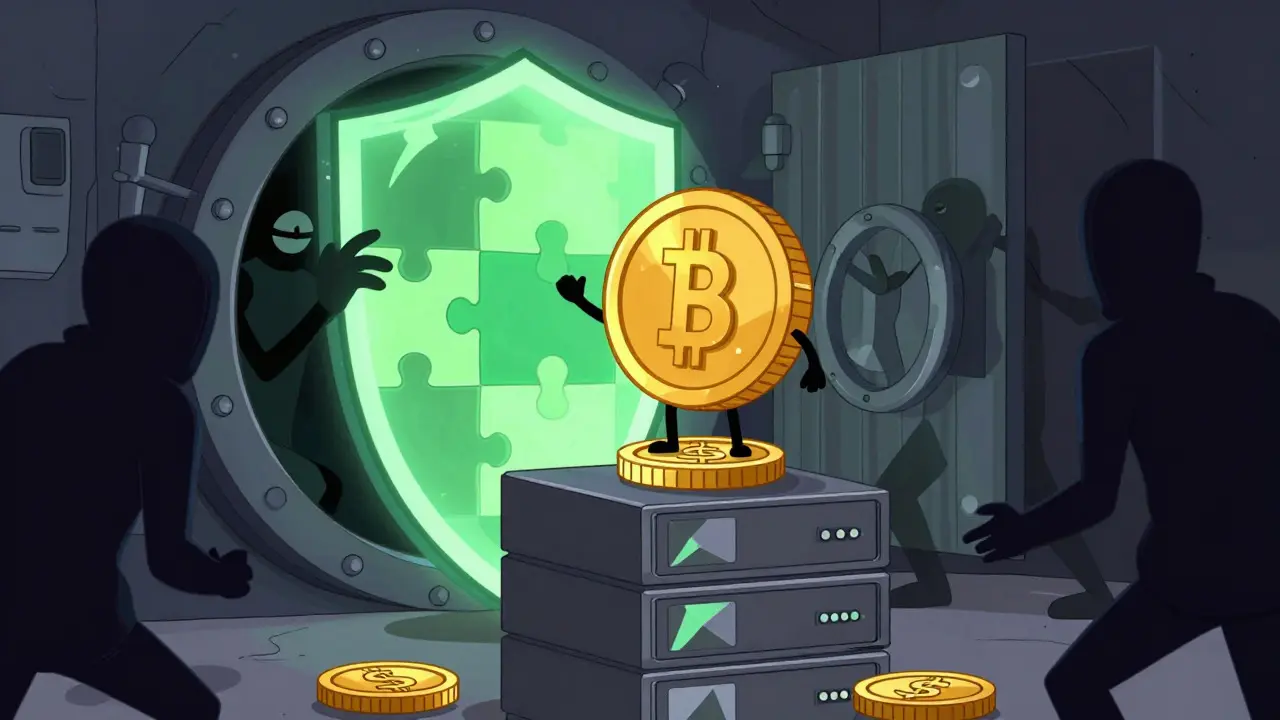
Choosing a crypto exchange is like picking a bank for your digital money. You need it to be safe, fast, and cheap enough that you don't lose your profits to hidden costs. But with over 150 platforms out there, how do you know which one actually holds up? Most people just pick the first name they see in an ad, but that’s a risky move. A bad choice can mean frozen accounts, high fees eating your wallet, or even lost funds if security isn’t tight.
This review breaks down what really matters when evaluating a market exchange. We’re looking at real data from 2025 and 2026, focusing on security, fees, and usability. Whether you’re a beginner buying your first Bitcoin or a pro trading derivatives, the right platform changes everything. Here is what you need to know before you deposit a single dollar.
Why Security Is the Non-Negotiable First Step
Before you care about how many coins are listed, you have to ask: will my money stay mine? The history of crypto is littered with exchanges that vanished overnight. Mt. Gox collapsed in 2014 because of poor security practices, a lesson the industry has been trying to learn ever since. Today, top-tier exchanges use multi-signature wallets and keep 95% to 98% of assets in cold storage. This means most of your coins aren’t sitting on hot servers where hackers can easily grab them.
Kraken, for instance, documents 100% asset protection through these cold storage solutions since its launch in 2013. They also carry insurance policies ranging from $250 million to $500 million, depending on the platform. If an exchange doesn’t publish regular proof-of-reserves audits, tread carefully. Transparency is the best friend of your capital. Look for platforms that show their books monthly. It’s a simple check that separates serious operators from fly-by-night operations.
Understanding Fee Structures: Where Your Money Goes
Fees are the silent killer of small portfolios. You might think a 1% fee sounds small, but if you trade frequently, it adds up fast. Exchanges typically charge two types of fees: maker fees (when you add liquidity) and taker fees (when you take liquidity). The spread between these can determine whether you profit or break even on a trade.
| Exchange | Cryptocurrencies Available | Fee Range | Key Strength | Main Weakness |
|---|---|---|---|---|
| Coinbase | 235 | 0% - 3.99% | Easy onboarding, strong banking integration | Higher fees for frequent traders |
| Kraken | 350+ | 0% - 0.4% | Low fees, advanced tools, high trust score | Steeper learning curve for beginners |
| Binance US | 158 | 0% - 0.6% | Wide selection, competitive pricing | Limited token list compared to global version |
| Gemini | 73 | 0.5% - 3.49% | Clean interface, institutional backing | Occasional outages during volatility |
Notice the gap between Coinbase and Kraken. If you’re a casual buyer, Coinbase’s simplicity is worth the premium. But if you’re moving large volumes, Kraken’s 0.16% maker fee versus Coinbase’s higher rates saves thousands annually. Always calculate your total cost based on your actual trading volume, not just the advertised rate. Hidden spreads can sometimes exceed the explicit fee structure, so monitor your execution prices closely.
Usability: The Difference Between Buying and Trading
A great exchange is useless if you can’t figure out how to use it. For beginners, speed and clarity matter most. Coinbase streamlines account setup to an average of 22 minutes, including KYC verification. Their mobile app maintains a 4.7/5 rating on the Apple App Store, largely due to its intuitive design. You can buy Bitcoin in three taps, which is perfect if you just want exposure without the headache.
However, power users often find basic interfaces limiting. Kraken offers a more complex dashboard with advanced order types like stop-losses and limit orders. It takes about 15-20 hours to master fully, according to recent user studies. But once you get the hang of it, the efficiency gains are significant. The platform executes 99.9% of market orders within 100 milliseconds, which is crucial for day traders who rely on speed. Choose the interface that matches your skill level, not the one that looks flashiest.
Regulatory Compliance and Trust Scores
In 2026, regulation is no longer optional; it’s a survival requirement. The SEC and other bodies are actively enforcing rules, which means compliant exchanges are safer long-term bets. Platforms like Binance US had to delist 37 tokens in Q2 2025 to meet compliance standards. While annoying for traders who liked those tokens, it shows the company is playing by the rules.
Trust scores from independent auditors like CoinGecko help gauge reliability. As of late 2025, Binance, Coinbase, and Kraken hold the top spots with scores above 9.5/10. These scores reflect liquidity, security, and transparency. An exchange with a low trust score might offer better deals today, but it carries higher risk tomorrow. Stick with platforms that have survived multiple market cycles and regulatory shifts. Stability beats novelty every time in this industry.

Common Pitfalls to Avoid
- Ignoring Withdrawal Limits: Some exchanges cap daily withdrawals at $50,000. If you plan to move larger sums, check these limits before you deposit. Kraken allows up to $100,000 daily for verified accounts, giving you more flexibility.
- Skipping Two-Factor Authentication: Never rely on email alone. Use an authenticator app or hardware key. SIM swap attacks remain a common way hackers drain unsecured accounts.
- Overlooking Tax Reporting: Every trade is a taxable event in the US. Ensure your exchange integrates with tax software like Koinly or TurboTax. Manual tracking is a nightmare during tax season.
- Chasing New Listings: Just because an exchange lists a new coin doesn’t mean it’s a good investment. Check the project’s fundamentals separately. Exchange listings are marketing events, not investment advice.
How to Choose the Right Platform for You
Your choice depends entirely on your goals. If you’re a beginner looking to start small, prioritize ease of use and customer support. Coinbase and Gemini are strong contenders here. If you’re a trader focused on cost-efficiency and tool depth, Kraken is hard to beat. For those needing access to a wide variety of altcoins, Binance US offers a solid middle ground, though its selection is smaller than its global counterpart.
Consider your geographic location too. Regulatory requirements vary by state and country. In the US, 48 states require Money Transmitter Licenses, which major players already hold. International users should verify local restrictions. Finally, test the waters with a small deposit. See how fast deposits arrive, how smooth the trading experience is, and how responsive support is. A $50 test run tells you more than any marketing brochure ever could.
Which crypto exchange has the lowest fees?
Kraken generally offers the lowest fees for active traders, with maker fees as low as 0.16%. However, for very small purchases, some exchanges offer zero-fee promotions. Always compare the total cost including spreads, not just the base fee percentage.
Is it safe to keep all my crypto on an exchange?
For short-term trading, yes, provided you choose a reputable exchange with strong cold storage practices. For long-term holding, consider moving assets to a personal hardware wallet. Diversifying custody reduces the risk of a single point of failure, such as an exchange hack or insolvency.
How long does KYC verification take?
Most major exchanges complete verification within 24 hours. Coinbase averages 22 minutes for initial setup, while Kraken may take up to 48 minutes or longer for full identity checks. Delays can occur during periods of high demand or if additional documentation is required.
What happens if a crypto exchange goes bankrupt?
Your assets may be frozen during legal proceedings. To mitigate this risk, choose exchanges with transparent proof-of-reserves and insurance policies. Keeping a portion of your portfolio in self-custody ensures you always have access to your funds, regardless of exchange status.
Do I need to pay taxes on every crypto trade?
In the United States, yes. Every sale of cryptocurrency is a taxable event, subject to capital gains tax. Holding onto your coins without selling is not taxed until you sell. Use exchange-integrated tax tools to track cost basis accurately and avoid reporting errors.





J Shepherd
Good breakdown on the fee structures, but you're missing the real alpha here which is slippage and liquidity depth. When you look at those maker/taker spreads, you have to factor in the market impact cost if your order size exceeds the top of book. For institutional flow, a 0.16% fee is irrelevant compared to the execution price degradation you suffer on thin books. Always backtest your strategy against historical volume profiles before committing capital to a specific venue.