
Imagine trying to make a phone call in a room where everyone has left except for one person who is asleep. That is essentially the experience of using O3 Swap, a decentralized cross-chain aggregation protocol designed to streamline token swapping across multiple blockchain networks. Founded by O3 Labs, a Japan-based company established in 2017, this platform promised to simplify the complex world of multi-chain trading. However, as we move through 2026, the reality on the ground tells a very different story from the initial hype.
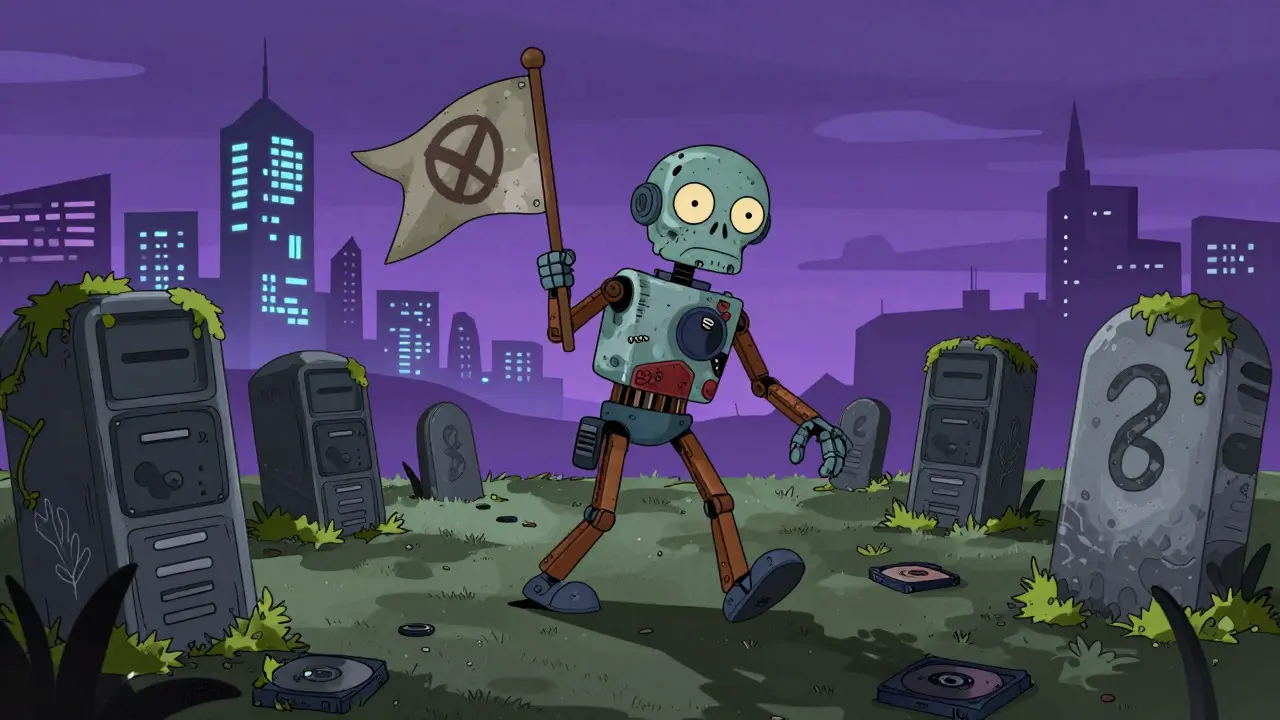
If you are holding O3 Token or considering using the platform for your next trade, you need hard facts, not marketing fluff. The data suggests that O3 Swap has slipped into what industry analysts call a "zombie protocol" state. With near-zero liquidity and minimal development activity since 2022, the question isn't just whether it works, but whether it still exists in any meaningful way within the Decentralized Finance (DeFi) ecosystem.
The Current State of O3 Swap in 2026
To understand where things stand, we have to look at the raw numbers. As of recent market data, the O3 Token ranks around #3113 globally. Its market capitalization hovers around $94,000 USD, with a circulating supply of 36 million tokens. In a sector where top projects boast billions in market cap, this is statistically insignificant. But market cap is only half the picture; liquidity is the other half, and here O3 Swap struggles severely.
The 24-hour trading volume reported on major trackers like CoinGecko is often cited as low as $10.18. Yes, ten dollars. For context, Uniswap, the market leader, processes over $1 billion daily. Even mid-tier exchanges handle millions. If you try to swap a significant amount of assets on O3 Swap, you will likely face massive slippage or fail to find a counterparty entirely. The Total Value Locked (TVL), which measures how much money users trust in the protocol's smart contracts, has remained below $10,000 since August 2022 according to DefiLlama. This indicates that very few active users are currently relying on the infrastructure.
Technical Architecture and Supported Chains
Despite its current lack of usage, the technical foundation of O3 Swap was ambitious. It operates as a multi-chain aggregation protocol, meaning it connects various blockchains so you don't have to bridge assets manually. At its peak, it supported integration with 12 major networks, including Algorand, Arbitrum, BNB Smart Chain, Celo, Filecoin, Flow, InfStones, Neo, Solana, and TrueFi.
The companion application, O3 Wallet, offers API access and is available across iOS, Android, Windows, Mac, and Linux. On paper, this wide compatibility was a strong selling point. However, technical support has largely evaporated. The official documentation hasn't been updated since Q4 2021. If you encounter an error today, there is no active community forum, no responsive support email, and no recent GitHub commits to guide you toward a solution. The last meaningful software update, version 2.1.3, was released back in March 2022.
User Experience and Community Feedback
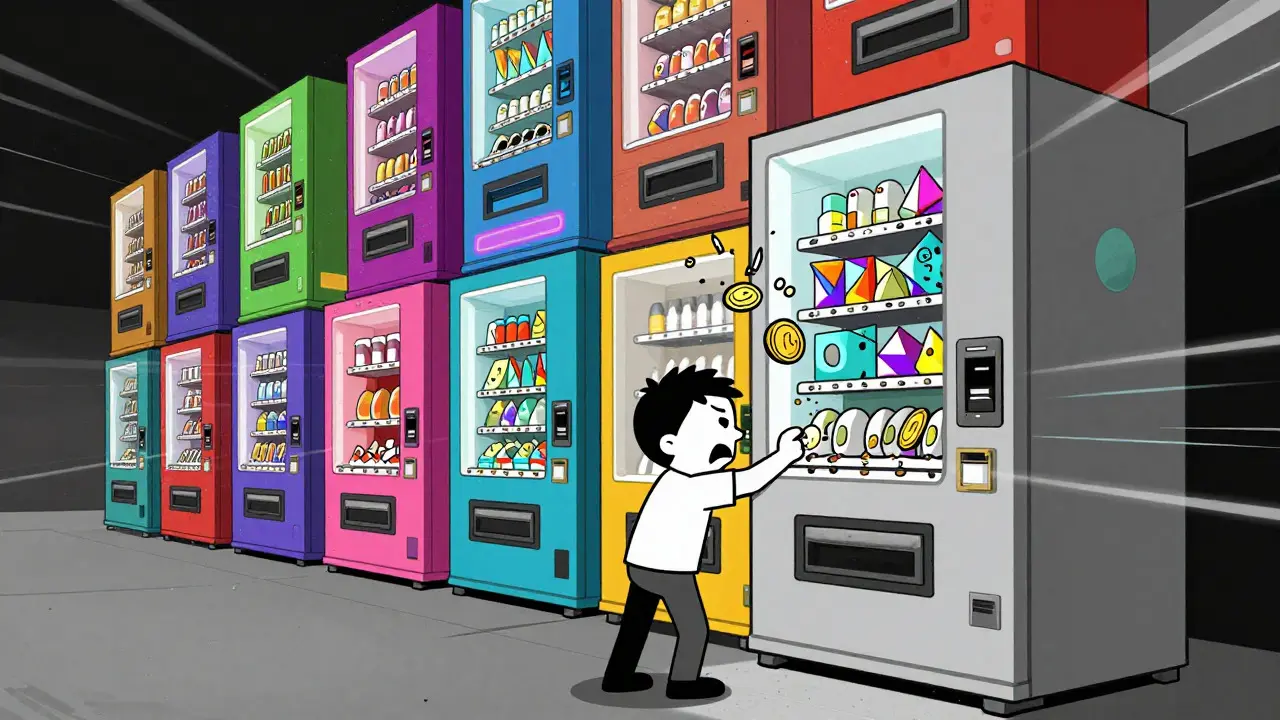
What do actual users say? The feedback is overwhelmingly negative. On CryptoSlate, user ratings average just 1.2 out of 5 based on reviews from early 2023. Common complaints include "constant failed transactions" and "impossible to withdraw funds." A Reddit thread on r/defi from June 2023 documented 27 user experiences, all reporting failed swaps due to insufficient liquidity. If you go to their official Telegram group, you will find only about 127 members, with the last admin message dated November 2022.
Social media sentiment analysis shows zero organic mentions in the past 90 days prior to late 2023, indicating complete market irrelevance. Trustpilot lists zero verified reviews. For a project that claims to be a hub for cross-chain trading, this silence is deafening. The few positive notes come from early adopters in 2021 who received token airdrops, but even those users report abandoning the platform by mid-2022 when functionality deteriorated.
| Metric | O3 Swap | Uniswap | PancakeSwap |
|---|---|---|---|
| Daily Trading Volume | ~$10 - $100 | $1 Billion+ | $500 Million+ |
| Total Value Locked (TVL) | < $10,000 | $Billions | $Billions |
| Community Activity | Minimal / Dormant | High / Active | High / Active |
| Last Major Update | March 2022 | Ongoing | Ongoing |
| Supported Chains | 12 (Limited Liquidity) | Multiple (EVM Focused) | BSC + EVM |
Competitive Landscape and Alternatives
Why did O3 Swap lose its footing? The cross-chain DEX space evolved rapidly after 2021. Newer protocols like THORSwap and Synapse Protocol captured the majority of the market share. By Q3 2023, THORSwap alone held 87% of the cross-chain DEX market share according to Messari Research. These competitors offer not just better technology, but crucially, better liquidity and active developer teams.
If you are looking for a cross-chain aggregator today, you should look elsewhere. Uniswap and PancakeSwap remain the safest bets for general trading due to their deep liquidity pools. For specific cross-chain needs, protocols with higher TVL and active governance are far more reliable. Sticking with O3 Swap means betting on a project that has shown no signs of revival despite several years of stagnation.
Risks of Holding or Using O3 Swap
Using a dormant DEX comes with specific risks that active platforms mitigate. First, there is the risk of smart contract vulnerabilities. Technical analysts noted in 2023 that core smart contracts showed vulnerabilities that hadn't been addressed since 2021. Without regular audits and updates, these bugs can become exploitable. Second, there is the exit liquidity risk. If you deposit funds to swap, you might find yourself unable to withdraw them if the pool dries up completely. Third, there is the opportunity cost. Time spent troubleshooting a broken interface is time not spent earning yield or trading on efficient platforms.
Regulatory considerations also play a role. While O3 Swap is decentralized, the lack of compliance infrastructure makes it less attractive for institutional investors or users in regulated jurisdictions. Competitors have implemented KYC options where necessary, whereas O3 Swap shows no evidence of such development. For most retail users, this isn't a dealbreaker, but it highlights the gap between O3 Swap and the rest of the maturing DeFi industry.
Frequently Asked Questions
Is O3 Swap safe to use in 2026?
Safety is relative. The smart contracts have not been updated since 2022, which poses a security risk if new exploits emerge. More practically, it is "unsafe" in terms of utility because low liquidity means you may fail to execute trades or suffer high slippage. It is generally recommended to use more liquid alternatives like Uniswap or PancakeSwap.
What happened to the O3 Swap team?
The development activity from O3 Labs appears to have ceased significantly after Q1 2022. GitHub repositories show only three contributors in the past year, and the official website has had no major content updates since late 2021. The team has not communicated effectively with the community via Telegram or Twitter in recent years.
Can I still buy O3 Token?
Yes, the token is listed on some minor tier-4 exchanges. However, buying it is speculative. With a market cap under $100k and negligible trading volume, price movements are driven by tiny amounts of capital. There is no fundamental driver for growth unless the protocol sees a sudden revival in usage, which is unlikely given the current market conditions.
Which chains does O3 Swap support?
Technically, it supports Algorand, Arbitrum, BNB Smart Chain, Celo, Filecoin, Flow, InfStones, Neo, Solana, and TrueFi. However, support does not equal usability. Most of these integrations have extremely low liquidity, making actual swaps difficult or impossible for larger amounts.
Is O3 Swap better than Uniswap?
For most users, no. Uniswap has vastly superior liquidity, a larger community, and ongoing development. O3 Swap's original niche was cross-chain aggregation, but newer competitors like THORSwap now dominate that space. Unless you have a specific reason to use O3 Swap, Uniswap is the safer and more efficient choice.



Ashley Snyder
It's really sad to see a project with such a cool initial concept just fade away like this. The multi-chain idea was promising back in the day, but without constant updates and liquidity, it's hard for any protocol to survive in DeFi. I hope the team finds a way to pivot or at least communicate better with the community before it's completely forgotten.