RadioShack DeFi Slippage Calculator
Calculate how much value you might lose due to slippage on RadioShack DeFi compared to other exchanges. Based on the article's findings that RadioShack has 1.8% slippage vs PancakeSwap's 0.35%.
$
RadioShack isn’t just a dusty store with old headphones and AA batteries anymore. In 2025, it’s trying to become a cryptocurrency exchange. Yes, RadioShack-the same brand that sold CB radios in the '80s and sold out of cordless phones in the '90s-is now launching its own decentralized exchange called RadioShack DeFi, powered by the RADIO token. It sounds like a joke. But it’s real. And people are watching.
What Is RadioShack DeFi?
RadioShack DeFi is a decentralized exchange (DEX) built on a custom blockchain. Unlike big names like Uniswap or PancakeSwap, it doesn’t rely on Ethereum or Solana. Instead, it uses its own network designed for speed and low cost. The platform lets users swap cryptocurrencies directly from their wallets-no middleman, no bank account needed. Its native token, RADIO, is used to pay lower fees, vote on platform changes, and earn rewards in liquidity pools. The goal? To turn RadioShack’s old customer base-small business owners, hobbyists, and tech tinkerers-into crypto users. With 400 physical stores still open across the U.S., RadioShack hopes to use those locations as crypto on-ramps. Imagine walking into a RadioShack, handing over cash, and walking out with $50 worth of Bitcoin or Ethereum. That’s the vision.How Does It Work?
Getting started is simple, but only if you already know how wallets work. Here’s the step-by-step:- Get a web3 wallet (MetaMask, Trust Wallet, or Ledger).
- Visit the RadioShack DeFi website and connect your wallet.
- Complete KYC verification (takes about 22 minutes).
- Fund your wallet with RADIO tokens or supported cryptocurrencies like ETH, USDC, or MATIC.
- Swap tokens using the interface-no limit orders, no advanced tools, just basic swaps.
Performance: Speed and Fees
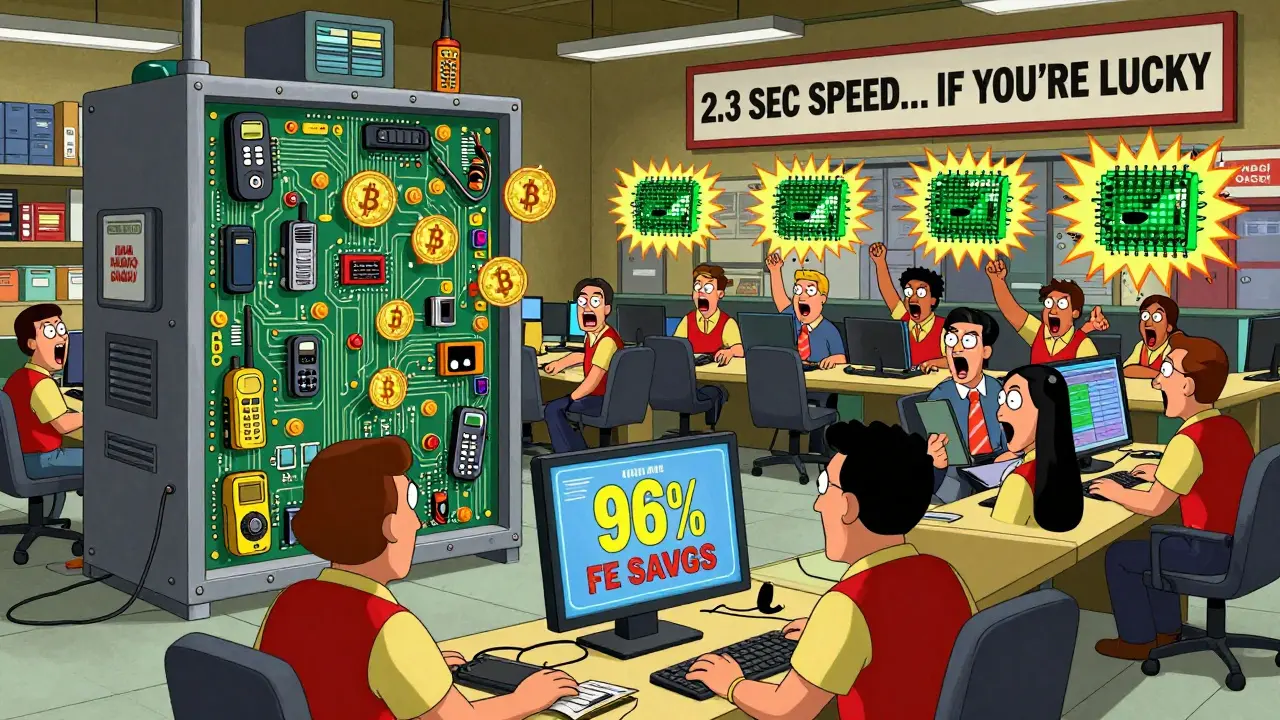
Where RadioShack DeFi actually shines is in cost and speed. Transactions average 2.3 seconds to confirm. Gas fees? Around $0.0007 per swap. That’s 96% cheaper than Ethereum, where fees hit $1.85 in early 2025. For small trades under $50, it’s the cheapest option on the market. It also uses Algorand Standard Assets (ASAs), which means you can create and trade custom tokens directly on the platform without needing a separate smart contract. That’s useful for local businesses wanting to issue loyalty tokens or digital coupons tied to crypto. But here’s the catch: it’s fast and cheap… but barely used.Liquidity Problems: The Silent Killer
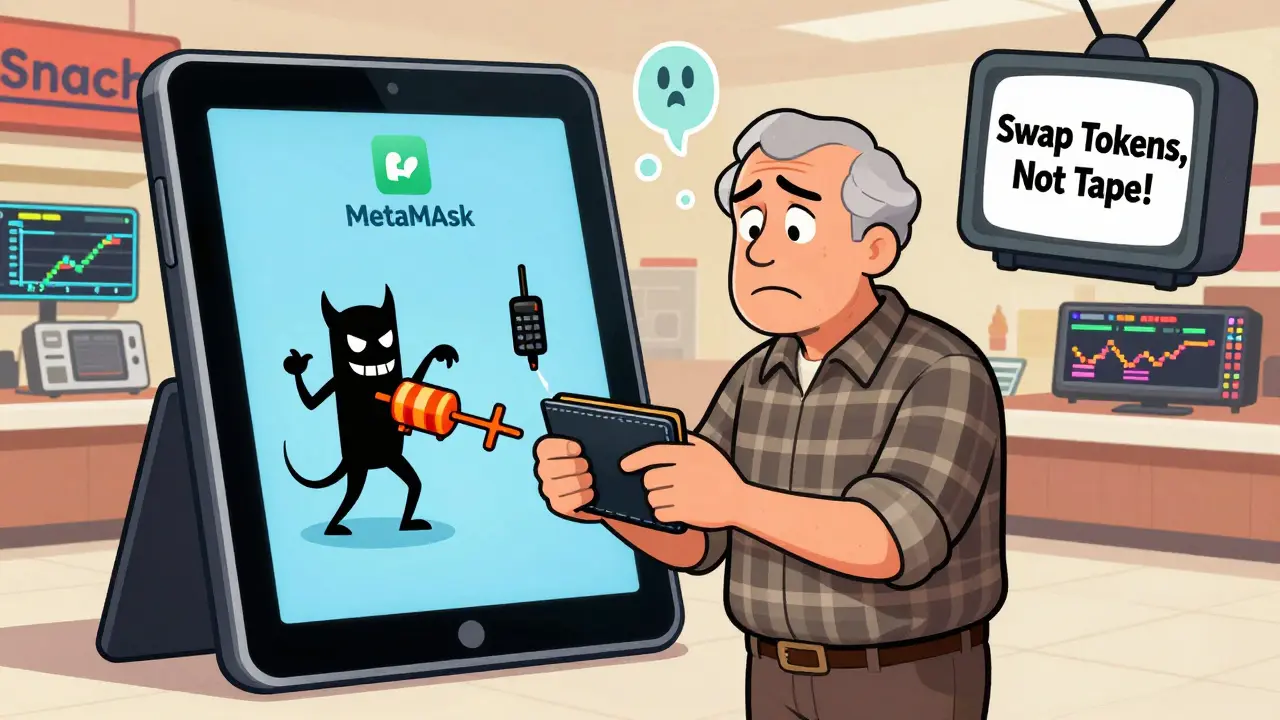
As of December 2024, RadioShack DeFi had only $1.7 million in total value locked (TVL). Compare that to Uniswap’s $5.2 billion. That’s not a gap-it’s a canyon. Low liquidity means two big problems:- Slippage: When you try to swap $100 of one token for another, the price moves against you. RadioShack’s average slippage is 1.8%. On PancakeSwap, it’s 0.35%. That means you lose more money just by trading.
- Failed transactions: If you try to swap more than $7,300 in one go, the trade often fails because there isn’t enough liquidity. For most users, that’s not an issue. But for small businesses trying to pay suppliers in crypto, it’s a dealbreaker.
Trading Pairs and Features: Barebones
RadioShack DeFi supports only 12 trading pairs as of early 2025. Uniswap supports over 250,000. You can’t trade Solana (SOL), Cardano (ADA), or even Shiba Inu (SHIB) directly. You have to go through a bridge first. No limit orders. No stop-losses. No margin trading. No staking beyond basic liquidity pools. If you’re used to trading on Binance or Kraken, this will feel like using a flip phone in 2025. The only advanced feature? Governance. Holders of RADIO tokens can vote on future upgrades. But with only 1,842 active wallets in December 2024, voter turnout is negligible.Is RADIO Token Worth Buying?
The RADIO token launched in January 2025 at $0.00035. By February, it had hit $0.00042. Then it dropped back to $0.00031. Price swings are wild. Analysts are split. DigitalCoinPrice predicts RADIO could reach $0.00289 by 2031. That’s a 700% increase. But CoinDataFlow says it’ll fall to $0.00012 by year-end. Why? Because the platform has no traction. No adoption. No institutional backing. Just a brand name and a website. Technical indicators like Stoch RSI and Commodity Channel Index are all in overbought territory-meaning the price may be artificially inflated. Many analysts are giving it a “SELL” rating. If you’re buying RADIO as an investment, you’re betting on RadioShack’s ability to turn its 78 million former customers into crypto users. That’s a long shot. Most of those people are now in their 50s and 60s. Do they even know what a wallet is?User Experience: Mixed Reviews
There are only 9 verified reviews on Trustpilot. Average rating: 2.1 stars. Positive feedback:- Easy to use for beginners
- Super low fees for small swaps
- Simple interface
- Transactions fail often
- Customer support takes 3+ days to reply
- “I lost $37 because my swap timed out”
- “Feels like a beta test, not a real exchange”
Who Is This For?
RadioShack DeFi isn’t for traders. It’s not for investors. It’s not for institutions. It’s for one group: curious beginners who still trust the RadioShack name. If you’ve never traded crypto before, and you’ve got $20 to spare to learn, this could be a low-risk sandbox. The interface is friendly. The fees are tiny. You won’t lose much if you mess up. But if you’re serious about crypto? Stick with Uniswap, PancakeSwap, or even a centralized exchange like Coinbase. They have liquidity. They have support. They have history. RadioShack is trying to build something new. But new doesn’t mean better. And in crypto, trust matters more than nostalgia.The Road Ahead: What’s Coming in 2025
RadioShack’s roadmap shows ambition. Version 1.2, released in January 2025, improved liquidity aggregation. Version 2.0, due in Q3 2025, promises:- Limit orders
- Stop-loss functionality
- Cross-chain swaps (Ethereum, Polygon, BSC)
- Integration with physical store terminals for fiat on-ramps



Heath OBrien
This is a scam lol 🤡