Buying a house used to mean taking on a massive mortgage or having enough cash for a down payment. Today, you can buy a slice of an apartment building in Miami for $50 using real estate token trading is the process of buying and selling digital tokens that represent fractional ownership in physical properties via blockchain technology. This shift isn't just hype; it's reshaping how we think about wealth and property. The global real estate market sits at over $613 trillion, but historically, most of that value was locked away from everyday investors. Now, thanks to blockchain infrastructure, that liquidity is finally becoming accessible.
How Real Estate Tokenization Actually Works
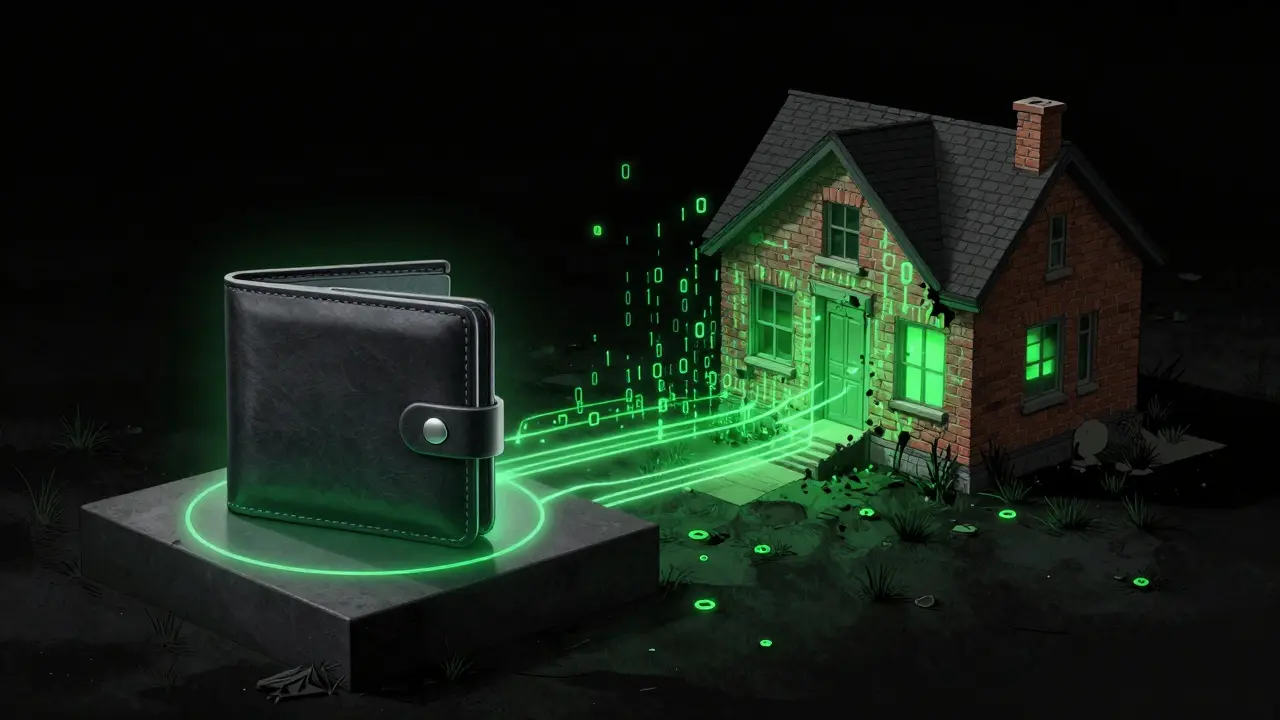
To understand the market, you first need to grasp the mechanics. When a developer or property owner decides to tokenize a building, they don't just put a "For Sale" sign up on Twitter. They create a legal structure-usually a limited liability company (LLC) or a special purpose vehicle-that owns the physical property. This entity then issues digital tokens on a blockchain. Each token represents a share of that LLC, which in turn holds the deed to the building.
You might wonder where this happens technically. Most platforms rely on Ethereum is a decentralized blockchain platform that supports smart contracts and has captured approximately 78% of the real estate tokenization market share. Ethereum provides the security and standardization needed for these financial instruments. However, because Ethereum transaction fees can be high, newer platforms are increasingly moving to Polygon is a Layer-2 scaling solution for Ethereum that offers significantly lower transaction fees and faster settlement times or Solana is a high-performance blockchain known for its speed and low cost, making it attractive for high-frequency trading applications. These alternatives allow for smoother user experiences when buying small fractions of property.
The magic lies in the smart contracts. These self-executing codes automate the boring but critical parts of real estate. When rent comes in, the contract automatically distributes your share to your wallet within 24 hours. No waiting for a check in the mail, no chasing down a property manager. Settlement times drop from the traditional 30-60 days to mere minutes. This efficiency cuts transaction costs by up to 30%, money that stays in your pocket rather than going to intermediaries.
Top Platforms for Buying Tokenized Property
Not all marketplaces are created equal. Some cater to retail investors looking for passive income with small amounts of capital, while others focus on institutional players requiring strict regulatory compliance. Here is how the major players stack up against each other.
| Platform | Primary Focus | Minimum Investment | Key Feature | Liquidity Level |
|---|---|---|---|---|
| RealT is a leading platform specializing in residential real estate tokenization with a strong secondary market for retail investors | Residential (US) | $50 | High retail accessibility | High ($2.3M monthly trades) |
| Propy is a hybrid marketplace facilitating both residential and commercial transactions with strong international capabilities | Hybrid (Global) | $5,000 avg | Cross-border transactions | Moderate |
| Harbor is an institutional-grade platform focused on regulatory compliance and accredited investor offerings | Institutional/Accredited | $25,000+ | SEC Regulation D compliance | Low (Restricted) |
| SolidBlock is a platform dedicated exclusively to commercial real estate assets with dedicated liquidity pools | Commercial Only | $10,000 | Dedicated liquidity pools | Moderate |
| Tokeny Solutions is a white-label infrastructure provider enabling institutions to create their own tokenized assets rather than a direct consumer marketplace | Infrastructure/B2B | N/A | White-label tech | N/A |
If you are a beginner with limited funds, RealT is likely your best entry point. It dominates the residential sector with over 970 US properties tokenized as of late 2024. About 88% of its users invest less than $5,000, proving that you don't need to be wealthy to participate. On the other hand, if you have significant capital and want to avoid retail volatility, Harbor offers robust compliance tools that meet 92% of global securities requirements, though you will face stricter withdrawal rules.
The Regulatory Hurdle: KYC, AML, and Jurisdiction
This is where the dream meets reality. You cannot simply connect your anonymous crypto wallet and buy property like you would an NFT. Real estate tokens are classified as securities in most jurisdictions, including the United States. This means every platform must enforce strict Know Your Customer (KYC) and Anti-Money Laundering (AML) protocols.
Expect the verification process to take between 24 and 72 hours. According to 2024 data from Zoniqx, the success rate for these verifications averages 87.3%. If you fail, it’s usually due to mismatched documents or residency restrictions. Currently, 43% of potential investors worldwide are blocked from participating in certain platforms due to jurisdictional conflicts. For example, EU-based investors often find themselves excluded from US-centric platforms because of the Markets in Crypto-Assets (MiCA) regulation conflicts.
Regulatory fragmentation remains the single largest barrier to global adoption. While New Jersey passed the Real Property Tokenization Act in January 2024, and Dubai launched its framework in September 2023, there is no global standard yet. This lack of harmony means that cross-border investing is still complex. Platforms like Propy handle this by processing 17% of transactions in non-US currencies, but even they require extensive legal structuring.
Tax Implications and Reporting
Let’s talk about what you actually keep. One of the biggest complaints among early adopters involves tax reporting complexities. In 2023, 67% of users cited difficulty in filing taxes for their tokenized investments. Why? Because you are dealing with two types of income: rental dividends and capital gains.
When you receive rent distributions, that is ordinary income. You must report it in the year you receive it. When you sell your tokens for a profit, that is a capital gain. The challenge is that many platforms do not provide consolidated tax forms (like a 1099 in the US) that neatly summarize all your transactions across different properties. You may need to track every single trade manually or use specialized accounting software.
Furthermore, tax laws vary wildly by location. If you live in one country but own tokens in a property located in another, you could face double taxation unless there is a treaty in place. Experts recommend consulting a tax professional who understands both cryptocurrency and real estate law. Expect to pay between $200 and $350 per hour for such specialized advice. It is an unfortunate but necessary cost of doing business in this nascent industry.
Risks Beyond the Code
Blockchain technology is secure, but the underlying assets are not immune to risk. Just because your token is stored in a multi-signature wallet (used by 92% of platforms) doesn't mean the building it represents is safe. Physical risks remain: natural disasters, tenant defaults, and maintenance issues still affect the value of your token.
There is also the risk of illiquidity. Despite the promise of easy trading, only 18% of tokenized properties currently have active secondary markets. If you need to exit your position quickly, you might not find a buyer. Bid-ask spreads on platforms like RealT average around 3.7%, meaning you lose a bit of value just by entering and exiting a trade. Additionally, regulatory uncertainty has delayed 31% of planned token offerings, showing that the entire ecosystem is still fragile.
Security breaches are rare but possible. While the blockchain itself is tamper-proof, the bridges connecting fiat currency to crypto, or the centralized databases holding user identities, are vulnerable. Always ensure the platform undergoes regular third-party audits. About 68% of major platforms conduct these quarterly, but you should verify this yourself before depositing funds.
Getting Started: A Step-by-Step Guide
If you decide to jump in, here is how to navigate the initial setup without getting overwhelmed. The learning curve for crypto-novice investors averages 14-21 days, so patience is key.
- Set Up a Compatible Wallet: Most platforms integrate with MetaMask, which accounts for 73% of integrations. Download the browser extension or mobile app and securely store your seed phrase offline. Never share this phrase with anyone.
- Choose a Platform: Based on your budget and goals, select a marketplace. For small amounts, RealT is ideal. For larger, compliant investments, look at Harbor or SolidBlock.
- Complete KYC Verification: Prepare your government-issued ID and proof of address. Upload these documents through the platform’s secure portal. Expect a wait time of up to three days.
- Fund Your Account: Most platforms support credit cards or bank transfers, though only 31% offer direct bank transfers as of Q3 2024. You will likely need to convert fiat currency into stablecoins (like USDC) or ETH to purchase tokens.
- Select Your Assets: Research the properties. Look at historical occupancy rates, rental yields, and location fundamentals. Don't just buy because the token looks cool; analyze the real estate metrics.
- Monitor and Reinvest: Track your rental income distributions. Decide whether to withdraw them as cash or reinvest them to compound your returns.
Future Outlook: Where Is This Going?
The trajectory for real estate tokenization is steep. Analysts project the market will grow from $2.7 billion in 2022 to $18.2 billion by 2032, a compound annual growth rate of 21.1%. By 2030, experts predict that tokenization will generate $1.4 trillion in new market liquidity. Institutional adoption is accelerating faster than retail, with REITs and private equity firms leading the charge.
We are also seeing integration with Decentralized Finance (DeFi). Seventeen platforms now allow you to use your tokenized real estate as collateral for loans. This means you can access liquidity without selling your property, maintaining your exposure to the asset's appreciation. As regulatory frameworks mature-particularly if the SEC approves real estate token exchanges as Alternative Trading Systems-we could see a massive influx of capital. Until then, proceed with caution, do your own due diligence, and remember that while the technology is innovative, the underlying asset is still just bricks and mortar.
Is real estate token trading legal in the United States?
Yes, it is legal, but it is heavily regulated. Real estate tokens are generally classified as securities under US law. This means platforms must comply with SEC regulations, including Regulation D for accredited investors or specific exemptions for retail investors. You must complete KYC/AML checks, and your ability to trade may be restricted based on your state of residence.
What is the minimum amount I need to start investing?
The minimum varies by platform. Retail-focused platforms like RealT allow investments starting as low as $50. Institutional platforms like Harbor typically require minimums exceeding $25,000 due to accreditation requirements. Commercial-focused platforms like SolidBlock often set minimums around $10,000.
How do I pay taxes on my tokenized real estate?
You must report two types of income: rental income (ordinary income) and capital gains from selling tokens. Most platforms do not provide consolidated tax forms, so you may need to track transactions manually. Consult a tax professional familiar with crypto and real estate to ensure compliance, especially if you own properties across different jurisdictions.
Can I lose money if the property value drops?
Yes. Tokenization does not insulate you from market risks. If the underlying property loses value due to economic downturns, poor management, or local market conditions, the price of your tokens will decrease. Additionally, illiquidity can make it difficult to sell at a fair price during market dips.
Which blockchain is best for real estate tokens?
Ethereum is currently the dominant platform, hosting about 78% of tokenized real estate assets due to its maturity and security. However, Polygon and Solana are gaining traction because they offer lower transaction fees and faster settlement times, which improves the user experience for frequent traders.
Are my funds safe on these platforms?
The blockchain layer is highly secure, with 92% of platforms using multi-signature wallets. However, risks exist in the off-chain components, such as the platform's central database or the legal structure holding the property. Always choose platforms that undergo regular third-party security audits and have clear insurance policies for digital assets.
Why are some investors blocked from buying tokens?
Jurisdictional restrictions block about 43% of potential investors. Securities laws vary by country and state. For instance, residents of certain US states or countries with conflicting regulations (like parts of the EU under MiCA) may be prohibited from purchasing specific tokens to protect them from unregistered securities offerings.
How long does it take to get started?
For beginners, the onboarding process typically takes 14-21 days. This includes setting up a crypto wallet, completing KYC verification (which can take 24-72 hours), funding the account, and learning how to navigate the platform interface. Patience is required during the verification phase.