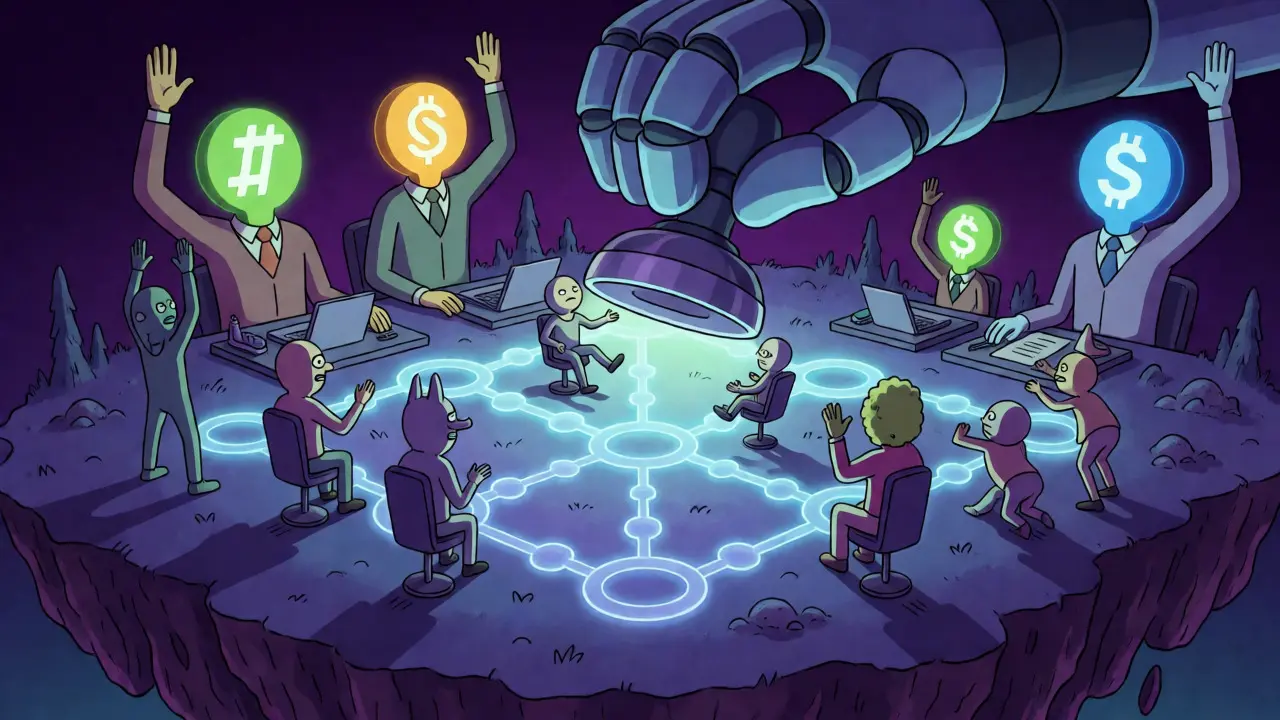
You’ve probably heard the buzz about Decentralized Autonomous Organizations (DAOs) being the future of work. But let’s be real-most people are still confused about what they actually do or how to get involved without losing your shirt on gas fees. If you’re tired of traditional corporate hierarchies where one CEO makes all the calls, a DAO might be exactly what you’re looking for. It’s an entity with no central leadership that operates through rules encoded as computer programs called smart contracts on a blockchain network. Think of it as a digital co-op where the code is law, and every member has a say.
As of late 2025, over 15,000 active DAOs collectively manage more than $25 billion in assets. That’s not just hype; it’s a shifting landscape of how we organize human effort. Whether you want to start your own collective or join an existing one, understanding the mechanics is crucial. This guide cuts through the jargon to show you exactly how to navigate this space, from picking the right platform to avoiding the common pitfalls that have burned many early adopters.
What Exactly Is a DAO?
At its core, a DAO is an organization owned by its members, governed by smart contracts, and funded by a shared treasury. Unlike a traditional LLC or corporation, there’s no board of directors making secret decisions. Instead, proposals are submitted, voted on by token holders, and executed automatically if they pass. The concept emerged following the launch of The DAO project in April 2016 on the Ethereum blockchain. While that first iteration raised $150 million before getting hacked, it paved the way for the sophisticated structures we see today.
The primary appeal here is transparency. Every transaction is visible on public blockchains like Ethereum, which hosts 74.3% of all DAOs. You can audit the treasury in real-time. No more wondering where the company funds went. Plus, participation is permissionless. If you hold the governance token, you can vote. There are no gatekeepers deciding who gets a seat at the table.
How to Start a DAO: Step-by-Step
Launching a DAO isn’t as hard as it sounds, but it requires careful planning. You don’t need to be a coding wizard, thanks to no-code platforms. Here is the practical workflow:
- Define Your Purpose: Are you pooling money for investments? Running a media collective? Managing a protocol? Clear goals prevent chaos later.
- Choose Your Platform: Select a tool that matches your technical comfort level. Aragon offers deep customization, while Colony lets you deploy in minutes.
- Set Up Governance Rules: Decide how voting works. Do you use simple majority (51%) or quadratic voting to prevent whales from dominating? Most DAOs use ERC-20 tokens for voting power.
- Fund the Treasury: Collect initial capital from members. On Ethereum Mainnet, deploying a basic DAO costs around 0.32 ETH (approx. $687 at current rates), though Layer 2 solutions like Polygon are much cheaper.
- Launch and Invite Members: Distribute tokens and start the first round of proposals.
For non-technical users, expect to spend 8-15 hours setting up using no-code tools. Custom implementations can take 40-60 hours. You’ll need a Web3 wallet like MetaMask and some ETH for gas fees. Don’t skip the legal step, either. States like Wyoming now offer DAO LLC registrations, providing liability protection that pure on-chain entities lack.
Comparing Top DAO Creation Platforms
Picking the wrong tool can lead to headaches down the road. Here’s how the major players stack up based on recent performance and user feedback:
| Platform | Best For | Setup Time | Approx. Cost (Gas + Fees) | Governance Flexibility |
|---|---|---|---|---|
| Aragon | Complex protocols & large treasuries | 3-5 Hours | $500 - $2,000 | High (Custom Plugins) |
| Colony | Task-based collectives & creators | 90 Seconds | ~$537 (0.25 ETH) | Moderate (Reputation-based) |
| Syndicate Protocol | Investment DAOs | 1-2 Hours | $1,200+ (Legal + Gas) | Low (SEC-compliant focus) |
| Tally.xyz | Governance interface only | Instant | $0.50/proposal | N/A (Frontend only) |
If you’re building a serious investment vehicle, Syndicate handles the legal heavy lifting. For creative groups wanting to assign tasks and pay contributors, Colony’s reputation system is superior. Aragon remains the gold standard for those who need granular control over voting thresholds and multisig approvals.
Joining a DAO: What to Look For
Not all DAOs are created equal. Some are vibrant communities; others are ghost towns with abandoned treasuries. Before you buy into a governance token, check these metrics:
- Active Participation: Look for voter turnout above 20%. The average across 1,245 analyzed DAOs was 23.7%, so anything lower suggests apathy.
- Treasury Health: Use dashboards like DeepDAO to see if the treasury is growing or draining. Investment DAOs control 58% of total assets but often have higher risk profiles.
- Proposal Frequency: Are people actually submitting ideas? A DAO with zero proposals in three months is likely dead.
- Security Record: Check for past hacks. In 2024 alone, 17 major DAO hacks resulted in $1.2 billion in losses. Smart contract vulnerabilities remain the biggest threat.
Don’t just look at the price of the token. Look at the Discord activity. If the chat is silent, the governance will be too. Friends With Benefits, for example, maintained a 78% active participation rate even as it grew to 12,500 members. That kind of engagement is rare and valuable.
The Risks and Realities
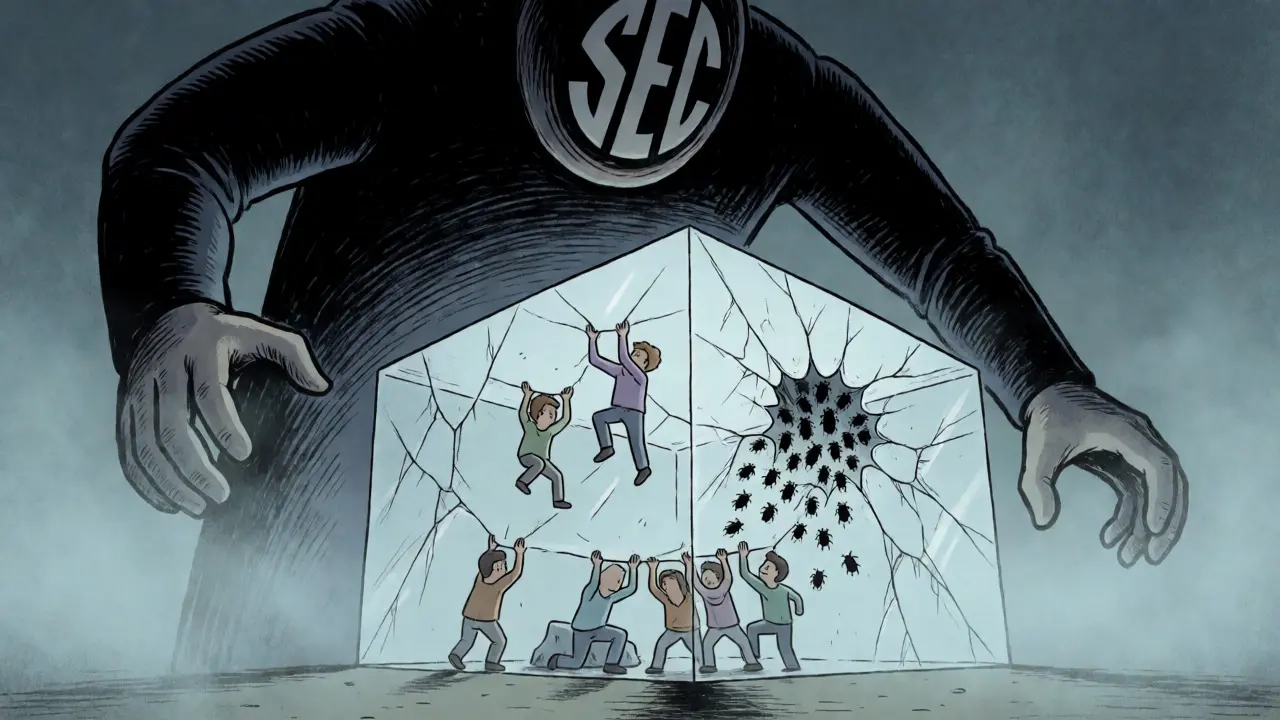
It’s not all sunshine and decentralized utopia. Regulatory uncertainty looms large. Professor Hilary Allen noted in 2025 testimony that 89% of DAO tokens likely qualify as unregistered securities under the Howey Test. The SEC filed 12 enforcement actions against DAOs in 2024, a 300% increase from the previous year. If you’re in the US, keep an eye on Wyoming’s evolving DAO LLC framework, which aims to clarify liability issues by January 2026.
Then there’s the "plutocracy" problem. In many DAOs, voting power is proportional to token holdings. This means whales can sway votes easily. Quadratic voting helps mitigate this by giving smaller holders more weight per dollar, but it’s complex to implement. Also, beware of "governance attacks," where bad actors buy enough tokens to pass malicious proposals. About 32% of new DAOs face at least one attempted attack in their first six months.
Future Outlook for DAOs
Despite the risks, adoption is accelerating. 42% of Fortune 500 companies now participate in at least one DAO. Ethereum’s Pectra upgrade reduced transaction costs by 42%, making micro-governance feasible. By 2030, experts predict 30% of new organizations will incorporate DAO elements, though pure DAOs may remain niche due to regulatory friction.
If you’re thinking about starting one, focus on utility, not speculation. Build something people need, not just a token to trade. If you’re joining, prioritize communities with transparent finances and active governance. The technology is maturing, but the social layer-how humans interact within the code-is still the hardest part to get right.
Do I need coding skills to start a DAO?
No. Platforms like Colony and Aragon offer no-code interfaces that allow you to configure governance settings, fund the treasury, and launch proposals without writing a single line of Solidity code. However, custom features may require developer assistance.
How much does it cost to create a DAO?
Costs vary by network. On Ethereum Mainnet, expect to pay between $500 and $2,000 in gas fees depending on complexity. Using Layer 2 networks like Polygon or Arbitrum can reduce this to under $50. Additionally, legal formation as an LLC can cost $1,000-$2,000.
Are DAO tokens considered securities?
In the US, many DAO tokens likely qualify as securities under the Howey Test, especially if investors expect profits from the efforts of others. The SEC has increased enforcement, so consult a lawyer specializing in crypto before selling governance tokens.
What happens if a DAO hack occurs?
Since DAOs are run by code, bugs can be exploited. Funds are often lost permanently unless the community votes to fork the chain or recover assets. Security audits are essential before launching significant value into a DAO.
Can I leave a DAO and sell my tokens?
Yes, most governance tokens are liquid and tradable on decentralized exchanges. However, some DAOs impose lock-up periods or reputation requirements that affect your ability to exit immediately.




Sophie Fitzgerald
I like the breakdown of costs here, it's actually pretty clear.