ACMD Airdrop: What It Is, Who Got It, and Why It Vanished
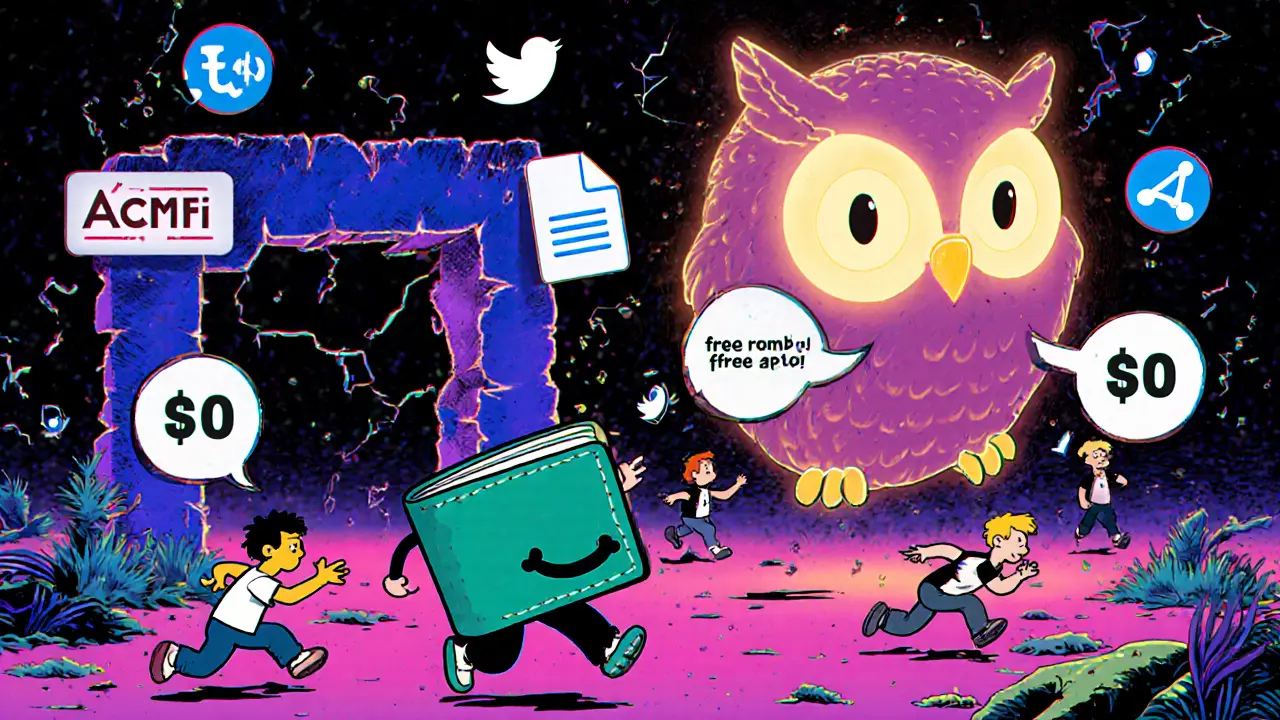
When you hear ACMD airdrop, a token distribution event tied to an obscure blockchain project with no public team or roadmap, you should pause. Most airdrops promise free crypto, but ACMD, a token that briefly appeared on decentralized exchanges with zero trading volume, was never meant to last. It didn’t have a whitepaper, no active developers, and no exchange listings beyond a few low-liquidity pairs. It was a flash in the pan — a snapshot of how many crypto projects use airdrops as a marketing trick, not a real product launch.
What makes crypto airdrop, a method of distributing tokens to wallet addresses to build early adoption so dangerous is how easily it’s abused. The ACMD airdrop asked users to connect wallets, follow social accounts, and sometimes pay gas fees — all for a token that vanished within weeks. It’s not unique. Look at DSG, METANIA, or QBIT — all had airdrops, all had hype, and all now sit at $0.00000001 with no buyers. These aren’t investments. They’re experiments in attention-grabbing. The real winners? The people who built the platforms that hosted the airdrop, not the users who claimed the tokens.
There’s a pattern here. Projects with no code, no team, and no utility still run airdrops because they know most people won’t check. They count on FOMO. They rely on the fact that you’ll see "free crypto" and click without reading the fine print. The token airdrop, a distribution strategy often used to bootstrap liquidity for new blockchain projects only works if the project survives. And ACMD? It didn’t. It disappeared like so many others — with no warning, no explanation, and no refunds.
What you’ll find below isn’t a guide on how to claim ACMD. There’s nothing left to claim. Instead, you’ll find real breakdowns of other airdrops that actually mattered — and others that were pure scams. You’ll see how BinaryX forced a token swap, how SoccerHub gave away playable tokens, and how AdEx Network used AI to help users track real rewards. You’ll also see projects like CreekEx and Woof Finance that never existed at all. The difference? One group tried to build something. The other just wanted your wallet address.