Blockchain Music: How Crypto and Decentralized Tech Are Changing Sound
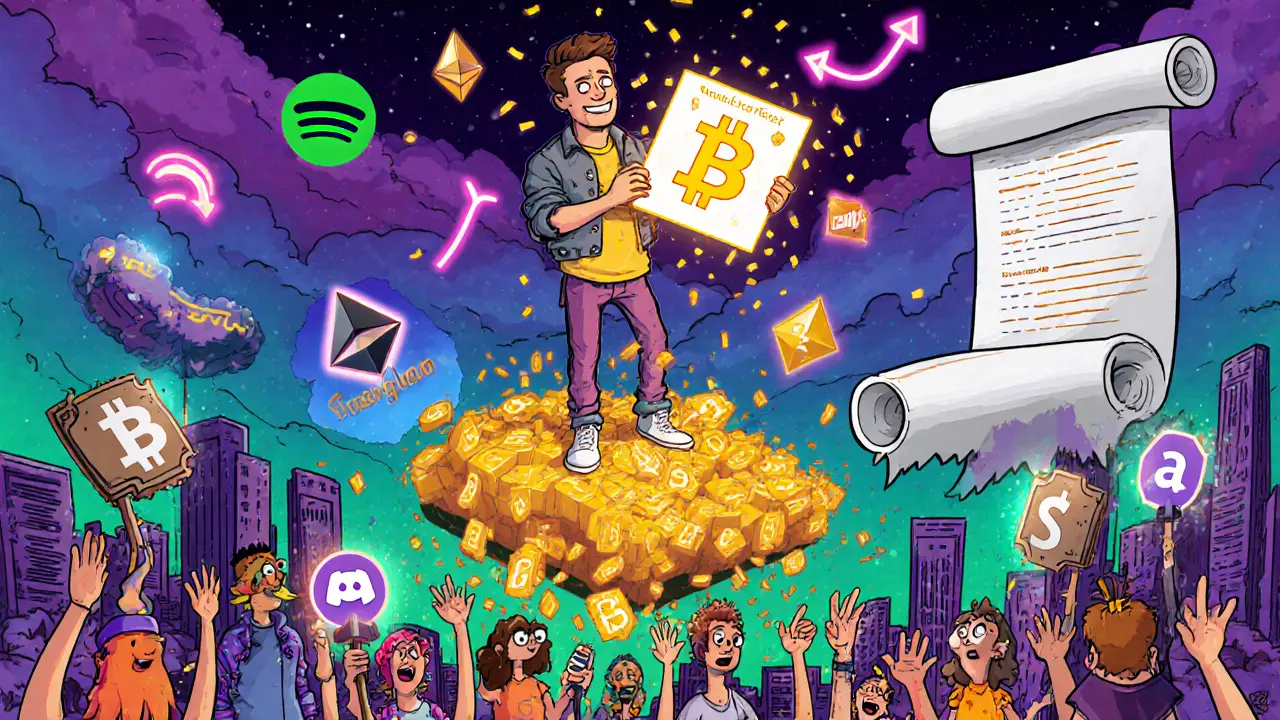
When you think of blockchain music, a system where musicians use blockchain to own, sell, and earn from their work without middlemen. Also known as decentralized music, it’s not just about streaming songs—it’s about giving artists real control over their art and income. For years, platforms took 30%, 50%, even 70% of what artists made. Now, with blockchain, a songwriter can sell a track directly to a fan, set their own royalty rules, and get paid instantly in crypto—no label, no bank, no delay.
This shift connects directly to NFTs for music, unique digital certificates that prove ownership of a song, album, or even a sample.music NFTs. Think of it like buying a signed vinyl, but digital and programmable. You might own a track that gives you 5% of every future resale, or access to exclusive live shows. It’s not hype—it’s already happening. Artists like 3LAU and Steve Aoki have sold NFT albums for millions, and smaller creators are using platforms like Royal and Sound.xyz to build real fan economies.
But it’s not just about selling songs. crypto royalties, automatic payments triggered by smart contracts every time a track is played, sold, or sampled are changing how money flows. No more waiting for quarterly statements from Spotify or Apple Music. With blockchain, every play, every download, every remix can trigger a payment—split exactly how the artist wants. And because the rules are coded into the blockchain, they can’t be changed by a corporation later.
Then there’s the rise of decentralized music platforms, apps built on blockchains like Ethereum, Solana, or NEAR that let artists upload, monetize, and connect with fans without approval from gatekeepers.Web3 music platforms. These aren’t just stores—they’re communities. Fans don’t just listen; they invest, vote on new releases, and even help fund tours. It turns passive listeners into active participants.
What you’ll find below isn’t theory. It’s real cases: projects that worked, ones that collapsed, and tools that actually let musicians earn. Some posts expose fake music tokens with zero trading volume. Others show how artists used NFTs to fund albums without loans. You’ll see how royalties are coded, how fans claim ownership, and why most music-related airdrops are still scams. No fluff. Just what’s real, what’s risky, and what’s changing right now in blockchain music.