Music Industry Blockchain: How Blockchain Is Changing Music Rights and Royalties
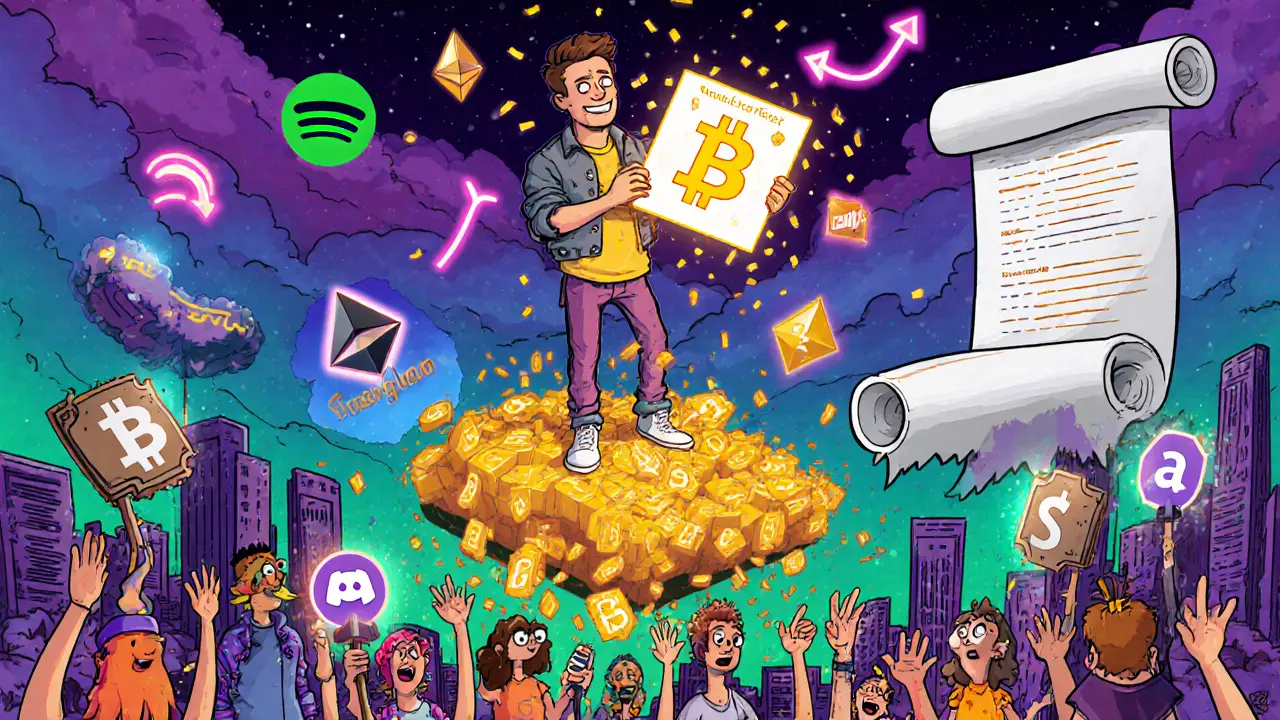
When you stream a song, the money rarely reaches the artist who made it. The music industry blockchain, a system using distributed ledgers to track ownership, licensing, and payments in the music business. Also known as blockchain music, it’s not about replacing Spotify—it’s about fixing how money moves after the stream ends. Right now, labels, distributors, and middlemen take most of the cut. Blockchain cuts them out by recording every use of a song on a public ledger, so every play, download, or sync triggers an automatic payment to the right person—no delays, no disputes.
This isn’t theory. Artists are already using NFTs in music, unique digital tokens that prove ownership of audio files, album art, or exclusive experiences to sell direct-to-fan releases. Fans buy an NFT and get not just the track, but voting rights on future releases or backstage access. Meanwhile, decentralized music platforms, blockchain-based services that let artists upload, license, and monetize without intermediaries are popping up. These platforms pay out in crypto or stablecoins within seconds, not months. They also let producers and session musicians claim their share upfront—something traditional contracts rarely allow.
The real shift? Control. Instead of signing away rights for a flat fee, artists can keep ownership and earn every time their music is used. A sample used in a hit song? The original creator gets paid automatically. A cover on TikTok? The rights holder gets a cut. No lawyers needed. No paperwork. No waiting for a royalty statement that never arrives. The system works because it’s transparent, tamper-proof, and built to scale.
But it’s not magic. Some projects fail because they’re just rebranded NFT drops with no real utility. Others get stuck in regulatory gray zones. That’s why you’ll find real-world breakdowns here: which platforms actually pay out, which artists are making money from this, and which blockchain tools are worth your time. You’ll see how a producer in Lagos got paid for a beat used in a Korean pop song. How a indie band in Mexico bypassed a label entirely. And why some "music blockchain" tokens are just hype with no backend.
What follows isn’t a list of buzzwords. It’s a collection of real cases, scams exposed, and working models that are changing how music gets made, shared, and paid for. If you’re an artist, a fan, or just tired of the old system, this is where the change is happening—and who’s actually getting paid.