NFTs in Music: How Blockchain Is Changing How Artists Get Paid
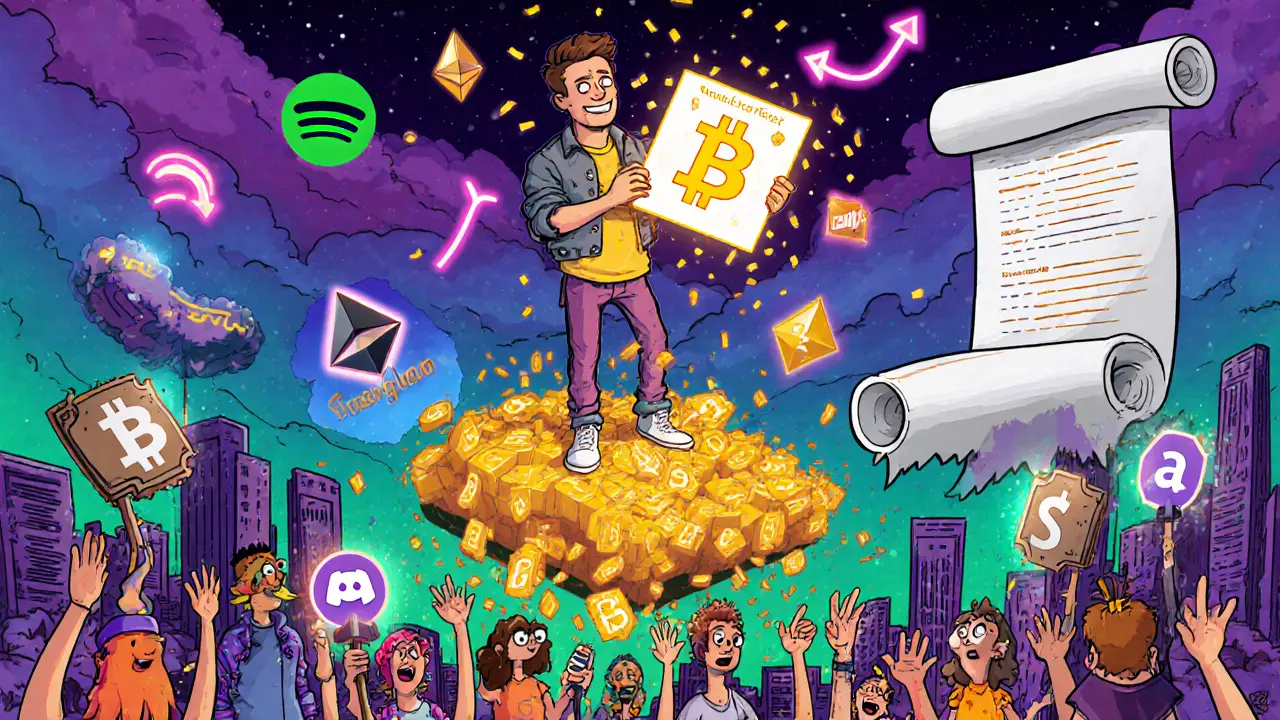
When you buy an NFTs in music, unique digital tokens that prove ownership of audio, artwork, or experiences tied to a song. Also known as music NFTs, they let artists sell a piece of their work directly to fans—no record label, no streaming cut. This isn’t just about buying a cool digital collectible. It’s about shifting power back to the creator.
Before NFTs, artists got pennies from streaming platforms, and once a song was released, they lost control. With NFTs, a musician can sell a limited edition track, give buyers exclusive access to live shows, or even share future royalties every time the NFT changes hands. That’s a game-changer. You’re not just buying a song—you’re buying into the artist’s future. And fans? They get something real: early access, behind-the-scenes content, or even voting rights on the next album cover. It turns listeners into stakeholders.
But it’s not all smooth. Many music NFT projects have failed because they offered no real utility—just a JPEG of a waveform. The ones that work? They tie the NFT to something you can use: a concert ticket, a voice note from the artist, or a share of streaming revenue. The real value isn’t in the file—it’s in the connection. And that’s why some of the biggest names in music, from Kings of Leon to Snoop Dogg, are testing this. They’re not chasing hype. They’re chasing ownership.
What you’ll find below isn’t a list of the hottest NFT drops. It’s a collection of real stories—some successful, some cautionary—about how blockchain is reshaping music. You’ll see how artists are using NFTs to bypass traditional gatekeepers, how fans are getting paid to support their favorite bands, and why some projects vanished overnight. Whether you’re an artist, a fan, or just curious, this is where the music industry is actually changing—right now.