Non-Fungible Tokens Guide: What They Are, How They Work, and What You Need to Know
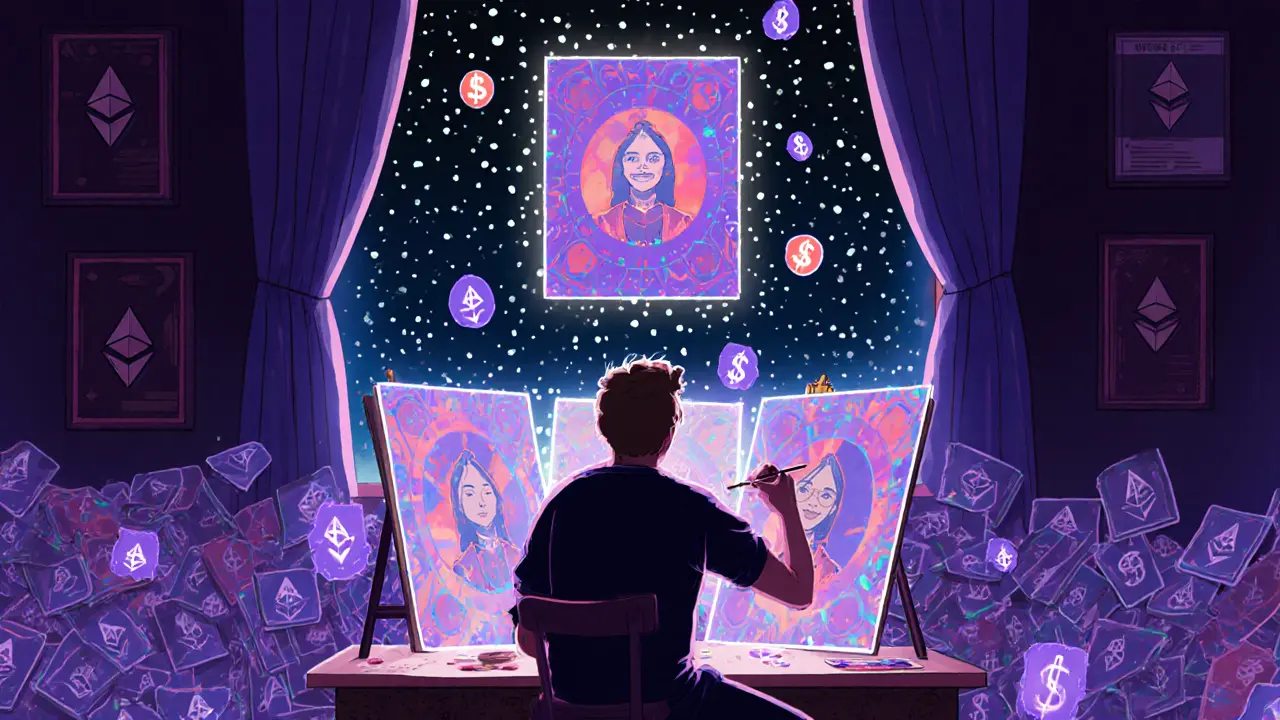
When you hear non-fungible tokens, unique digital assets stored on a blockchain that can’t be swapped one-for-one like currency. Also known as NFTs, they represent ownership of one-of-a-kind items — from digital art to in-game gear, music, or even virtual land. Unlike Bitcoin or Ethereum, where every unit is identical and interchangeable, each NFT is its own thing. That’s why you can’t trade one NFT for another and expect the same value. One might be a pixelated ape worth $100,000. Another could be a digital sneaker worth $5. It all depends on what it is, who made it, and who wants it.
NFTs rely on blockchain, a public digital ledger that records transactions securely and permanently. Also known as distributed ledger technology, it’s what makes NFTs verifiable and tamper-proof. When someone buys an NFT, the transaction is locked into the blockchain — no middleman, no guesswork. That’s why people care about provenance. Did this artwork really come from the artist? Was this virtual item owned by someone famous before? The blockchain answers those questions. But here’s the catch: owning an NFT doesn’t always mean you own the copyright. You own the token. The image or file might still be copied everywhere else online. That’s a big source of confusion.
digital ownership, the idea that you can truly possess something digital, not just access it is what makes NFTs powerful — and controversial. Think of it like buying a physical painting. You don’t own the idea of the painting, but you own that specific canvas. NFTs try to do the same for digital stuff. But most NFTs today aren’t art. They’re speculative bets. Many projects vanish. Others have zero utility. You’re not buying a song — you’re buying a digital receipt that says you own one of 10,000 copies. And if no one else cares, it’s just a JPEG with a blockchain stamp.
Some NFTs are tied to real-world use. Like in-game items in play-to-earn games, or access passes to exclusive events. Others are just collectibles, like digital trading cards. A few even let you vote in DAOs or unlock software. But the market is messy. Most NFTs have no trading volume. Prices swing wildly. Scams are common. You’ll find projects with no team, no roadmap, and zero community — yet they still get listed on exchanges. That’s why checking the background matters more than the hype.
And then there’s the environmental angle. Early NFTs on Ethereum used tons of energy. That’s changed with newer blockchains like Solana, Polygon, and Flow — which use way less power. But the old stigma still sticks. People forget that not all NFTs are the same. Some are built to last. Others are built to flip and disappear.
What you’ll find below isn’t a list of top NFTs to buy. It’s a collection of real stories — some about failed tokens, others about platforms that actually delivered. You’ll see how NFTs connect to airdrops, exchanges, and even scams. One post breaks down a fake gaming token that promised NFTs but had no game. Another explains why a popular NFT collection went silent after its launch. There’s even a case where someone got stuck with an NFT that turned out to be a token swap in disguise. These aren’t theoretical. They’re real experiences from people who thought they were buying the future — and ended up learning the hard way.