Norway Mining Regulations: What You Need to Know in 2025
When it comes to Norway mining regulations, the legal and environmental framework governing cryptocurrency mining operations in Norway. Also known as Norwegian crypto mining laws, it combines abundant hydropower with tight oversight to create one of the world’s most unusual crypto mining environments. Unlike countries that ban or ignore mining, Norway lets you run rigs—but only if you play by their rules.
Here’s the real deal: Norway doesn’t ban crypto mining. In fact, it encourages it because of its massive renewable energy surplus. Over 95% of its electricity comes from hydropower, making it one of the cheapest places on Earth to mine Bitcoin. But there’s a catch. The government doesn’t care if you’re mining—it cares about carbon footprint, the total greenhouse gas emissions caused by energy use. If your mining operation draws too much power from the grid, local authorities can shut you down. You can’t just plug in a warehouse full of ASICs and call it a day. You need permits, environmental impact assessments, and proof you’re not overloading regional infrastructure.
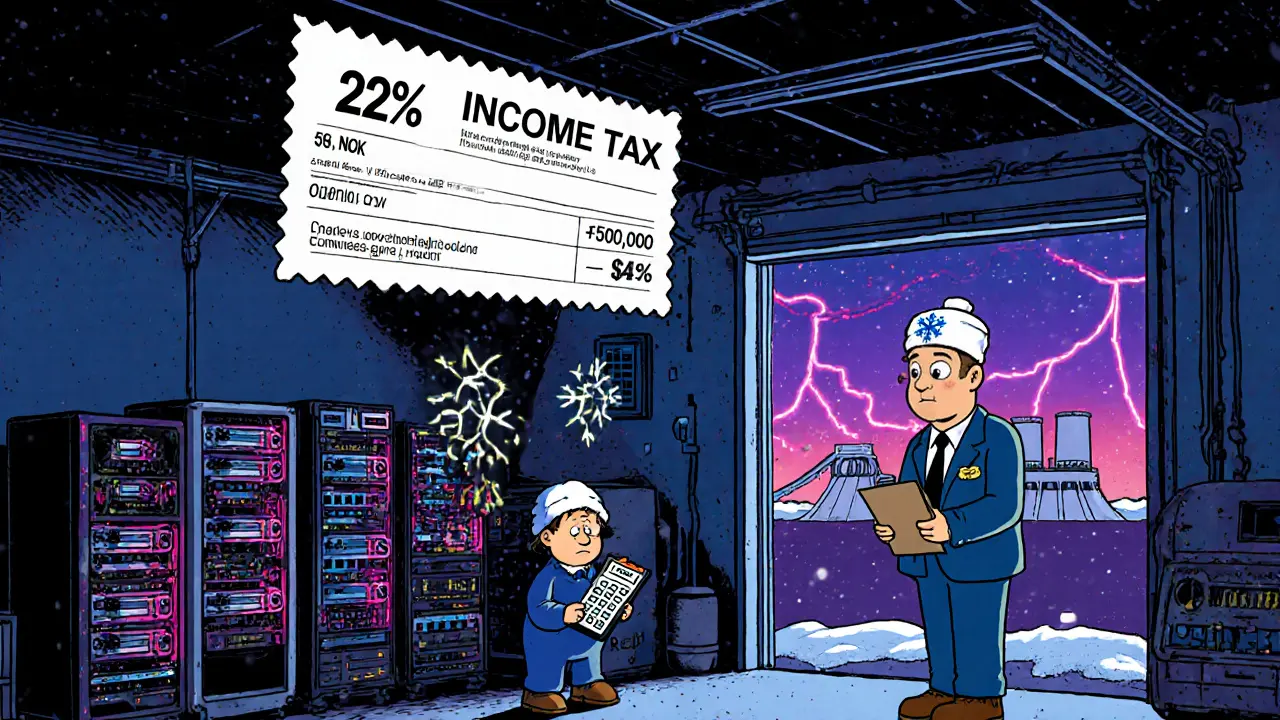
Then there’s crypto tax Norway, how the Norwegian Tax Administration treats profits from cryptocurrency mining and trading. Mining rewards are treated as income, taxed at your personal rate—up to 38.2%. If you sell those coins later, you pay capital gains on the profit. No loopholes. No exemptions. The tax agency tracks wallet addresses and cross-references exchange data. Even if you’re mining from your basement, you’re still on the radar.
What about hardware? Norway doesn’t restrict what gear you use, but if you import mining equipment, you pay VAT—25%. And if you’re a company, you need to register with the Brønnøysund Register Centre. Individuals? You don’t need a business license, but you still report every satoshi. There’s no official registry of miners, but local energy providers monitor usage spikes. If your household suddenly uses 30 kW, expect a call.
And don’t think you can hide behind anonymity. Norway is part of the EU’s MiCA framework, which means crypto service providers must comply with KYC and transaction reporting—even if you’re just mining. Exchanges operating in Norway report user data to the tax authority. Your wallet isn’t private if you cash out locally.
So who’s still mining here? Mostly small-scale operators with access to surplus hydropower—like farms with unused capacity, or tech-savvy homeowners with old industrial buildings. Big mining farms? They’re rare. The cost of compliance, permits, and energy infrastructure outweighs the savings from cheap power for most corporations.
What you’ll find in the posts below are real stories from people who’ve navigated this system. You’ll see how one miner in Tromsø got his permit approved, why another gave up after a 6-month audit, and how a group in Bergen turned a garage into a legal mining node. You’ll also find warnings about fake "Norway mining license" scams targeting foreigners online. This isn’t a free-for-all. It’s a carefully balanced system—and if you’re serious about mining here, you need to know the rules before you plug in.