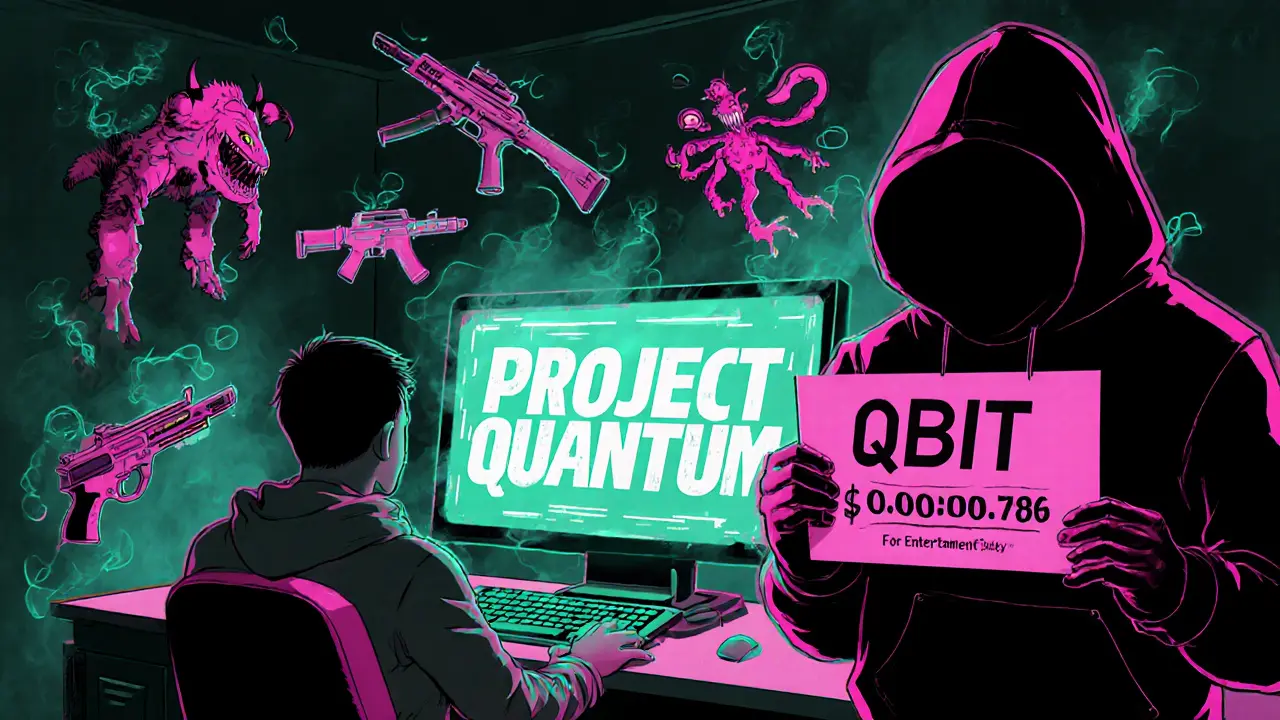
QBIT Coin: What It Is, Where It’s Traded, and Why It Matters
When you hear QBIT coin, a low-profile cryptocurrency with no clear whitepaper or development team. Also known as QBIT, it’s one of hundreds of tokens that pop up on decentralized exchanges with little fanfare but big hype cycles. Unlike Bitcoin or Ethereum, QBIT doesn’t have a well-documented history. It doesn’t run on a major chain like Ethereum or Solana. Instead, it lives on smaller networks—often BSC or Polygon—where new tokens launch daily with promises of quick returns and zero transparency.
QBIT coin relates to other meme coins, speculative tokens driven by community buzz, not utility. It shares traits with Pepes Dog (ZEUS) and TajCoin (TAJ), which also have massive supplies, no team, and no real use case. Like those, QBIT thrives on social media chatter, not technical innovation. It doesn’t power a DeFi protocol, isn’t part of a gaming ecosystem, and doesn’t solve a real problem. Its value comes from whether someone else is willing to pay more for it tomorrow. That’s why it shows up in lists alongside failed tokens like Flowmatic ($FM) and MetaniaGames (METANIA)—all examples of assets that gained attention briefly, then vanished from trading volume and community activity.
What makes QBIT different from other obscure coins? Not much. But that’s the point. The crypto market runs on noise. A single tweet, a Telegram group, or a fake YouTube review can send a token like QBIT into a short-lived spike. You’ll find it listed on small exchanges that don’t require KYC, where liquidity is thin and exit scams are common. If you’re looking for long-term value, QBIT won’t deliver. But if you’re testing how fast a token can rise and fall—then it’s a perfect case study.
Below, you’ll find real reviews and deep dives into similar tokens. Some posts expose scams pretending to be QBIT. Others show how entire communities vanish overnight. You’ll learn how to spot the difference between a dead token and a risky gamble. No fluff. No promises. Just facts about what’s real, what’s fake, and what you should avoid.