Sharding Benefits: How Blockchain Splitting Boosts Speed and Scalability
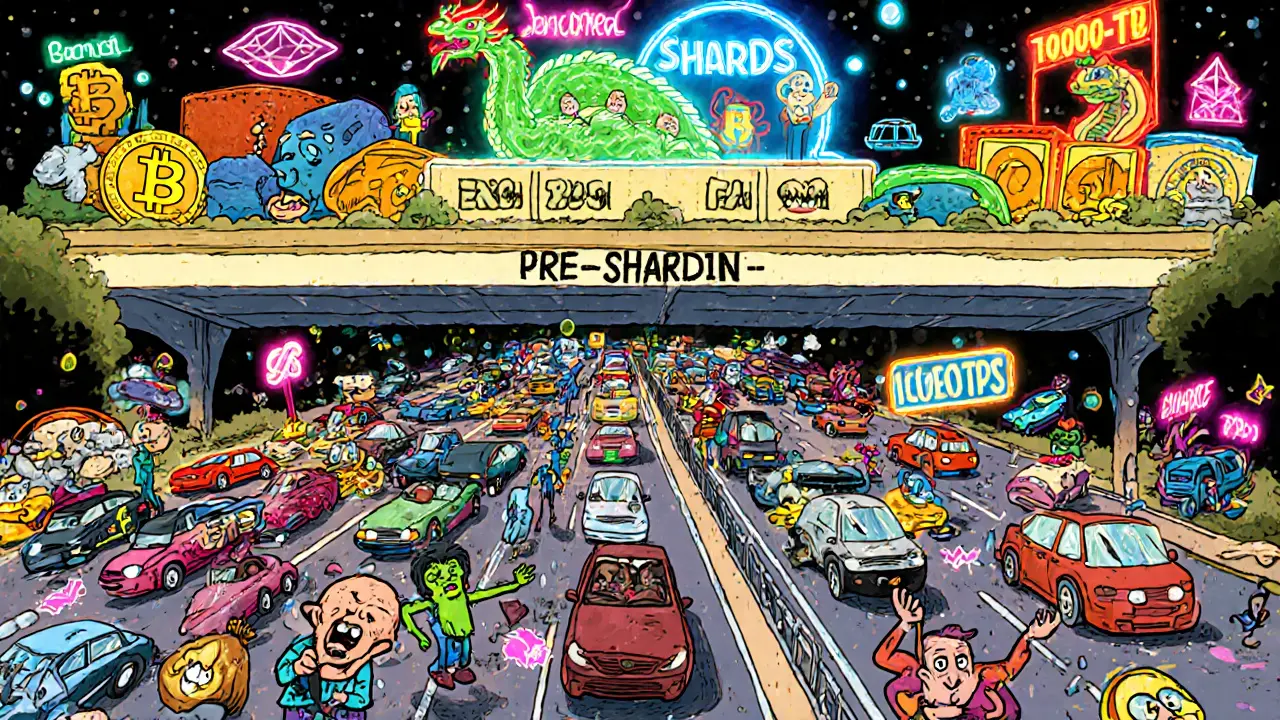
When a blockchain gets crowded, it slows down. Transactions take longer. Fees spike. That’s where sharding, a technique that splits a blockchain into smaller, parallel chains called shards. It’s not magic—it’s engineering. Think of it like adding more checkout lanes at a grocery store instead of making one line longer. Each shard handles its own transactions, reducing the load on the whole network. This is why Ethereum sharding, a major upgrade planned to scale Ethereum’s capacity is such a big deal. Without sharding, blockchains struggle to support millions of users without becoming painfully slow or expensive.
Sharding doesn’t just make things faster. It also makes blockchains more efficient. Instead of every node verifying every transaction, each shard only needs to validate its own piece. That cuts down on energy use and hardware demands. It also lowers barriers for new participants. You don’t need a supercomputer to run a node anymore—you just need enough power to handle one shard. This is why projects like blockchain scalability, the broader goal of making blockchains handle higher transaction volumes rely on sharding as a core strategy. It’s not just about speed. It’s about making crypto usable for everyday people, not just tech elites with expensive rigs.
But sharding isn’t a silver bullet. It introduces new challenges—like ensuring shards stay secure and don’t get attacked independently. It also requires strong coordination between shards to prevent double-spending. That’s why only a few major blockchains have fully rolled it out. Still, the sharding benefits, the measurable improvements in throughput, cost, and accessibility are clear enough that nearly every serious blockchain project is working on it. You’ll see it in action in updates to Ethereum, Zilliqa, and other networks aiming for mass adoption.
Below, you’ll find real-world breakdowns of how sharding affects exchanges, DeFi platforms, and even mining setups. Some posts show how sharding enables lower fees on DeFi apps. Others reveal how it changes the way traders interact with networks. You won’t find fluff here—just clear examples of what sharding actually does when it’s working, and what happens when it’s not.