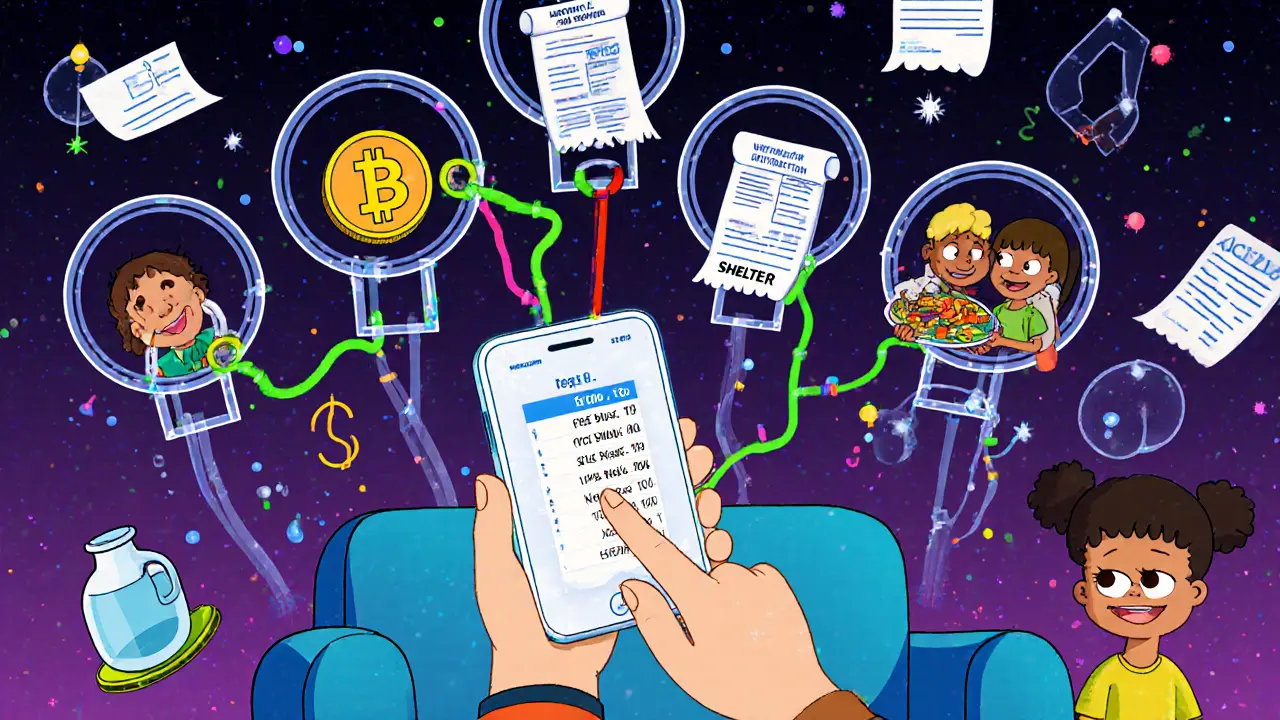
Transparent Charity in Crypto: How Blockchain Builds Trust in Donations
When you give to a transparent charity, a nonprofit that uses blockchain to publicly show how every dollar is spent. Also known as on-chain philanthropy, it removes the black box that traditional charities often operate in. Instead of relying on annual reports or third-party audits, you can track your donation from wallet to project in real time. This isn’t theory—it’s happening right now, with real tokens moving on public ledgers that anyone can verify.
Blockchain makes this possible because every transaction is permanent, date-stamped, and visible. If a charity receives 100 ETH to build clean water wells in Kenya, you can see exactly when that ETH arrived, which address it was sent to, and where it went next—whether to a supplier, a local partner, or a contractor. No middlemen. No hidden fees. No guesswork. That’s the core of crypto donations, using cryptocurrency to fund charitable causes with full public visibility. And it’s not just about sending money. Some groups issue tokens tied to outcomes—like a token for every liter of water delivered—so donors can see impact in real time.
But not all crypto charities are real. Many use the buzzword "transparent" to look legit while hiding behind anonymous wallets or fake audits. That’s why the difference between a blockchain transparency, the actual use of public ledgers to prove fund usage. and a marketing gimmick matters. Look for charities that link their wallets to public dashboards, publish smart contract addresses, and let you trace every transfer. Projects like GiveCrypto, BitGive, and Gitcoin have done this well—proving that when you combine open tech with clear goals, trust follows.
The real power of crypto philanthropy, using digital currencies to support social causes with verifiable outcomes. isn’t just accountability—it’s scale. A donor in Germany can fund a school in Nigeria without waiting weeks for bank transfers or paying 10% in fees. And because crypto moves 24/7, emergency aid can reach disaster zones faster than ever. But it’s not magic. It still needs human oversight. Smart contracts don’t fix bad management. Public ledgers don’t stop fraud if the charity itself is dishonest. The tech just makes it harder to hide.
What you’ll find in these posts are real cases—some working, some failing. You’ll see how a charity’s wallet was traced after a donation surge, how a token-based giving model collapsed due to zero oversight, and why some "transparent" projects had no public ledger at all. You’ll learn what to look for before you send your first crypto donation, and how to spot the difference between a project that’s open by design and one that’s just pretending.