Benefits of Social Tokens for Communities
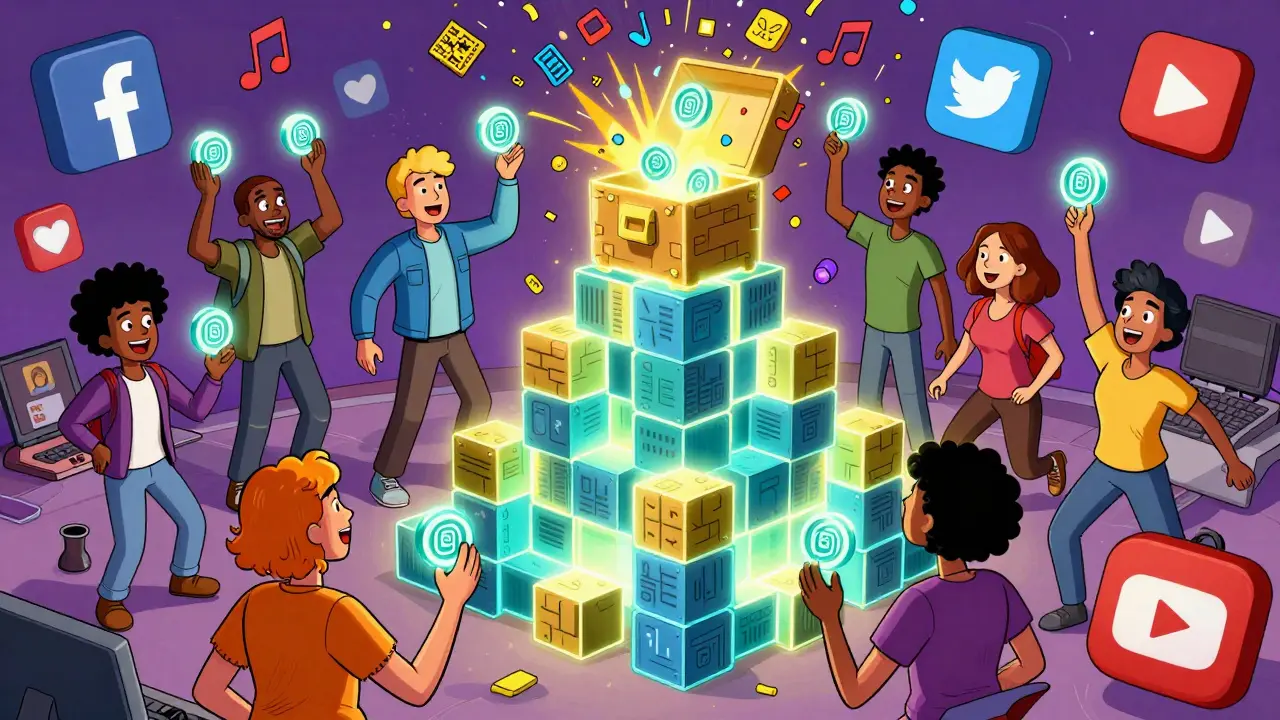
Social tokens let communities own their value, govern decisions, and earn from growth - turning passive members into active stakeholders in a new Web3 economy.
When you join a Web3 community, a decentralized network of users who collaborate, govern, and share value through blockchain-based tools and tokens. Also known as blockchain communities, it isn’t just a Discord server or a Telegram group—it’s a digital town square where ownership is coded into smart contracts, not just promised in a whitepaper. Unlike old-school online forums, these groups don’t rely on a CEO or a moderator to decide what happens next. Instead, members hold tokens that give them voting power, access to rewards, or even a share in the project’s treasury. This shift turns passive followers into active participants.
Real tokenized communities, groups where membership and influence are tied to digital tokens issued on a blockchain. Also known as crypto communities, it works like this: you earn a token by contributing time, content, or capital, and that token lets you propose changes, vote on upgrades, or claim airdrops. Look at platforms like Rally and Roll—creators turned fans into co-owners. Or take Ref Finance and VVS Finance, where users didn’t just trade tokens—they helped shape the platform’s rules. These aren’t hypotheticals. They’re live systems with real people making decisions, sometimes with as little as $10 in tokens. Meanwhile, decentralized autonomous organizations, governance structures where rules are automated on-chain and decisions are made by token holders. Also known as DAOs, it’s the engine behind many of these communities. But here’s the catch: most DAOs fail because no one shows up to vote. The best ones solve this by rewarding participation, not just ownership. They don’t just talk about decentralization—they bake it into daily life. You’ll see this in the posts below: some communities built real utility around gaming, real estate, or creator economies. Others collapsed because they were just hype wrapped in a token.
What ties these stories together? Web3 communities only thrive when they give people something to own, not just something to follow. Whether it’s voting on a new feature in a DeFi app, claiming a share of an NFT-backed property, or earning tokens for helping moderate a forum—the value has to be tangible. The posts here show you what worked, what didn’t, and why some projects turned into digital cooperatives while others vanished overnight. You’ll find real examples: from the XGT airdrop that never happened to the SoccerHub token that actually got used in a game. No fluff. Just what people did, what they lost, and what they gained.
4 December
Social tokens let communities own their value, govern decisions, and earn from growth - turning passive members into active stakeholders in a new Web3 economy.