Woof Finance Crypto Exchange Review: Is This Platform Legit or a Scam?
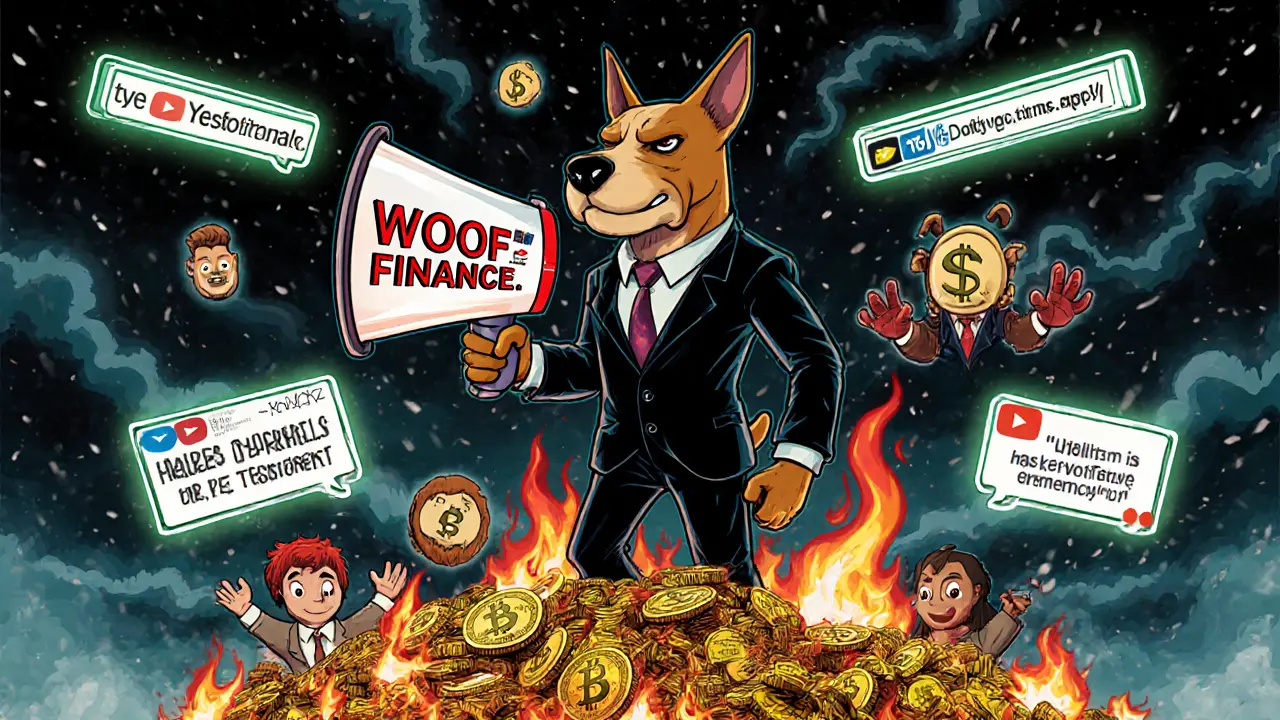
Woof Finance is not a real crypto exchange - it's a scam. Learn how the WOOF token骗局 works, red flags to spot, and safe alternatives to protect your funds in 2025.
When people talk about WOOF token, a meme-driven cryptocurrency built on blockchain networks with no central team or roadmap. Also known as WOOF, it’s one of hundreds of tokens that ride hype cycles instead of fundamentals. Unlike coins like Bitcoin or Ethereum, WOOF doesn’t solve a problem, fund infrastructure, or offer DeFi tools. It exists because people find it funny, share it online, and sometimes make money from the chaos.
WOOF token relates directly to other meme coins, crypto assets that gain value through internet culture rather than technical innovation. Also known as dog coins, they include names like Dogecoin, Shiba Inu, and Pepes Dog (ZEUS). These tokens often start as jokes, get picked up by influencers, and explode in price — then crash just as fast. WOOF fits right in. It’s not listed on major exchanges like Binance or Coinbase. You’ll find it on small, decentralized platforms where liquidity is thin and risks are high.
Many people who trade WOOF are chasing crypto airdrops, free token distributions meant to build community around new projects. Also known as free crypto rewards, airdrops can be legitimate or total scams. WOOF itself didn’t have a real airdrop — but fake ones using its name pop up constantly. If someone tells you to send ETH to get WOOF tokens, it’s a scam. Real airdrops don’t ask for your money upfront. They give you tokens just for holding something else or completing a simple task.
WOOF also connects to the broader world of decentralized finance, a system where financial services run on blockchains without banks or middlemen. But here’s the catch: WOOF doesn’t enable DeFi. It doesn’t let you lend, borrow, or earn yield. It’s just a token. Real DeFi projects like Ref Finance (REF) or SushiSwap have code, users, and real trading volume. WOOF has memes and volatility.
There’s no team behind WOOF. No whitepaper. No updates. No roadmap. It’s not built on a new blockchain — it’s likely a BEP-20 or ERC-20 token slapped onto an existing network. That means it’s easy to create, hard to track, and impossible to regulate. If you hold WOOF, you’re betting on someone else buying it later — not on any real value.
That’s why WOOF shows up in posts about abandoned tokens, scam alerts, and risky bets. You’ll find stories about tokens like Flowmatic ($FM), TajCoin (TAJ), and Project Quantum (QBIT) — all similar in structure. Zero utility. Zero transparency. Just price swings driven by social media noise.
So why does WOOF still exist? Because crypto thrives on attention. People love underdogs. They love inside jokes. They love the idea that a single tweet could turn $10 into $1,000. WOOF isn’t an investment. It’s entertainment with risk. And if you’re smart, you treat it that way.
Below, you’ll find real reviews, scam breakdowns, and airdrop guides that show you how to spot the difference between noise and opportunity in crypto. Some tokens are built to last. Others? They’re just digital confetti. WOOF is one of them.
9 October
Woof Finance is not a real crypto exchange - it's a scam. Learn how the WOOF token骗局 works, red flags to spot, and safe alternatives to protect your funds in 2025.