
Iran’s electricity grid is falling apart. Homes go dark for hours. Factories shut down. But in hidden warehouses, military bases, and special economic zones, thousands of powerful computer rigs hum nonstop-consuming more power than entire cities-mining Bitcoin and other cryptocurrencies. And the people running them? They don’t pay bills. They don’t need permits. They answer only to the Islamic Revolutionary Guard Corps (IRGC).
The Real Cost of Iran’s Crypto Boom
In 2025, Iran is one of the top ten Bitcoin-producing countries in the world. But this isn’t a grassroots tech revolution. It’s a state-run energy heist. While ordinary Iranians struggle to keep their lights on during winter outages, the IRGC operates massive mining farms that use more electricity than the entire population of Tehran. These aren’t hobbyists with a few rigs in their garages. These are industrial-scale operations-some as large as 175 megawatts-running 24/7, powered by electricity meant for hospitals, schools, and homes. The scale is staggering. Roughly 180,000 mining devices are active across Iran. Of those, an estimated 100,000 are controlled by IRGC-linked entities. That means more than half of the country’s crypto mining is run by military and regime-affiliated organizations. Meanwhile, private miners face crushing regulations: they must pay high electricity rates and sell their mined coins directly to the Central Bank of Iran at fixed, below-market prices. Many have simply shut down.How the IRGC Built a Crypto Empire
The IRGC didn’t stumble into crypto mining. They planned it. By 2019, as U.S. and European sanctions choked Iran’s access to global banking, the regime needed a new way to move money. Cryptocurrency was the perfect solution. No banks. No audits. No borders. Just digital wallets and blockchain. The IRGC moved fast. They partnered with Chinese hardware suppliers to import thousands of ASIC miners-specialized machines built for mining Bitcoin. They built massive farms in Rafsanjan, Kerman, and other remote provinces, often inside military compounds or under the cover of religious foundations like Astan Quds Razavi, a vast charitable trust directly controlled by Supreme Leader Ali Khamenei. These operations don’t just avoid paying for electricity-they actively divert it. In 2022, Iran’s parliament quietly passed a law allowing the military to build private power plants and bypass the national grid. The IRGC now runs its own transmission lines, siphoning subsidized electricity from public grids and routing it straight to their mining rigs. When cities experience blackouts, it’s not because of a shortage. It’s because the IRGC took it.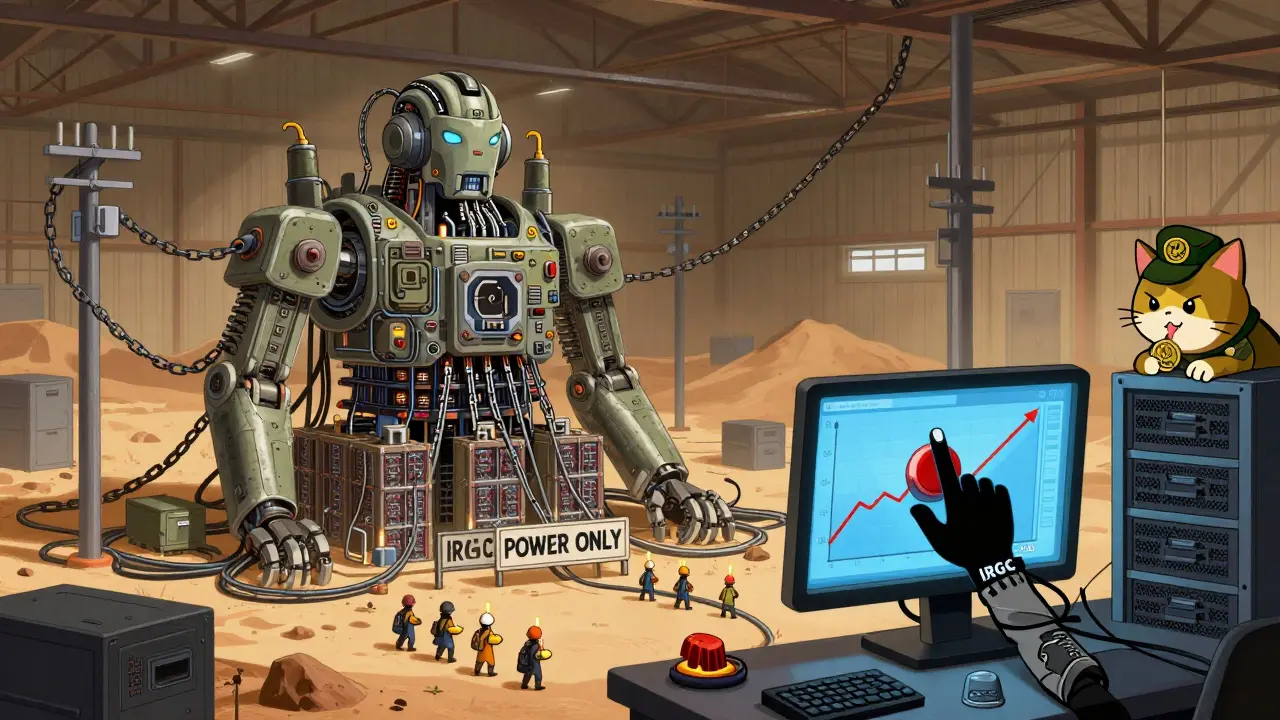
A Two-Tiered System: Who Gets Power, Who Doesn’t
There are two types of miners in Iran: the ones who get arrested, and the ones who get protected. Private miners who operate without licenses face fines, equipment seizures, and even jail time. The government has raided homes and warehouses, confiscating mining rigs and accusing owners of “energy theft.” But when those same rigs are owned by IRGC-affiliated companies, they’re treated as national assets. No inspections. No penalties. No questions asked. Even the Energy Minister, Ali Abadi, admitted the problem. He called unlicensed mining “an ugly and unpleasant theft.” But Abadi isn’t just a bureaucrat-he’s a former IRGC commander. He once led military engineering units. He now runs the country’s energy policy. His words ring hollow when his own former colleagues are the ones stealing the power. This isn’t corruption. It’s institutionalized plunder. The IRGC doesn’t break the rules. They rewrite them.How Crypto Helps the IRGC Evade Sanctions
The real goal isn’t just to mine Bitcoin. It’s to use it as a financial weapon. International sanctions have frozen Iran’s access to SWIFT, blocked foreign bank accounts, and cut off access to dollar reserves. But cryptocurrency doesn’t care about sanctions. Bitcoin transactions move peer-to-peer. No bank clearance. No paper trail. Just a wallet address and a digital signature. Blockchain analysts have traced millions of dollars in Bitcoin transactions directly to wallets linked to IRGC-affiliated entities. These funds are used to buy weapons, pay proxy militias in Yemen and Syria, and fund cyberattacks against foreign governments. The U.S. Treasury Department and Israeli intelligence have both identified Iranian crypto wallets tied to IRGC operations and frozen them-but the regime simply creates new ones. Iran’s crypto mining isn’t about wealth. It’s about survival. And it’s working.







Allen Dometita
This is wild. The IRGC turning electricity into digital gold? Bro, that's next-level capitalism meets dystopia. 🤯