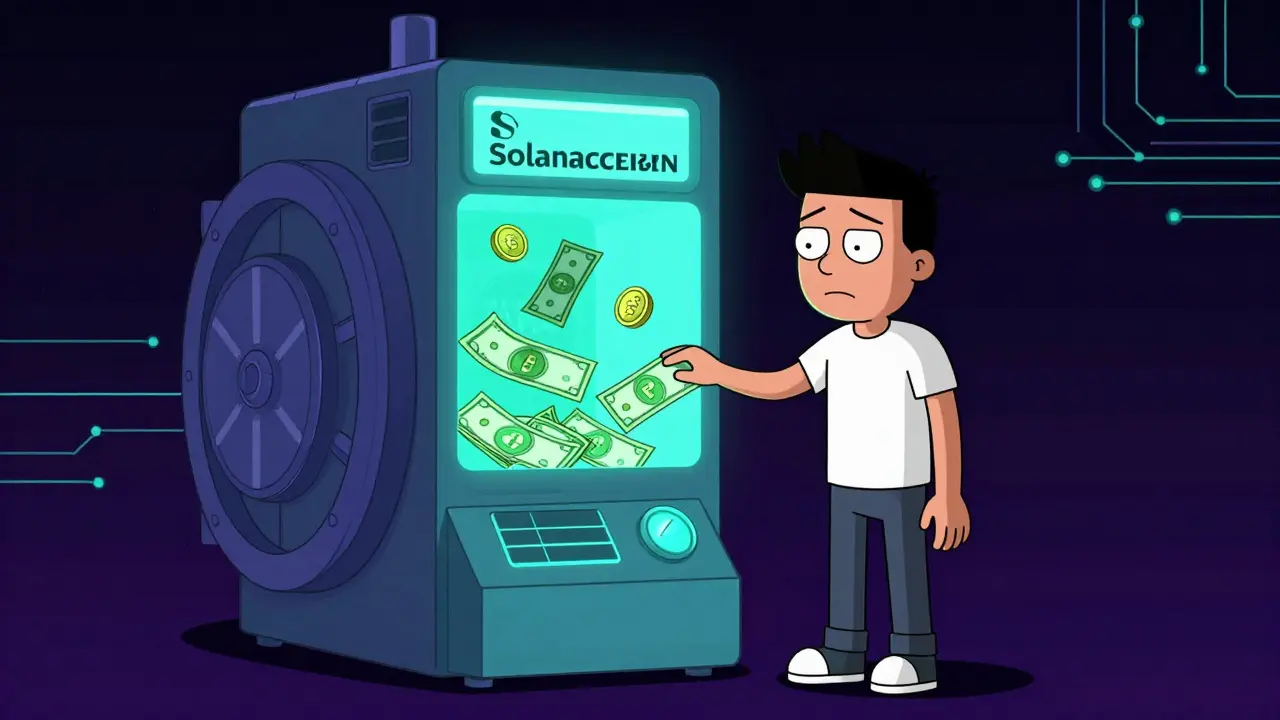
You might have stumbled upon the ticker PRT on a chart or heard whispers of it in old Solana community chats. If you are asking "what is Parrot Protocol" today, you are likely looking for more than just a definition; you are probably wondering if this asset still holds any value or if it is a relic of a past market cycle. The short answer is that Parrot Protocol was once a promising decentralized finance (DeFi) project on the Solana blockchain, but its status has changed dramatically due to controversial governance decisions.
To understand where things stand in 2026, we need to look back at what Parrot actually built, how its native stablecoin PAI worked, and why the PRT governance token faced a near-total phase-out. This isn't just a history lesson; it's a case study in how on-chain governance can go wrong and what it means for your portfolio.
The Core Concept: Unlocking Liquidity on Solana
Launched during the explosive growth phase of Solana DeFi in 2021, Parrot Protocol was designed as a non-custodial lending platform that allowed users to borrow against yield-bearing assets. In simple terms, if you held an asset that was earning interest-like staked SOL or another liquidity provider token-you didn't want to sell it and lose those rewards. But you might need cash (or a stablecoin) to trade elsewhere.
Parrot solved this by letting you deposit those yield-bearing tokens as collateral. You could then mint or borrow PAI (Parrot USD), the protocol's dollar-pegged stablecoin. This concept, known as "unlocking liquidity," was crucial for deepening the Solana ecosystem. It meant capital wasn't sitting idle; it was working in two places at once. The protocol relied on Solana’s high throughput and low transaction fees to make these complex borrowing operations cheap and fast, unlike the expensive gas wars often seen on Ethereum.
Key Components: PAI, Lending, and vAMM
The Parrot ecosystem wasn't just one product; it was a suite of financial tools. Understanding these components helps explain why the project had utility before the controversy hit.
- PAI Stablecoin: This was the heart of the system. PAI was an algorithmic/collateralized stablecoin pegged to the US Dollar. Users borrowed PAI against their collateral. Data from analytics platforms like DefiLlama tracked PAI's market cap and peg stability, showing it fluctuated around $1.00, though often trading slightly off-peg (e.g., $0.95-$0.99) depending on market stress.
- Non-Custodial Lending: Unlike traditional banks, Parrot never took custody of your funds in a centralized way. Your assets remained in smart contracts on the Solana blockchain. Interest rates were determined algorithmically based on supply and demand.
- vAMM (Virtual Automated Market Maker): For traders, Parrot offered margin trading via a vAMM. Instead of a traditional order book, this virtual model allowed users to open leveraged positions efficiently. This was popular among sophisticated DeFi users who wanted exposure to price movements without locking up massive amounts of capital.

The PRT Token: Governance and Its Downfall
Here is where the story takes a sharp turn. The PRT token served as the governance token for the Parrot Protocol ecosystem. Holders were supposed to vote on proposals, adjust risk parameters, and guide the protocol's future. Typically, holding a governance token implies a long-term stake in the project's success.
However, in mid-2023, a major shift occurred. An activist investor-led plan proposed phasing out the PRT token entirely. The plan involved using the protocol's treasury funds to buy back PRT tokens from the market and then retiring them. While this might sound like a standard stock buyback in traditional finance, in the crypto world, it sparked outrage.
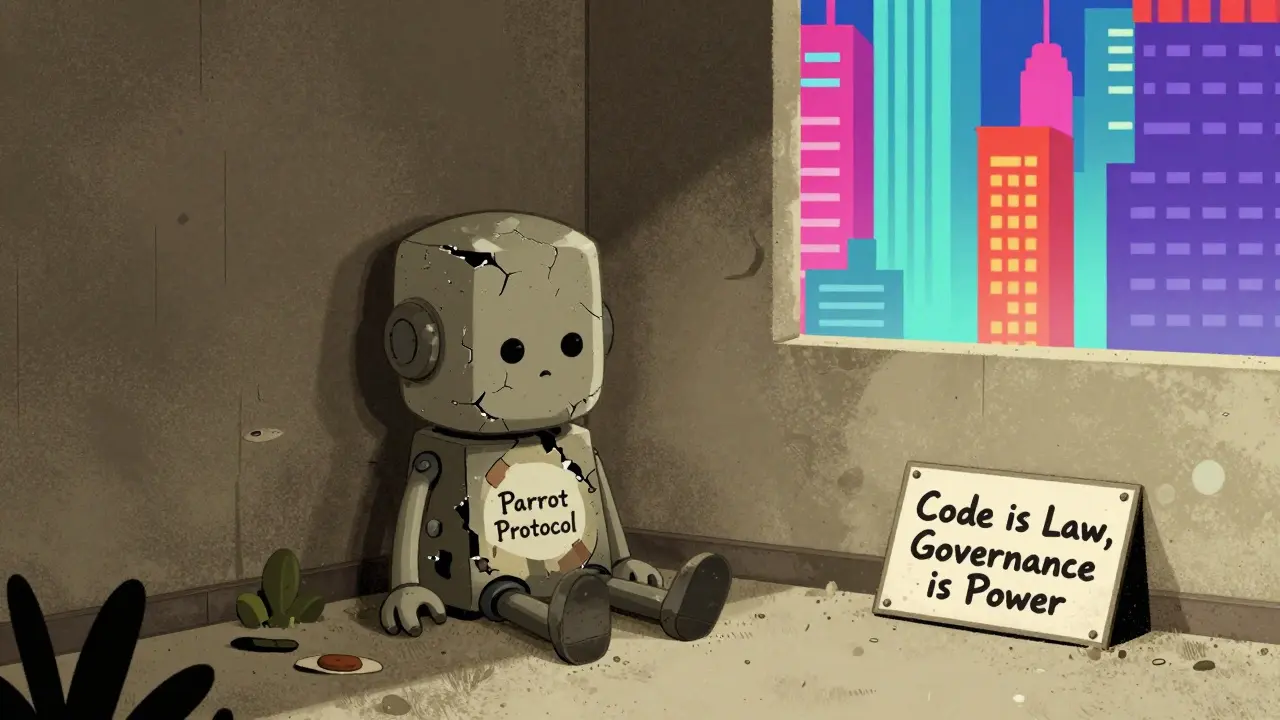
Critics labeled this move a "soft rug pull." A rug pull usually involves developers draining liquidity and disappearing overnight. A "soft" version uses legalistic on-chain governance mechanisms to extract value or wind down a project, leaving retail investors with worthless tokens. The buyback effectively signaled that the protocol no longer needed a governance token, rendering PRT obsolete. Consequently, the price of PRT collapsed. By recent snapshots, data aggregators like Yahoo Finance listed PRT at fractions of a cent (around $0.00002), reflecting a severe loss of confidence and utility.
| Asset | Function | Current Status (2026 Context) | Risk Level |
|---|---|---|---|
| PAI (Parrot USD) | Borrowable stablecoin pegged to USD | Active but low liquidity; peg stability varies | High (Algorithmic/Collateral risk) |
| PRT (Governance) | Voting rights and ecosystem participation | Phased out/Buyback completed; negligible value | Extreme (Legacy asset) |
Why Does This Matter for Crypto Investors?
If you are researching Parrot Protocol today, you are likely evaluating risk. The Parrot saga highlights several critical lessons for navigating DeFi in 2026 and beyond.
- Governance Tokens Are Not Always Safe Havens: Just because you hold a voting token doesn't mean the project will prioritize your interests. Activist investors or core teams can pass votes that dilute or eliminate your holdings if the governance structure allows it.
- Liquidity Matters: PAI still exists, but its market cap is tiny compared to giants like USDC or USDT. Low liquidity means large trades can slip the price significantly, and exiting positions quickly can be difficult.
- Solana's Speed Is a Double-Edged Sword: While Solana offers fast transactions, it also enables rapid execution of controversial governance changes. There is less time for community pushback compared to slower chains.
Is Parrot Protocol Dead?
Technically, the smart contracts for lending and PAI minting may still function on the Solana blockchain. You can likely still find PAI listed on some exchanges or DEXs. However, the "spirit" of the project as a growing, community-governed DeFi powerhouse has largely faded. The PRT token is effectively a legacy asset with minimal utility. The protocol serves as a cautionary tale rather than a primary investment vehicle for most users.
For new users entering Solana DeFi, there are newer, more robust protocols offering similar lending and stablecoin services with clearer roadmaps and stronger community trust. Parrot remains a chapter in Solana's history-a reminder that code is law, but governance is power, and sometimes that power is used against the very holders it was meant to empower.
Can I still use the PRT token for anything?
As of 2026, the PRT token has largely lost its utility. Following the activist-led buyback and phase-out plan initiated in 2023, the token no longer serves a significant governance role. Its market value is extremely low, and it is not recommended for active trading or staking purposes.
Is PAI stablecoin safe to hold?
PAI carries higher risks than fiat-backed stablecoins like USDC. It is an algorithmic/collateralized stablecoin, meaning its peg to the US Dollar depends on the health of the underlying collateral and market demand. With lower liquidity and historical peg deviations, it is considered a high-risk asset suitable only for experienced DeFi users who understand smart contract and de-pegging risks.
What happened to Parrot Protocol's governance?
The governance model underwent a controversial shift when a proposal was passed to buy back and retire the PRT governance token using treasury funds. Critics described this as a "soft rug pull" because it effectively ended the long-term value proposition for token holders, redistributing wealth in a way that disadvantaged retail investors.
Does Parrot Protocol still operate on Solana?
The smart contracts remain on the Solana blockchain, and limited activity may still occur within the lending markets. However, the project has lost much of its prominence and user base compared to other leading Solana DeFi protocols. It is best viewed as a legacy project rather than a current industry leader.
How does Parrot compare to other Solana lending protocols?
Unlike newer competitors such as Marinade Finance or various emerging lending platforms, Parrot lacks active development momentum and strong community governance. Other protocols offer better liquidity, deeper integrations, and more transparent governance structures, making them safer choices for borrowers and lenders in the current market.