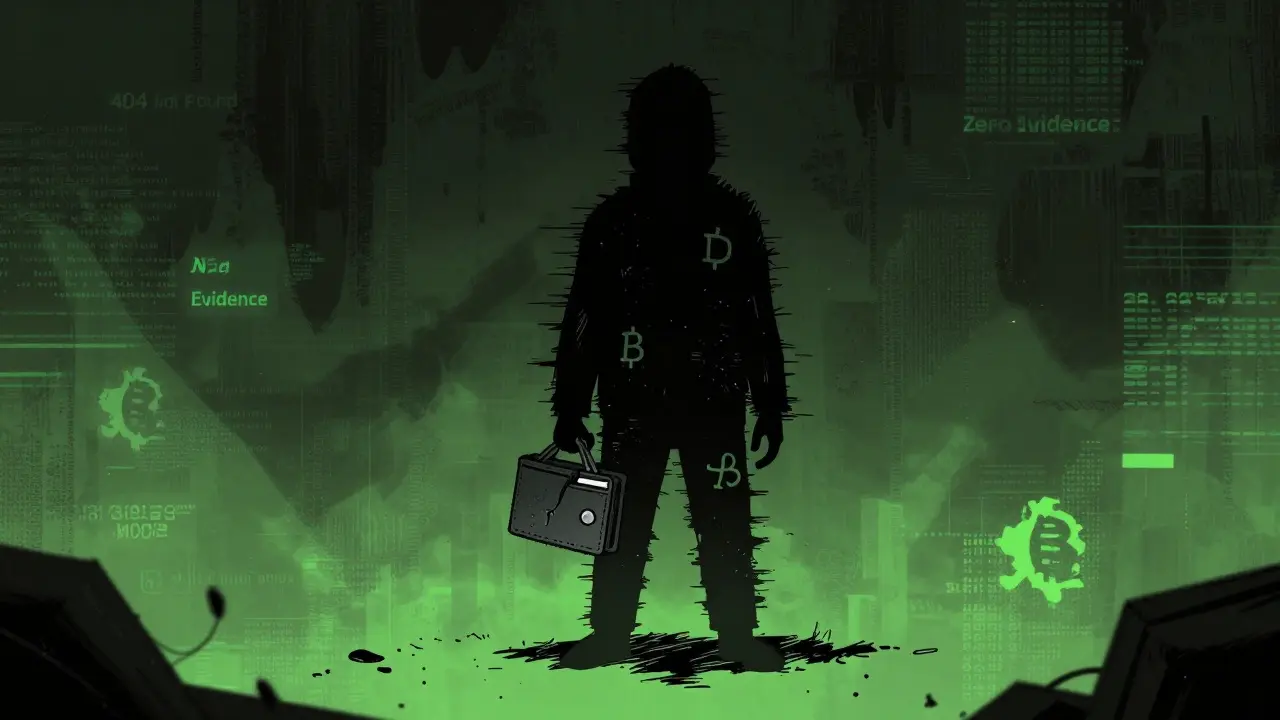
You’ve likely heard the name Koopal Dex pop up in a chat group, an ad on social media, or perhaps a direct message promising high returns. You want to know if it’s a legitimate place to trade your cryptocurrency. The short, hard answer is that you should stay far away from it. After digging through industry reports, security databases, and major crypto news outlets as of mid-2026, there is zero evidence that Koopal Dex is a real, operational, or safe decentralized exchange.
In the world of crypto, silence is usually a red flag. Legitimate platforms shout about their features, their security audits, and their user base. Koopal Dex whispers nothing because it doesn’t exist in any verifiable way. This article isn’t just about saying “no” to one platform; it’s about teaching you how to spot these fake exchanges before they drain your wallet. We’ll look at why this name appears, what the real risks are, and where you can actually trade safely in 2026.
The Verdict: Koopal Dex Does Not Exist
When we talk about a "review" for a non-existent entity, we aren't critiquing its interface or fees. We are analyzing its absence. In the crypto space, specifically within the Decentralized Exchange (DEX) sector, transparency is the baseline. A real DEX has smart contracts deployed on a public blockchain like Ethereum, BNB Chain, or Solana. These contracts are visible to anyone with a block explorer.
We checked the major block explorers. We checked the top aggregators like CoinGecko and CoinMarketCap. We looked at the 2025 and early 2026 industry rankings from reputable sources like 99Bitcoins, CryptoPotato, and Koinly. None of them list Koopal Dex. Not once. This is significant. The DEX market is crowded, but even niche players leave a digital footprint. If a platform claims to handle millions in volume, it will appear in liquidity tracking tools like DefiLlama. Koopal Dex does not.
This lack of presence points to three possibilities:
- It is a typo: You might be thinking of KuCoin (a centralized exchange) or another similarly named platform. However, KuCoin is well-known and distinct from the "Dex" branding.
- It is a brand new, unverified launch: New projects launch daily. But without a website, whitepaper, or social media following, it’s indistinguishable from a scam.
- It is a phishing scam: This is the most dangerous option. Scammers create fake websites that look like real exchanges to steal your private keys or seed phrases.
Given the complete lack of data, treating Koopal Dex as a potential threat is the only logical move. Do not connect your wallet to any site claiming to be Koopal Dex.
How Fake DEX Scams Work in 2026
If Koopal Dex is indeed a fraudulent operation, how would it try to trick you? Understanding the mechanics of these scams helps you protect yourself. Most fake DEXs don't have sophisticated technology; they rely on psychological pressure and technical ignorance.
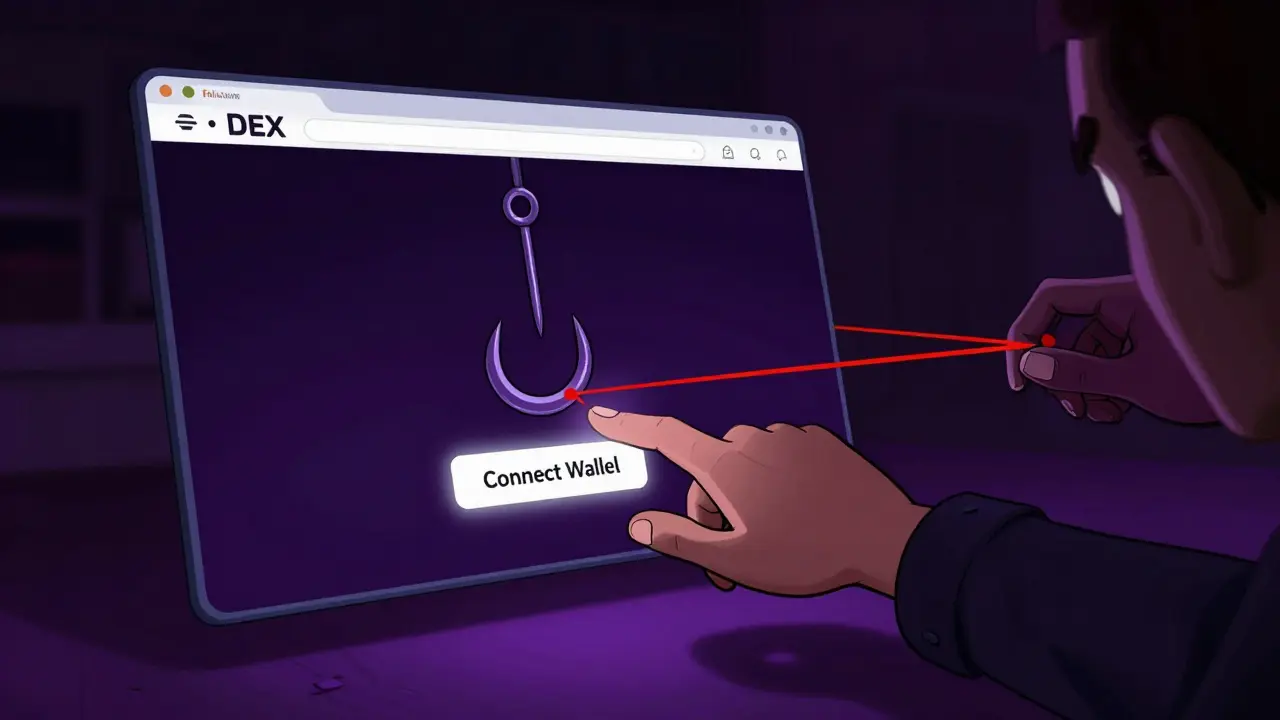
The Phishing Wallet Connect Scammers often set up a website that looks identical to a popular DEX like Uniswap or PancakeSwap. They use ads on Twitter or Telegram to drive traffic. When you visit, the site asks you to "Connect Wallet." If you click accept, you aren't just connecting; you are signing a malicious transaction. This transaction grants the scammers unlimited access to transfer tokens out of your wallet. Once signed, they drain your assets instantly. There is no customer support to call. The money is gone forever.
The Fake Token Trap Another common tactic involves creating a token with the same name as a legitimate project but deploying it on a different contract address. They might list this fake token on a shadow DEX. You buy what you think is a real asset, but it’s worthless code. You can sell it back into the pool, but when you try to withdraw the stablecoins or ETH you paid with, the function fails. The liquidity has already been pulled by the creators.
The "High Yield" Promise Fake platforms often promise guaranteed returns, like "1% daily APY" or "risk-free staking." Real decentralized finance (DeFi) carries risk. Returns come from trading fees or lending interest, which fluctuate. Guaranteed high returns are the hallmark of a Ponzi scheme. If a platform promises more than 10-20% annual yield with zero risk, it is lying.
Red Flags: How to Spot a Bogus Exchange
You don’t need to be a coder to identify a shady crypto platform. Look for these specific warning signs. If you see two or more of these, close the tab immediately.
| Red Flag | What It Means | Legitimate Behavior |
|---|---|---|
| No Audit Report | The code hasn't been checked by security firms. | Real DEXs publish audit results from firms like CertiK or OpenZeppelin. |
| Anonymous Team | No one is accountable if things go wrong. | While some DeFi is anonymous, established projects reveal key contributors. |
| Pressure to Act Fast | Scammers want you to skip due diligence. | Real platforms encourage research and patience. |
| Poor Website Quality | Spelling errors, broken links, generic stock photos. | Professional design, clear documentation, active GitHub repository. |
| Unverifiable Stats | Claims of "$1B Volume" with no proof. | Data matches independent trackers like DefiLlama or Dune Analytics. |
For Koopal Dex, every single one of these flags is raised simply because the platform cannot be verified. A legitimate business wants you to trust it. It provides contact info, legal structure, and technical details. A scam wants you to ignore questions and deposit funds.
Safe Alternatives: Where to Trade in 2026
Avoiding a scam is step one. Finding a reliable place to trade is step two. Since Koopal Dex is off the table, you need a DEX that is transparent, secure, and widely used. The good news is that the DEX landscape in 2026 is mature and robust. Here are the top contenders that actually exist and have proven track records.
Uniswap (Ethereum & Layer 2s) Uniswap remains the gold standard for decentralized trading. It operates on Ethereum and various Layer 2 networks like Arbitrum and Optimism. It uses an Automated Market Maker (AMM) model, meaning you trade against a pool of liquidity rather than another person. This ensures 24/7 availability. Uniswap V3 allows for concentrated liquidity, which improves capital efficiency for providers. It is open-source, audited, and handles billions in volume weekly. If you want to trade ERC-20 tokens, this is your safest bet.
PancakeSwap (BNB Chain) If you are trading on the Binance Smart Chain (now BNB Chain), PancakeSwap is the dominant player. It offers low fees and fast transactions compared to Ethereum mainnet. Beyond simple swaps, it provides yield farming, staking, and NFT marketplaces. The CAKE token powers its governance. Because it has been around since 2020, it has survived multiple market cycles and security challenges, proving its resilience.
Curve Finance (Stablecoins) Curve is specialized. It is designed primarily for swapping stablecoins (like USDC, USDT, DAI) with minimal slippage. Slippage is the difference between the expected price and the executed price. On general DEXs, swapping stablecoins can result in poor rates due to volatility algorithms. Curve’s stableswap algorithm keeps prices tight. It also supports wrapped assets like wBTC. For traders who need to move large amounts of value without losing money to spread, Curve is essential.
dYdX (Perpetual Trading) If you are looking for leverage and futures trading in a decentralized environment, dYdX is the leader. It operates on its own chain (dYdX Chain) based on Cosmos SDK. This allows for faster settlement and better privacy than Ethereum-based solutions. It offers perpetual contracts for Bitcoin, Ethereum, and other major assets. Unlike centralized exchanges like Binance, you retain custody of your funds via a non-custodial wallet connection.
Security Best Practices for DEX Users
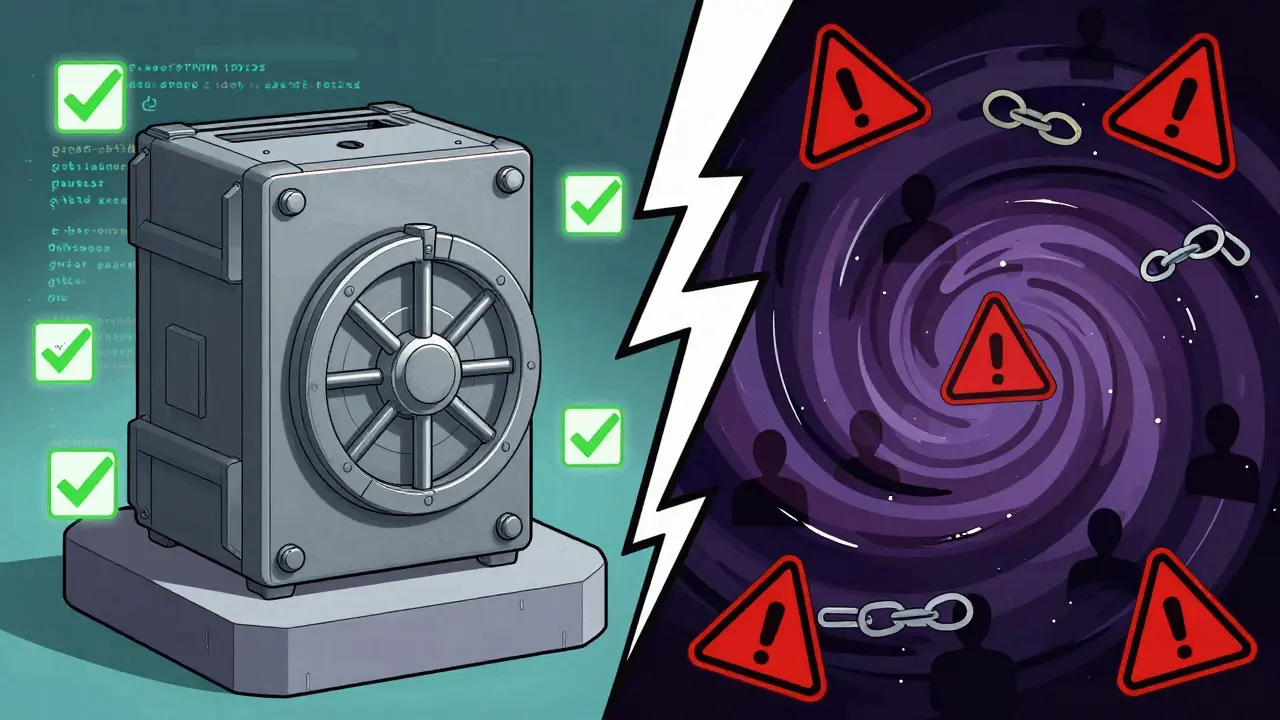
Even when using legitimate platforms like Uniswap or PancakeSwap, risks remain. Smart contract bugs, rug pulls by liquidity providers, and user error are real threats. Protecting yourself requires a disciplined approach.
Use a Hardware Wallet Never trade significant amounts from a software wallet like MetaMask on your phone or browser alone. Use a hardware wallet like Ledger or Trezor. These devices keep your private keys offline. Even if your computer gets malware, the attacker cannot sign transactions without your physical button press. For DEX interactions, ensure your hardware wallet is updated to the latest firmware.
Verify Contract Addresses Always double-check the token contract address before swapping. Scammers create fake tokens with the same symbol (e.g., $SHIB) but a different address. Copy the address directly from the official project website or a trusted aggregator like CoinGecko. Paste it into your DEX interface. Never type the address manually.
Revoke Permissions Regularly When you interact with a DEX, you approve certain contracts to spend your tokens. Sometimes, these approvals remain active indefinitely. If a DEX is hacked later, those old approvals could be exploited. Use tools like Revoke.cash to check and remove unnecessary permissions. Do this monthly.
Beware of Gas Wars During high network congestion, gas fees spike. Scammers sometimes front-run trades by detecting your pending transaction and buying the asset first, driving up the price so you pay more. Using Layer 2 networks like Arbitrum, Optimism, or Polygon reduces gas costs and minimizes exposure to these attacks.
Why Transparency Matters in DeFi
The core promise of decentralized finance is trustlessness. You shouldn’t have to trust a company; you should trust the code. This is why platforms like Uniswap publish their source code on GitHub. Anyone can inspect it. Auditors review it. If Koopal Dex existed and was legitimate, it would do the same. The absence of code, audits, and team information breaks the fundamental tenet of DeFi.
In 2026, regulatory scrutiny is increasing. Governments are demanding clearer rules for crypto businesses. Legitimate exchanges comply with these rules or operate clearly in decentralized jurisdictions with full transparency. Shadowy platforms that refuse to disclose basic information are likely operating outside the law. Engaging with them puts your funds at legal and financial risk.
Remember, in crypto, you are your own bank. That means you are also your own security guard. No one else will save you if you send funds to a void. By sticking to established, verified platforms and practicing strict security hygiene, you can participate in the benefits of DeFi without falling victim to scams like the alleged Koopal Dex.
Is Koopal Dex a legitimate cryptocurrency exchange?
No. As of 2026, there is no verifiable evidence that Koopal Dex is a real or operational decentralized exchange. It does not appear in major industry reviews, block explorers, or liquidity trackers. It is highly likely to be a scam or a misspelled name.
What should I do if I already connected my wallet to Koopal Dex?
Immediately disconnect your wallet from the site. Move your remaining funds to a new, clean wallet address. Check your transaction history for any unauthorized approvals or transfers. Use a tool like Revoke.cash to revoke all permissions granted to unknown contracts. Monitor your accounts closely for suspicious activity.
How can I verify if a DEX is safe before using it?
Check for security audits from reputable firms like CertiK or OpenZeppelin. Verify the platform’s presence on independent trackers like DefiLlama or CoinGecko. Look for an active GitHub repository with recent commits. Ensure the team is identifiable or the project has a long, transparent history. Avoid platforms that promise guaranteed high returns.
Are decentralized exchanges safer than centralized ones?
They offer different types of safety. DEXs reduce counterparty risk because you never hand over custody of your funds to a company. However, they introduce smart contract risk. If the code has a bug, hackers can exploit it. Centralized exchanges hold your funds, making them targets for hacks and bankruptcy (like FTX). DEXs are generally safer for self-custody, but require more user diligence.
What are the best DEX alternatives to Koopal Dex?
Top legitimate alternatives include Uniswap for Ethereum and Layer 2s, PancakeSwap for BNB Chain, Curve for stablecoin swaps, and dYdX for perpetual futures. These platforms are widely used, audited, and transparent.