XGT Airdrop Eligibility Checker
Check Your XGT Eligibility
This tool helps you verify if your Ethereum wallet might contain XGT tokens based on historical data. Remember: the Xion Finance airdrop never actually happened.
Eligibility Results
Important Warning: Any website claiming to help you "claim your XGT" is a scam. Xion Finance never distributed XGT tokens to anyone.
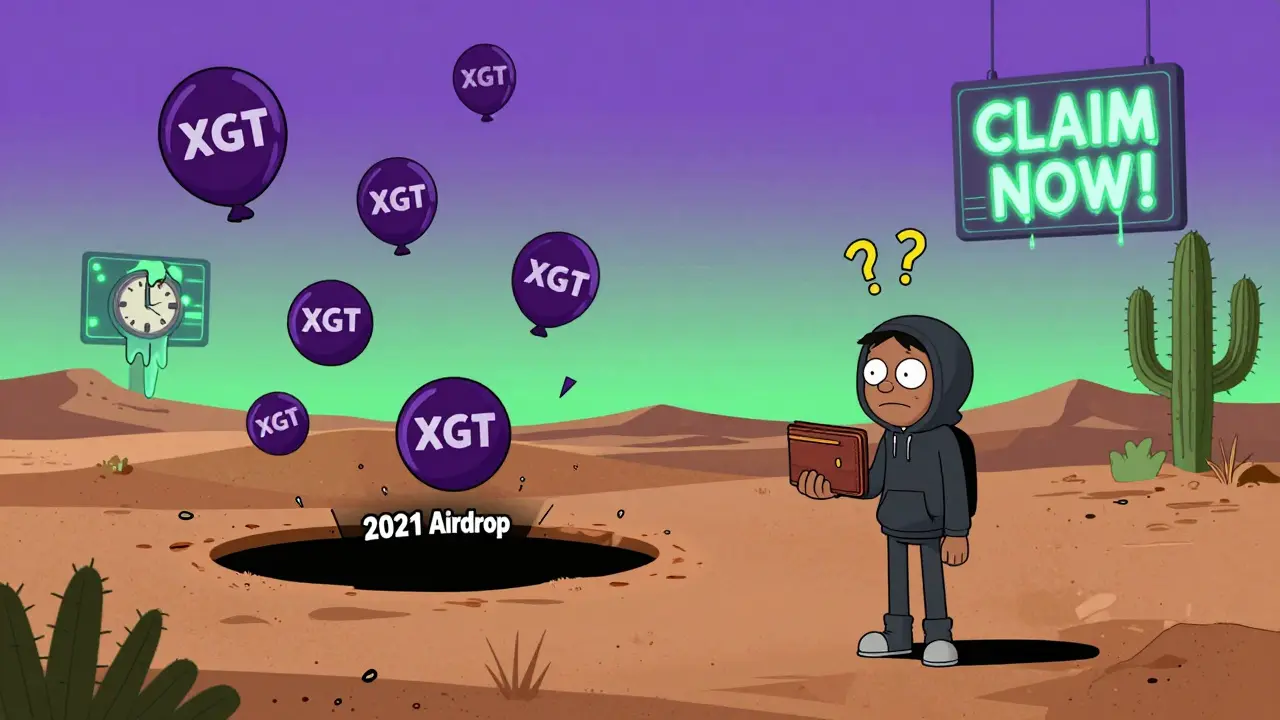
Back in July 2021, Xion Finance promised an airdrop of XGT tokens - the native currency of its one-click DeFi payments platform. Thousands of people signed up, hoping for free crypto. But here’s the truth: XGT airdrop never actually happened - at least not publicly.
TrustPad, a platform that tracks token launches, showed two scheduled airdrop dates: July 7, 2021, and July 14, 2021. The plan was to release 50% of the airdrop on the first date, then 25% a week later. But when the clocks hit 16:00 UTC, nothing arrived in wallets. The distributed amount? Zero. Not 100 tokens. Not 1 token. Just empty.
That’s not a glitch. That’s a red flag.
Xion Finance launched with a total supply of 1 billion XGT tokens. At launch, it claimed a fully diluted valuation of $180 million. That sounds impressive - until you look at who actually got the tokens. Only 0.84% of the total supply - 8.4 million tokens - went to private investors. Another 0.06% - just 630,000 tokens - went to the public IDO. The rest? Locked up. Unreleased. Sitting in wallets that haven’t moved since 2021.
Today, only 22.42 million XGT tokens are in circulation. That’s 2.24% of the total supply. So even if the airdrop had worked, you’d be competing for a tiny slice of a very large pie. And there’s no proof anyone ever received it.
Here’s how the funding rounds actually broke down:
- Seed round: $500,000 raised at $0.08 per token. 6.25 million tokens issued. Early investors saw a 107% return when the price briefly spiked.
- Private round: $301,000 at $0.14 per token. 2.15 million tokens. ROI was only 18.3% - not bad, but far from explosive.
- Public IDO: $113,400 at $0.18 per token. This is the kicker - those who bought in during the public sale lost 8% on their investment. The token never reached the price they paid.
That’s not how successful airdrops work. Successful airdrops - like Uniswap or Arbitrum - reward early users, testers, and community members with real, transferable tokens. They create buzz. They drive adoption. Xion Finance did none of that.
The XGT token is an ERC-20 token on Ethereum, with contract address 0x9eb8...a37d47. That means it *could* work with wallets like MetaMask and DeFi apps like Uniswap. But here’s the problem: no one’s using it. You won’t find XGT listed on Binance, Coinbase, Kraken, or any major exchange. No trading pairs. No volume. No liquidity. If you somehow got XGT in your wallet today, you couldn’t sell it. You couldn’t swap it. You couldn’t even stake it.
And that’s not because it’s new. It’s because it’s dead.
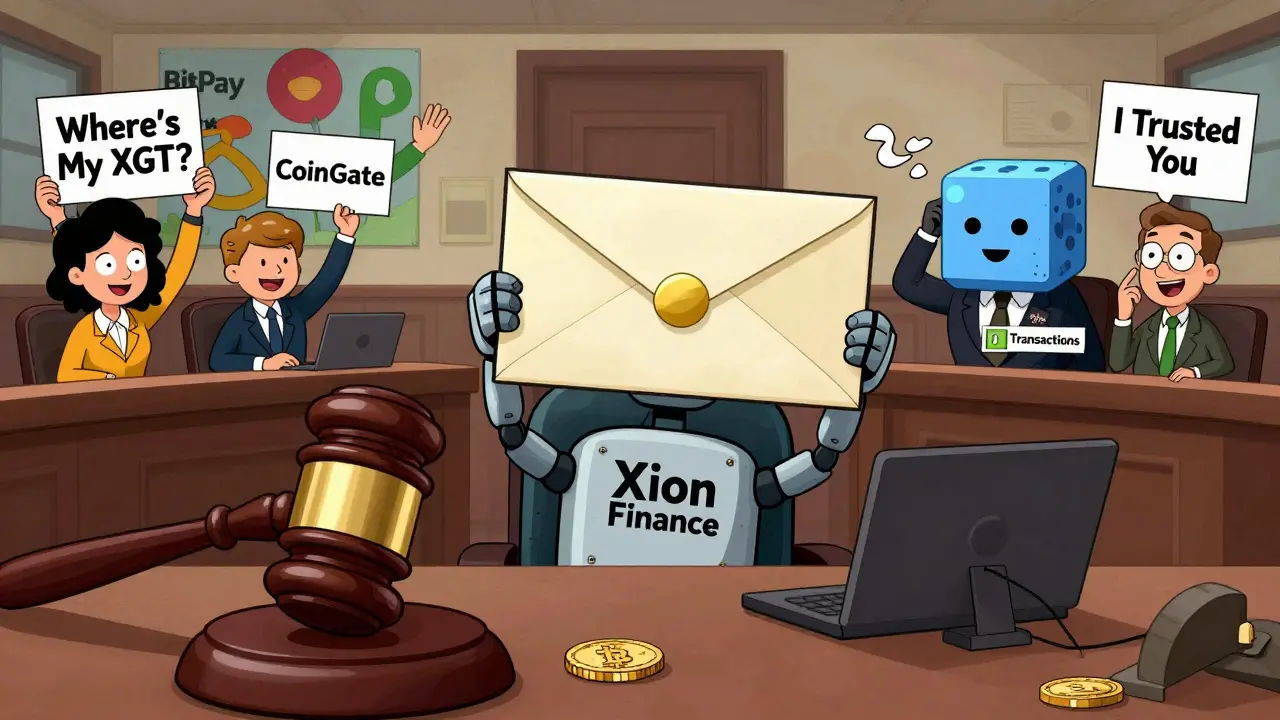
There’s no recent news. No blog updates. No Twitter activity since 2022. No Reddit threads. No Discord engagement. No GitHub commits. The platform still claims to support over one million merchants in crypto payments - but there’s zero public proof. No logos. No partner announcements. No case studies. Compare that to BitPay or CoinGate - companies that actually publish merchant lists and transaction data. Xion Finance doesn’t.
Some might say, “Maybe it’s just quiet.” But quiet doesn’t mean alive. It means abandoned.
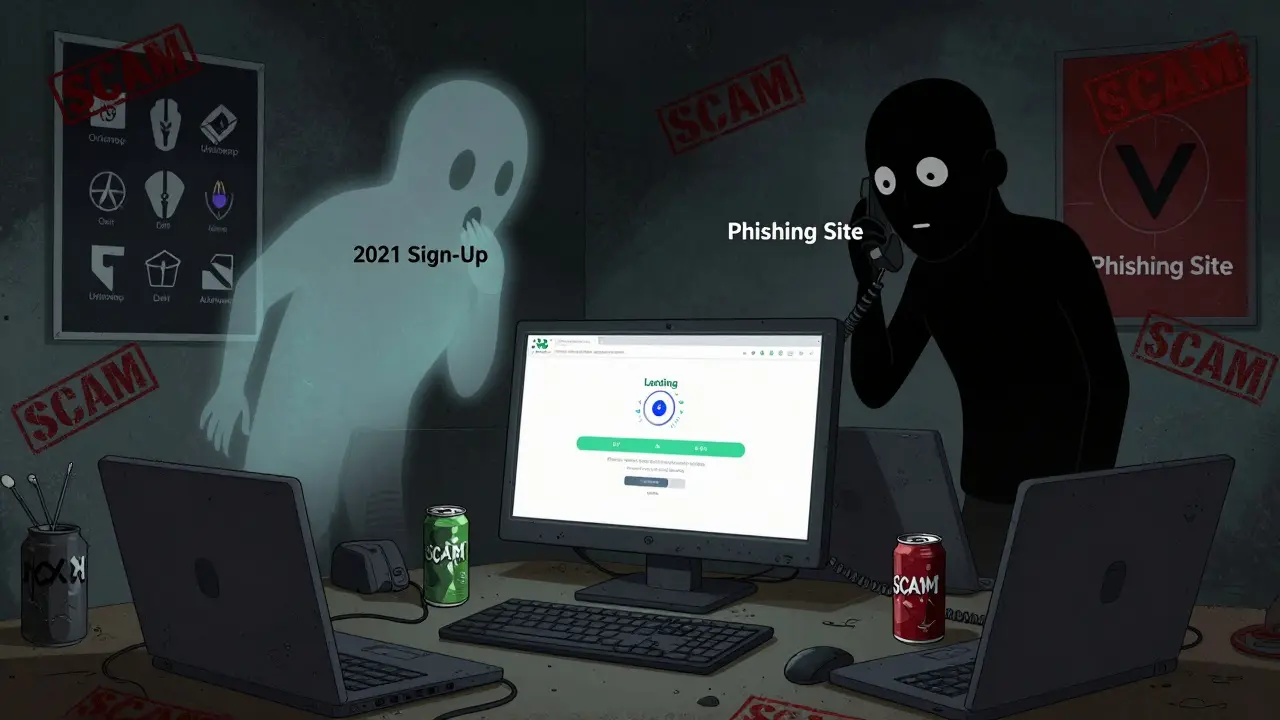
Why does this matter in 2025? Because people still search for “XGT airdrop.” They still sign up for fake airdrop sites pretending to be Xion Finance. They still get scammed by phishing pages that ask for wallet keys in exchange for “unclaimed XGT.”
There are no official airdrop criteria because there was no airdrop. No email lists. No snapshot dates. No KYC steps. No wallet eligibility rules. Just a promise that vanished.
And here’s the brutal truth: Xion Finance didn’t fail because of bad tech. It failed because it never built a community. It never delivered value. It never even tried.
Compare XGT to other DeFi tokens launched around the same time. Look at Chainlink. Look at Polygon. Look at Arbitrum. They all had airdrops - real ones - that went to thousands of users who tested their networks, used their dApps, and helped them grow. Those tokens are now worth millions. XGT? Worthless.
Even the token’s technical design - cross-chain bridging, one-click DeFi, merchant integration - sounds solid on paper. But without users, without liquidity, without transparency, it’s just code sitting on a blockchain. No one’s paying attention. No one’s building on it. No one’s even checking its balance.
So what should you do if you’re still holding XGT? Sell it if you can. If you can’t, forget about it. Don’t wait for a “future airdrop.” Don’t trust any website claiming to “claim your XGT.” Those are scams. The project is inactive. The airdrop was never real. The tokens have no utility.
If you’re looking for real DeFi opportunities in 2025, don’t chase ghosts. Look at projects with active development, transparent tokenomics, and real user growth. Check their GitHub. Check their Twitter. Check their community. If no one’s talking about it, it’s probably not worth your time.
Xion Finance didn’t just miss the airdrop. It missed the entire point of DeFi.
Why This Airdrop Failed When Others Succeeded
Airdrops aren’t magic. They’re marketing. They’re incentives. They’re how projects turn passive observers into active participants.
Uniswap’s airdrop in 2020 gave 15% of its total supply to early users. That single move turned thousands of people into loyal advocates. They promoted the platform. They staked their tokens. They helped it grow into the largest DEX in the world.
Xion Finance didn’t do that. They didn’t ask users to test their platform. They didn’t track who used their wallet. They didn’t reward early adopters. They just announced a token and disappeared.
Real airdrops have:
- Clear eligibility rules
- Public snapshots of wallet addresses
- Token distribution timelines
- Community engagement before, during, and after
Xion Finance had none of that.
Is XGT Still Active in 2025?
The contract address 0x9eb8...a37d47 is still live on Ethereum. That doesn’t mean the project is alive. It just means the code hasn’t been deleted.
There are no recent transactions. No new smart contract upgrades. No liquidity pool additions. No partnerships announced. No team updates. No press releases.
The last time anyone posted about Xion Finance on social media was in early 2022. Since then? Silence.
If a project doesn’t update for three years, it’s not dormant - it’s dead.
What to Do If You Think You’re Eligible for XGT
If you signed up for the XGT airdrop back in 2021, you’re not alone. But here’s what you need to accept:
- You were never confirmed as eligible.
- No wallet snapshot was ever published.
- No tokens were ever distributed.
- There is no official portal to claim XGT.
Any website claiming to help you “claim your XGT” is a scam. They’ll ask for your private key. Or they’ll send you a fake transaction. Or they’ll trick you into paying a “gas fee.” Don’t fall for it.
Check your wallet. If you have XGT tokens, they’re likely worth less than $0.01 each - if they’re even tradable. Most wallets won’t even show them because there’s no market.
Don’t waste time chasing something that doesn’t exist.
Alternatives to Xion Finance in 2025
If you’re looking for a DeFi payments platform that’s actually working, here are real options:
- BitPay: Powers payments for over 20,000 merchants. Accepts Bitcoin, Ethereum, and more. Integrated with Shopify, WooCommerce, and Magento.
- CoinGate: Supports 100+ cryptocurrencies. Offers instant fiat conversion. Used by small businesses worldwide.
- Stripe Crypto: Stripe now lets businesses accept crypto payments with automatic USD settlement. Backed by a trusted financial infrastructure.
- Circle’s USDC: Not a payment processor, but the most widely adopted stablecoin for DeFi and payments. Used by Coinbase, PayPal, and Meta.
These platforms have real merchants, real transactions, and real user data. They don’t need airdrops to prove they’re working.
How to Spot a Fake Airdrop
Not all airdrops are scams - but too many are. Here’s how to tell the difference:
- Real airdrops: Never ask for your private key. Never ask you to pay gas fees to claim. Always have a public snapshot and official announcement.
- Fake airdrops: Ask for your seed phrase. Redirect you to a fake website. Promise “limited time” rewards. Use urgent language like “claim now or lose it.”
If it sounds too good to be true, it is. If you didn’t actively use the platform before the airdrop, you probably weren’t eligible.
Always check the official website. Always verify the contract address. Always look for community discussions on Reddit or Twitter. If you can’t find it, don’t trust it.



Reggie Herbert
This isn't just a failed airdrop-it's a masterclass in how not to build a crypto project. Zero community engagement, zero transparency, zero utility. The team didn't even bother to fake it. They just took the money and vanished. Classic rug pull with a side of delusion.
And yet people still fall for it. That's the real tragedy.