Imagine plugging in a rig and realizing you’re paying double the electricity rates of your neighbor across the border. Or worse, waking up to find the government has just banned your hobby overnight. That’s the reality of crypto mining today. It’s not just about having the best hardware anymore; it’s about geography. The difference between profit and loss often comes down to where you decide to set up shop.
If you are looking to mine in 2025, the map has changed drastically since the early days. China’s crackdown sent miners scrambling, but new hubs have risen from the ashes. Some offer cheap power, others offer legal clarity, and a few offer both. But beware: "friendly" is a relative term. What works for a garage miner with two GPUs might be a regulatory nightmare for an industrial farm with megawatts of consumption. Here is how the top contenders stack up right now.
The United States: The Institutional Powerhouse
You can’t talk about mining without talking about the US. It currently holds the largest share of global hash rate. Why? Because despite high energy prices in some states, the sheer scale of infrastructure and institutional acceptance makes it hard to beat. If you want banking access that doesn’t freeze your accounts every time you move funds, the US is still the gold standard.
But it’s fragmented. Texas remains the darling of the industry thanks to its deregulated grid and cheap natural gas flaring opportunities. You can buy power directly from generators, bypassing middlemen. Meanwhile, New York has slapped strict environmental restrictions on proof-of-work mining, making it nearly impossible for new large-scale operations to get permits. The lesson here? Don’t just say "USA." Pick your state carefully. Texas, Wyoming, and Kentucky are open arms. California and New York are closed doors for most.
Kazakhstan: The Low-Cost Giant
Kazakhstan stepped into the void left by China and became a massive player almost overnight. By 2025, it accounts for over 6% of the global Bitcoin network. The appeal is obvious: electricity is dirt cheap, often hovering around $0.03-$0.04 per kWh. For a miner watching margins, that number is music to your ears.
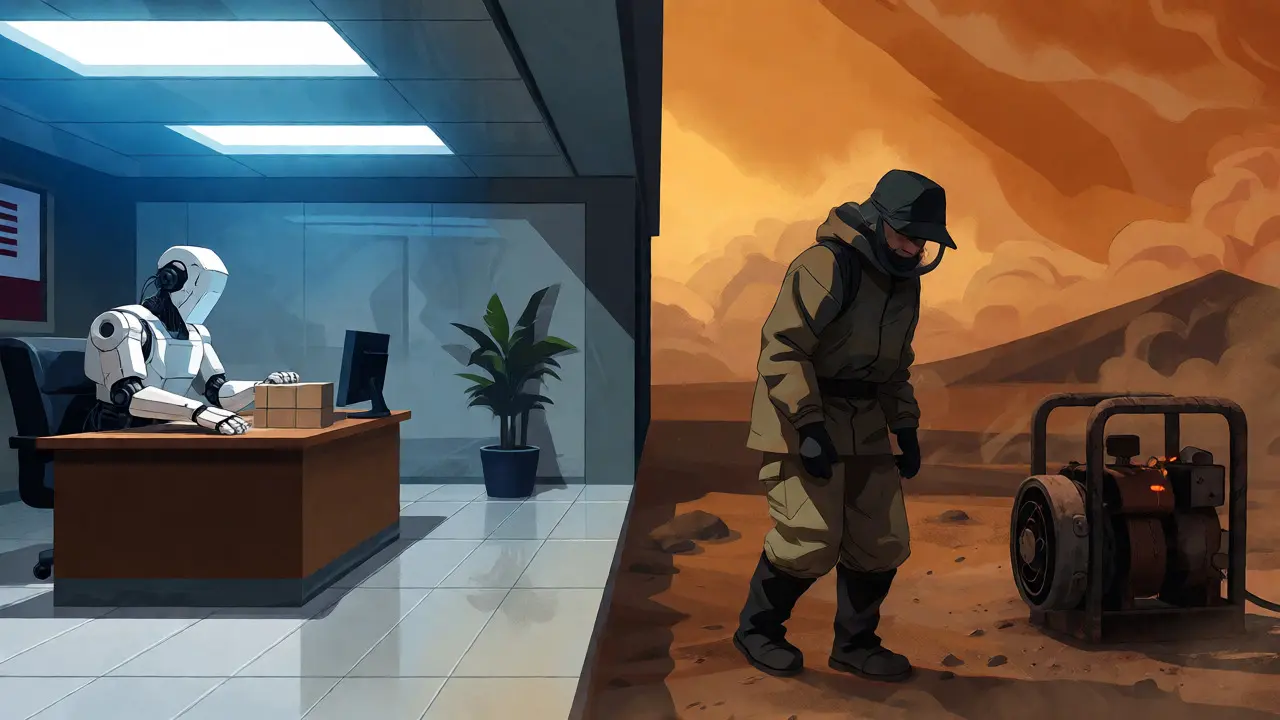
The government actively encourages this through the Astana International Financial Centre (AIFC). If you register there, you get significant tax breaks, including exemptions on corporate taxes until 2066. It sounds too good to be true, and sometimes it is. The grid is old and prone to blackouts. In winter, temperatures drop so low that heating equipment becomes a cost, while in summer, the dust storms can clog filters if you aren’t careful. Plus, political stability isn’t always guaranteed. It’s a high-reward game, but you need robust backup generators and a local legal team who knows how to navigate sudden policy shifts.
Iceland: The Natural Coolant
If you hate noise complaints and overheating rigs, Iceland is your sanctuary. The country uses nearly 100% renewable energy, primarily geothermal and hydroelectric. This means your carbon footprint is tiny, which matters more every year as ESG (Environmental, Social, and Governance) criteria squeeze funding sources.
The climate does half the work for you. Average temperatures stay cool enough that you don’t need expensive air conditioning units. Your fans run slower, lasting longer. However, don’t expect rock-bottom prices like Kazakhstan. Electricity is affordable but not free, and the cost of living and logistics is high. Shipping parts to Reykjavik takes time. Iceland is ideal for smaller, boutique operations or companies that value brand image and sustainability over squeezing every last cent out of energy costs. It’s also very stable politically-no surprises here.
| Country | Avg. Energy Cost | Regulatory Clarity | Tax Incentives | Best For |
|---|---|---|---|---|
| United States | $0.05 - $0.12/kWh | High (State-dependent) | Moderate | Institutional Scale, Banking Access |
| Kazakhstan | $0.03 - $0.04/kWh | Moderate | High (AIFC Zone) | Cost-Conscious Large Farms |
| Iceland | $0.04 - $0.07/kWh | Very High | Low | Sustainable Branding, Small Ops |
| Canada | $0.03 - $0.08/kWh | Fragmented | Variable | Hydro-Powered Regions |
| Georgia | $0.04 - $0.06/kWh | High | Zero Capital Gains | Individual Miners, Startups |
Canada: The Hydro Haven
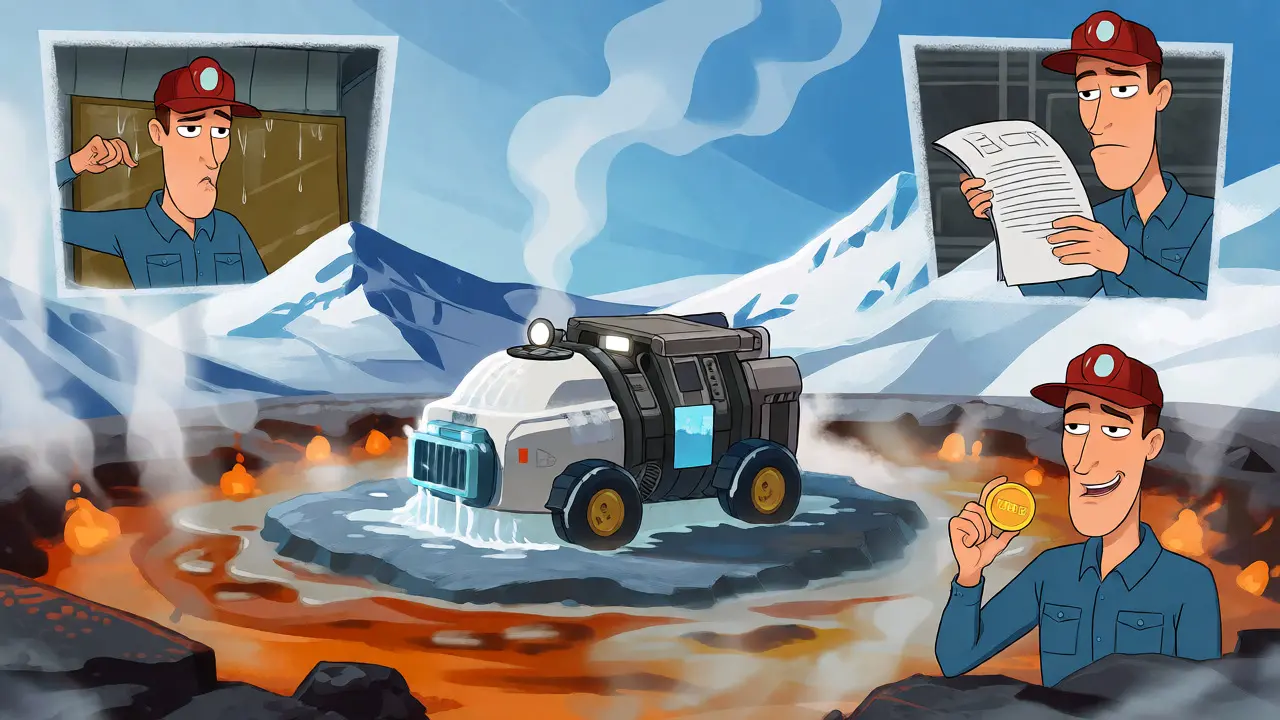
Canada offers something unique: vast amounts of surplus hydropower. Provinces like Quebec and British Columbia have excess capacity that needs to be used. For years, they welcomed miners with open arms. But the landscape is tricky because Canada is a federation. Each province sets its own rules.
Quebec recently paused new connections for large miners due to grid strain, though existing contracts remain honored. Alberta, however, is much friendlier, leveraging its wind and gas resources. If you are eyeing Canada, do not sign a lease before checking the provincial energy board’s current stance. The upside is strong banking relationships and proximity to the US market. The downside is bureaucratic red tape that varies wildly depending on which side of the border you cross.
Georgia: The Tax-Free Frontier
Don’t let the name confuse you; we mean the country Georgia, not the US state. Nestled between Europe and Asia, Georgia has quietly become one of the most attractive spots for small-to-medium miners. Why? Zero capital gains tax on cryptocurrency holdings. You mine, you hold, you sell-no tax hit on the profit itself.
Electricity costs are competitive, especially during the rainy season when hydro output peaks. The regulatory environment is clear: mining is legal, taxed lightly at the operational level, and supported by a government eager to diversify its economy away from tourism and agriculture. Visa processes are straightforward, and English is widely spoken in business circles. It’s a great spot if you want to avoid the complex tax codes of Western nations but still want a stable, non-controversial jurisdiction.
Hong Kong: The Asian Rebirth
While mainland China bans mining, Hong Kong has swung back toward crypto. As a Special Administrative Region, it operates under different rules. The Securities and Futures Commission introduced licensing for virtual asset providers, bringing legitimacy without strangling innovation. There is no capital gains tax on crypto trading profits.
This makes Hong Kong less about raw mining horsepower and more about the ecosystem surrounding it. If you are running a mining operation that doubles as a tech hub or trading desk, HK offers better banking access than most Asian jurisdictions. Major banks like HSBC are engaging with crypto firms again. It’s a strategic play for those who need to bridge Asian markets with global capital.
El Salvador: The Legal Tender Experiment
El Salvador made headlines by adopting Bitcoin as legal tender. While this doesn’t directly lower your electricity bill, it creates a unique economic loop. You can pay suppliers in BTC, receive payments in BTC, and avoid currency conversion fees entirely. The government has also invested in geothermal-powered mining farms, aiming to make the country a net exporter of mined Bitcoin.
For individual miners, the infrastructure is still developing. Internet reliability can be spotty outside major cities. But the ideological support is unmatched. If you believe in the ethos of decentralization and want to operate in a place where Bitcoin is treated like cash, El Salvador is worth a look. Just factor in higher security costs and logistical challenges compared to North America or Europe.
How to Choose Your Spot
So, how do you pick? It depends on your size and risk tolerance.
- Small/Home Miner: Look at Georgia or rural areas in the US. You need reliable internet and simple tax reporting. Avoid places with strict residential zoning laws against noise.
- Mid-Sized Farm (1-5 MW): Texas or Alberta, Canada. You need scalable power contracts and decent banking. You can absorb some regulatory friction if the margins are good.
- Industrial Scale (10+ MW): Kazakhstan or specialized zones in the US. You need the cheapest possible power and long-term energy agreements. Political risk is part of the cost of doing business.
Remember, energy costs fluctuate. A deal that looks great in January might bleed money in July if demand spikes. Always negotiate fixed-rate contracts where possible. And never ignore the cooling costs. In hot climates, your electricity bill includes cooling; in cold climates, it might include heating. Do the math on total thermal management, not just the base rate per kilowatt-hour.
Is crypto mining legal everywhere?
No. While many countries allow it, some have outright bans (like China for domestic operations) or heavy restrictions (like parts of Iran or Nigeria). Even within legal countries, specific regions may ban it due to grid constraints. Always check local municipal laws, not just national ones.
Which country has the cheapest electricity for mining?
As of 2025, Kazakhstan and certain provinces in Canada and Russia (where legal) offer the lowest rates, often below $0.04 per kWh. However, hidden costs like transmission fees and maintenance can erode these savings.
Do I need to pay taxes on mined crypto?
In most jurisdictions, yes. Mined coins are typically treated as income at the fair market value when received. When you later sell them, you may owe capital gains tax. Countries like Georgia and Hong Kong offer favorable treatment, such as zero capital gains tax on crypto assets.
Is renewable energy mandatory for mining?
Not legally mandatory in most places yet, but it is becoming a de facto requirement for institutional investors and public companies. Using fossil fuels can limit your ability to raise capital or secure partnerships. Locations like Iceland and Norway naturally provide this advantage.
Can I mine Bitcoin in my home country if it's not on this list?
Yes, unless specifically banned. Many European countries allow home mining but impose high electricity rates and strict noise ordinances. Profitability depends entirely on your local utility rates. If you pay more than $0.15 per kWh, home mining is rarely profitable for Bitcoin, though it might work for altcoins.