
Imagine borrowing $100 million without a credit check, buying assets to crash their price, stealing millions from a protocol, and then paying back the loan-all in less than two seconds. This isn’t a movie plot; it is the reality of flash loan attacks, which are sophisticated exploits targeting decentralized finance (DeFi) protocols by manipulating uncollateralized lending mechanisms within a single blockchain transaction. In 2025 alone, crypto hacks resulted in over $1.7 billion in losses, with flash loan exploits making up a significant chunk of that damage. If you are building or investing in DeFi, understanding these atomic heists is no longer optional-it is survival.
What Is a Flash Loan?
To understand the attack, you first need to understand the tool. A flash loan is an unsecured cryptocurrency loan that must be borrowed and repaid within the same blockchain transaction block. Unlike traditional bank loans, there is no collateral required. There is no credit score check. The only rule is simple: if the money is not paid back by the end of the transaction, the entire process reverses as if it never happened.
This mechanism was popularized by AAVE, which is a leading decentralized lending protocol that pioneered the use of uncollateralized flash loans in the DeFi ecosystem. Originally, flash loans were designed for legitimate purposes like arbitrage trading or self-liquidation. But because they allow anyone with technical knowledge to access massive amounts of capital instantly, they became the perfect weapon for hackers looking to exploit weak points in other protocols.
The Anatomy of a Flash Loan Attack
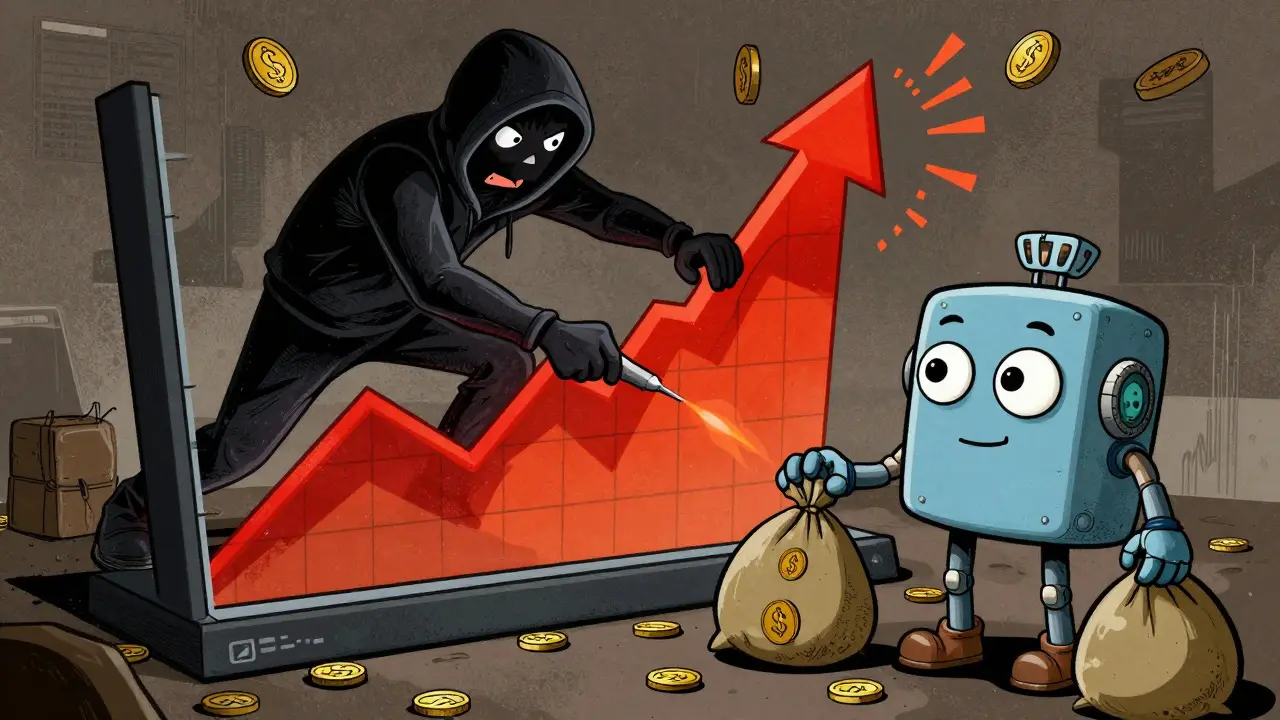
Flash loan attacks rely on the "atomic" nature of blockchain transactions. Everything happens in one go. If any step fails, the whole thing rolls back. Hackers use this to their advantage by chaining together several actions into a single script. Here is how the typical sequence unfolds:
- Borrow: The attacker borrows a huge amount of a specific token (let’s call it Token A) from a flash loan provider like AAVE. They pay only the small gas fee.
- Manipulate Price: They take Token A and swap it for another asset (Token B) on a decentralized exchange (DEX). Because the amount is so large, it skews the price of Token B artificially high.
- Exploit Vulnerability: The attacker goes to a different DeFi protocol that uses that DEX as its sole source for pricing (its "oracle"). Seeing the inflated price of Token B, the protocol thinks Token B is worth much more than it actually is.
- Steal Value: The attacker deposits the manipulated Token B as collateral and borrows out a larger value of stablecoins or other assets from the vulnerable protocol.
- Repay and Profit: Finally, the attacker sells the stolen assets to repay the original flash loan. Since the loan is paid back, the transaction succeeds. The attacker keeps the profit, and the victim protocol is left with worthless collateral.
The entire process takes seconds. By the time anyone notices something is wrong, the money is gone, and the transaction is immutable on the blockchain.
High-Profile Cases: When Things Go Wrong
The theory sounds complex, but the results are devastatingly real. Several major incidents have highlighted just how dangerous these attacks can be when protocols fail to secure their code or data feeds.
| Protocol / Victim | Date | Attack Vector | Estimated Loss |
|---|---|---|---|
| Beanstalk Farms | April 2022 | Governance manipulation via $1B flash loan | $182 million |
| PancakeBunny | 2021 | Price manipulation in liquidity pools | $200 million |
| KiloEx | March 2025 | Price manipulation exploit | $7 million |
The Beanstalk Farms attack is particularly instructive. Instead of just manipulating prices, the attacker used a $1 billion flash loan to gain enough voting power to control the project’s governance. They essentially hijacked the protocol’s decision-making process to drain funds. This showed that flash loans aren’t just about math errors; they can be used to bypass democratic controls in decentralized organizations.
In March 2025, KiloEx suffered a $7 million loss through similar price manipulation techniques. These cases prove that while some protocols learn from past mistakes, new vulnerabilities constantly emerge as developers rush to launch features.
Why Are Flash Loans So Dangerous?
There are three main reasons why flash loan attacks have become such a persistent threat in the DeFi space.
Low Barrier to Entry: You don’t need millions of dollars to start a hack. You just need enough cryptocurrency to pay for gas fees and the technical skill to write the exploit script. This accessibility means that even small-time hackers can attempt attacks on large protocols.
Speed and Atomicity: Because the attack happens in a single transaction block, there is no window for intervention. Traditional financial systems have circuit breakers or compliance teams that can freeze accounts. In DeFi, once the transaction is confirmed, it is done. Real-time detection is nearly impossible.
Oracle Manipulation: Most DeFi protocols rely on external data feeds, known as oracles, which are services that provide real-world data, such as asset prices, to smart contracts on the blockchain. Many older or poorly designed protocols use a single DEX as their price feed. As we saw in the anatomy section, a flash loan can easily skew that price. If the protocol trusts that skewed price, it gets exploited. Security firms like Amberdata consistently identify oracle manipulation as a top cause of DeFi failures.
How to Prevent Flash Loan Attacks
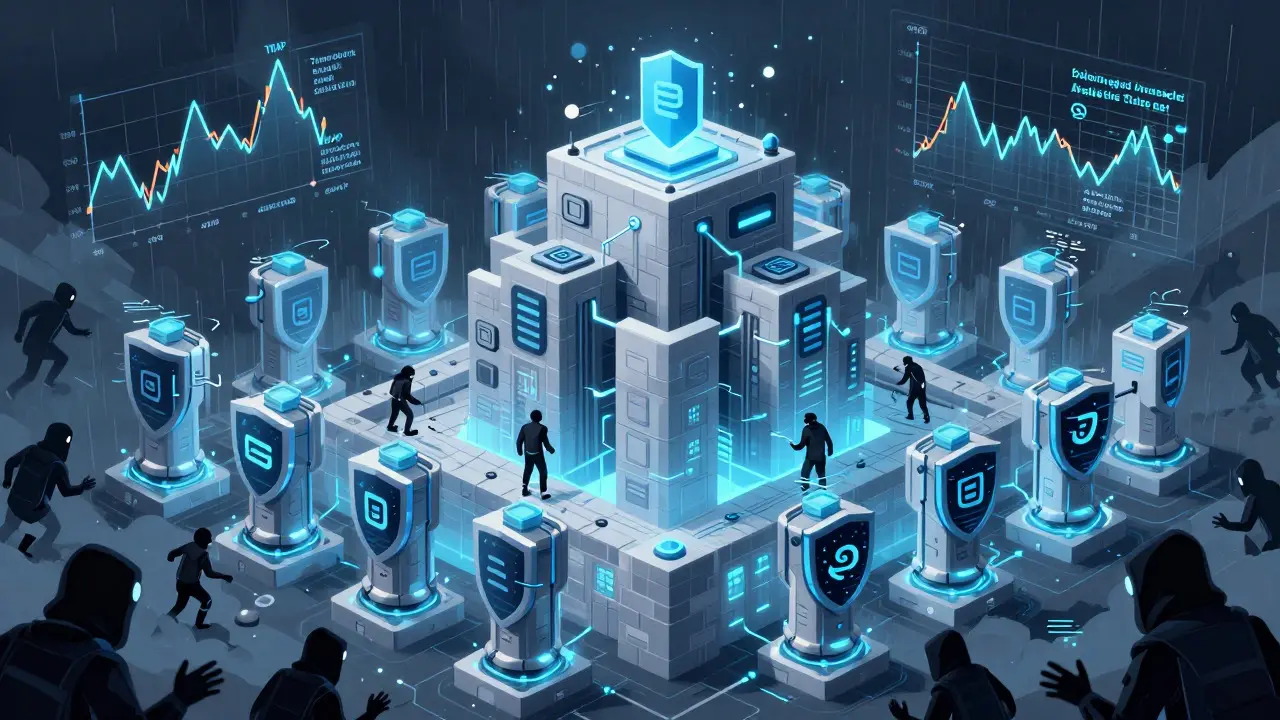
If you are a developer building a DeFi protocol, or an investor evaluating one, you need to look for specific security measures. Prevention focuses on two areas: smart contract code quality and robust data sources.
1. Diversify Your Oracles
Relying on a single price source is a recipe for disaster. Leading protocols now use multiple decentralized oracles to pull price data from various exchanges. Services like Chainlink, which is a decentralized oracle network that connects smart contracts with real-world data sources. aggregate data from many providers, making it much harder for a single flash loan to manipulate the final price.
2. Use Time-Weighted Average Prices (TWAP)
Instead of looking at the current price at the exact second of the transaction, TWAP calculates the average price over a period of time (e.g., the last 10 minutes). This smooths out sudden spikes caused by flash loans. It prevents attackers from exploiting short-term volatility.
3. Rigorous Code Auditing
Smart contracts are immutable once deployed, so bugs are expensive. Protocols should undergo rigorous audits from reputable security firms. Developers must test for common vulnerabilities like reentry issues (where a function calls itself unexpectedly) and missing access controls. Using verification tools and implementing the "checks-effects-interactions" pattern helps ensure that state changes happen before external calls are made.
4. Circuit Breakers
Some protocols are introducing circuit breakers that halt trading if prices move too drastically in a short period. While this can impact user experience, it provides a critical buffer against rapid exploitation. Multi-block confirmation requirements for large transactions also add a layer of safety, though they reduce the speed that DeFi users love.
The Future of DeFi Security
The landscape is evolving. In April 2025, losses from crypto hacks jumped 124% compared to the previous month, totaling $92 million across 15 incidents. This acceleration shows that attackers are getting smarter, using artificial intelligence and machine learning to find weaknesses faster than humans can patch them.
In response, the industry is seeing the rise of insurance protocols specifically designed to protect against flash loan attacks. Regulatory bodies are also beginning to examine DeFi security standards, though comprehensive laws are still in development. For now, the burden of security falls on the developers and the users. Understanding the mechanics of flash loans is the first step toward building a safer decentralized financial system.
What is a flash loan in simple terms?
A flash loan is an unsecured cryptocurrency loan that must be borrowed and repaid within the same blockchain transaction. If the loan is not repaid, the transaction is reversed automatically. No collateral is needed upfront.
How do hackers use flash loans to steal money?
Hackers borrow a large amount of crypto, use it to manipulate the price of an asset on a decentralized exchange, and then exploit a vulnerable protocol that relies on that manipulated price. They borrow more value than they should, repay the flash loan, and keep the difference.
Can I get my money back if a DeFi protocol is hacked?
Usually, no. Because blockchain transactions are irreversible, stolen funds are often lost forever unless the hacker voluntarily returns them or the community raises funds to buy back tokens. Some newer protocols offer insurance coverage, but it is not standard yet.
What is the biggest flash loan attack in history?
One of the largest was the PancakeBunny attack, which resulted in approximately $200 million in losses. Another notable case was the Beanstalk Farms hack in 2022, where a $1 billion flash loan was used to manipulate governance and steal $182 million.
How can DeFi protocols prevent flash loan attacks?
Protocols can prevent attacks by using multiple decentralized oracles for price data, implementing Time-Weighted Average Prices (TWAP), conducting rigorous smart contract audits, and adding circuit breakers to halt trading during unusual price movements.
Are flash loans legal?
Yes, flash loans themselves are a legitimate financial tool used for arbitrage and efficiency. However, using them to exploit vulnerabilities in smart contracts is considered theft and is illegal in most jurisdictions, though enforcement in the decentralized space remains challenging.



Aryan MISHRA
The fundamental flaw remains the reliance on centralized oracle feeds! Most devs ignore the TWAP necessity. It is basic security hygiene. If you do not implement multi-source verification, you are begging for exploitation. The atomic nature of these transactions renders traditional recourse obsolete. Stop building fragile smart contracts.