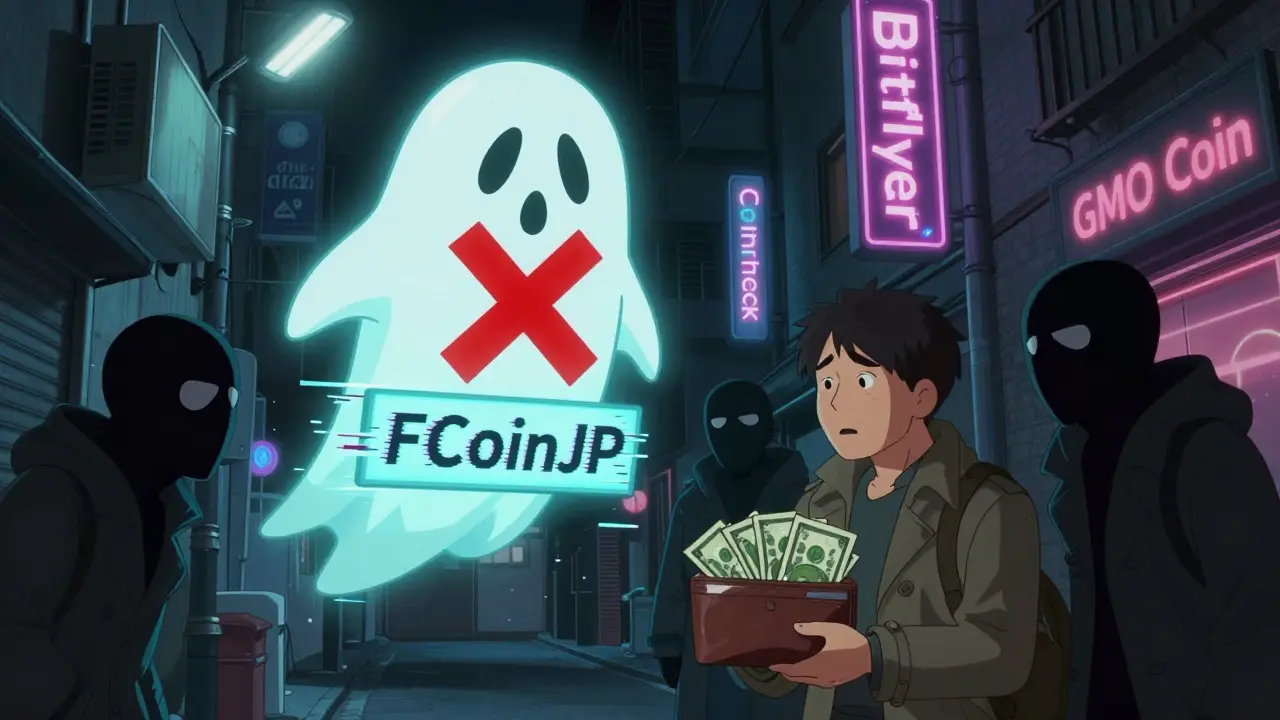
There is no such thing as FCoinJP - not as a working exchange, not as a licensed platform, and not as a legitimate service for Japanese users. If you're searching for reviews, sign-up guides, or fee comparisons for FCoinJP, you're chasing a ghost. The name might sound real - it even has that "JP" suffix to trick you into thinking it's Japanese - but this platform never existed. It's not under investigation. It's not in beta. It's not hiding in plain sight. It's simply not there.
Where Did FCoinJP Come From?
The confusion likely comes from mixing up two things: the short-lived Chinese exchange FCoin and Japan's strict crypto regulations. FCoin was real - for a while. Founded in 2018 by Zhang Jian, it quickly climbed to become the world's third-largest crypto exchange by trading volume. At its peak, it handled over $10 billion in daily trades. But its model was built on hype, not stability. It paid users in its own token just for trading. That didn't last. By September 2019, FCoin shut down withdrawals permanently. Users lost an estimated $250 million. Chainalysis confirmed it as one of the exchanges that "completely ceased operations." It's dead. And it never had any legal presence in Japan.
So why "FCoinJP"? That’s not a typo. It’s a trap. Scammers and misleading websites sometimes slap "JP" onto fake exchange names to make them look local. Japanese users are more likely to trust a platform that seems domestic. But Japan doesn't allow foreign exchanges to operate without full licensing. The Financial Services Agency (FSA) doesn't play games. As of January 2026, only 23 exchanges are licensed in Japan. None of them are called FCoinJP. Not even close.
What Actually Exists in Japan?
If you're in Japan and want to trade crypto legally, you have real options - and they're tightly regulated. The FSA requires every licensed exchange to hold 95% or more of user funds in cold storage, perform quarterly public audits, and enforce real-name verification for any transaction over 1 million JPY. That’s not just security - it’s a barrier to entry for fly-by-night operators.
The top players today are:
- Bitflyer: Japan’s largest exchange with over 4.2 million users. It offers JPY deposits at just 0.1% fees and supports BTC/JPY and ETH/JPY trading. Users praise its mobile app and reliability, though it has a limited selection of altcoins.
- Coincheck: Acquired by Monex Group in 2018 for $337 million. It’s known for a smooth mobile experience and supports over 20 cryptocurrencies. Trading fees range from 0.15% to 0.30%, depending on volume.
- GMO Coin: Backed by Japan’s largest internet company, GMO Internet. It offers low fees (as low as 0.02% for high-volume traders) and strong customer support.
- DMM Bitcoin: Operated by DMM.com, a major Japanese e-commerce and gaming platform. It’s one of the few that lets you trade Bitcoin against Japanese yen, euros, and even Turkish lira.
All four are FSA-licensed. That means your funds are protected under Japan’s Payment Services Act. If one of them fails, your money is still covered - up to a point. That’s something FCoin never offered.

Why You Should Never Trust "FCoinJP"
Any website or YouTube video promoting "FCoinJP" is either misleading or outright fraudulent. Here’s what to watch out for:
- They promise low fees - like 0.05% trading fees or free JPY deposits. Legitimate Japanese exchanges charge at least 0.1% because they pay for compliance, audits, and security. If it sounds too good to be true, it is.
- They don’t list their FSA license number - every licensed exchange displays it on their website. Check the FSA registry yourself. If it’s not there, it’s not legal.
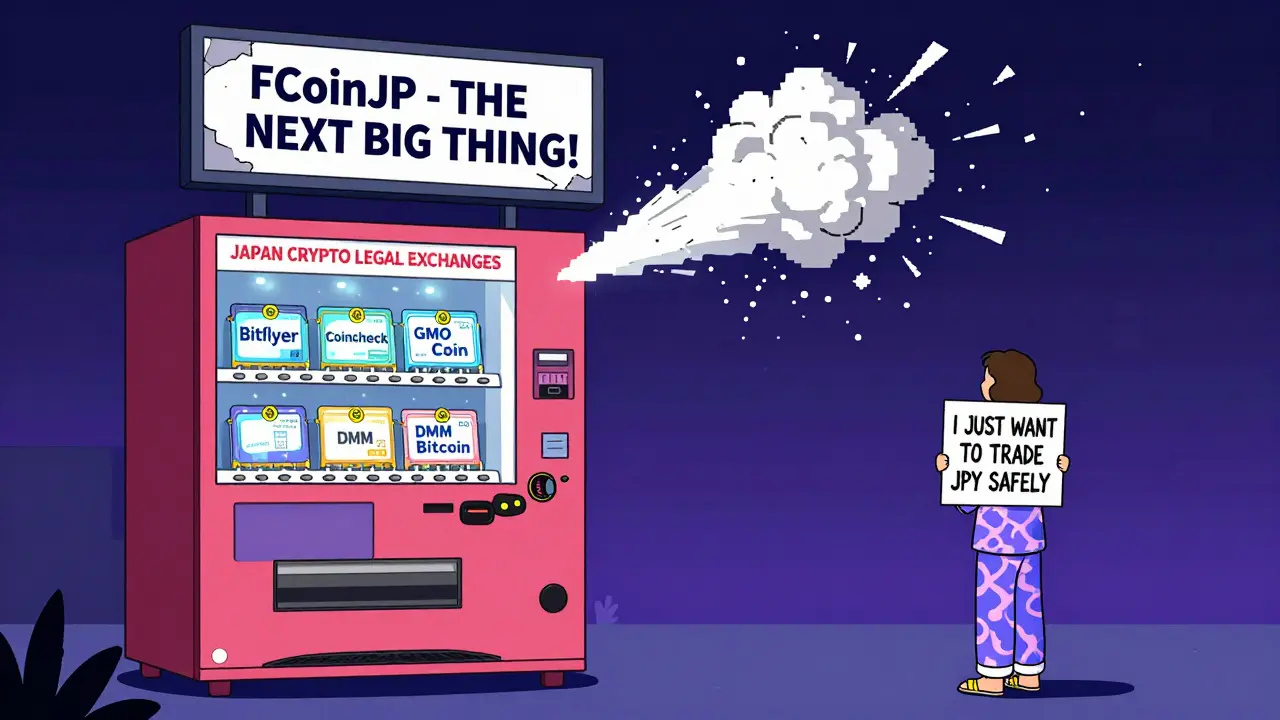
- They use vague language - "Join FCoinJP today!" or "The next big thing in Japan!" - instead of clear details about regulation, fees, or security.
- They ask for private keys - no legitimate exchange will ever ask you to upload your wallet seed phrase. Ever.
One YouTube review from late 2025 warned viewers: "They buy at 100, they sell it to you at 101, and then charge you a fee on top." That’s a classic pump-and-dump scam. If you’re seeing FCoinJP promoted with those kinds of claims, walk away.
What Japanese Users Really Care About
Based on 2025 user reviews from Trustpilot and Bitcointalk, Japanese crypto users prioritize three things:
- Fiat on-ramps - Can you deposit JPY easily? Bitflyer and Coincheck make it simple. Others? Not so much.
- Trading pairs - BTC/JPY and ETH/JPY make up 86% of all trading volume in Japan. If an exchange doesn’t support those, it’s not for you.
- Transparency - Users want to know where their money is. That’s why FSA requires public reserve audits. If a platform doesn’t publish them, don’t trust it.
FCoinJP offers none of this. It offers nothing. Not even a website you can visit that’s hosted in Japan. No domain registration records. No FSA application. No customer support email that works. It’s a phantom.
What’s Next for Japan’s Crypto Market?
Japan isn’t slowing down. The Bank of Japan plans to launch its own digital yen in Q3 2026. Licensed exchanges will need to integrate it. That means even stricter rules ahead. The FSA is already pushing for real-time transaction monitoring and mandatory API security standards. The cost of compliance? 2.5 million JPY per year, plus 0.05% of trading volume. That’s why experts predict a 40% consolidation in Japan’s exchange market by 2027. Smaller, unlicensed players will vanish.
FCoinJP? It wouldn’t survive a week in that environment. It never had a chance.
What Should You Do Instead?
If you’re in Japan and want to trade crypto:
- Go to the FSA official registry and search for licensed exchanges.
- Start with Bitflyer or Coincheck - they’re the most trusted.
- Use only JPY deposit options - avoid USD or EUR pairs unless you know why.
- Never send funds to an exchange you can’t verify.
- Never trust YouTube videos or Telegram groups promoting "new" exchanges.
There’s no shortcut. No hidden gem. No "FCoinJP" waiting to be discovered. The market is clear. The rules are strict. And the legitimate options are right in front of you.
Is FCoinJP a real crypto exchange?
No, FCoinJP is not a real exchange. It does not exist as a licensed or operational platform in Japan or anywhere else. The name likely confuses users with the defunct Chinese exchange FCoin (2018-2019) or is a scam site designed to mimic a Japanese crypto platform. Japan’s Financial Services Agency (FSA) only licenses 23 exchanges as of 2026, and FCoinJP is not among them.
Why do people search for FCoinJP?
People search for FCoinJP because the name sounds official - the "JP" suggests it’s based in Japan, where crypto regulations are strict and trusted. Scammers use this tactic to trick users into thinking they’re signing up for a legitimate local exchange. Some may also confuse it with the old Chinese exchange FCoin, which shut down in 2019. Search results often include fake reviews, YouTube videos, and phishing sites that promote FCoinJP as a new or hidden opportunity.
What are the real crypto exchanges in Japan?
As of 2026, Japan has 23 FSA-licensed crypto exchanges. The most popular and trusted include Bitflyer (Japan’s largest with 4.2 million users), Coincheck, GMO Coin, and DMM Bitcoin. These exchanges comply with strict rules: they hold 95%+ of assets in cold storage, require real-name verification for transactions over 1 million JPY, and publish quarterly reserve audits. They all support JPY trading pairs and offer secure, regulated access to Bitcoin and Ethereum.
Can I use FCoinJP to trade Japanese yen (JPY)?
No, you cannot use FCoinJP to trade JPY because the platform does not exist. Legitimate Japanese exchanges like Bitflyer and Coincheck allow direct JPY deposits and withdrawals with fees as low as 0.1%. FCoinJP has no banking partnerships, no regulatory approval, and no infrastructure to handle fiat currency. Any site claiming to offer JPY trading under the name FCoinJP is a scam.
How can I verify if a crypto exchange is licensed in Japan?
Go to the official Financial Services Agency (FSA) registry at https://www.fsa.go.jp and use their search tool for licensed financial institutions. Enter the exchange’s full legal name - not just the brand name. Licensed exchanges must display their FSA license number clearly on their website. If you can’t find it in the FSA registry or the number doesn’t match, the exchange is not authorized. Never trust a platform that hides this information.



![What Is Pi [IOU] (PI)? Understanding the Difference Between IOUs and Real Pi Coin](/uploads/2026/07/thumbnail-what-is-pi-iou-pi-understanding-the-difference-between-ious-and-real-pi-coin.webp)