
Imagine hiring a talented developer for a remote role, only to find out months later that they aren't who they say they are. Even worse, they weren't working for your company's benefit-they were a state-sponsored operative for the Democratic People's Republic of Korea (DPRK). This isn't a movie plot; it's a widespread fraud scheme where North Korean IT workers is a state-sponsored operation deploying professionals under false identities to generate foreign currency for the regime. By 2025, these operatives have moved beyond simple hacks, opting instead for "legitimate" employment to funnel millions into prohibited weapons programs.
Key Takeaways
- DPRK operatives use fake IDs and AI deepfakes to secure remote IT jobs globally.
- They prefer payment in stablecoins like USDT and USDC to simplify laundering.
- Funds are fragmented across multiple wallets and moved through Russian and UAE infrastructure.
- The regime has generated over $1.65 billion from these schemes in early 2025 alone.
- Businesses can protect themselves by avoiding crypto payments and using multi-platform video verification.
The Playbook: How the Infiltration Works
The process starts with a carefully crafted lie. Operatives don't just apply for jobs; they build entire personas. They use Virtual Private Networks (VPNs) and stolen identity documents to appear as if they are based in the U.S., Europe, or Asia. To seal the deal during interviews, some now use AI-powered voice and face software to create convincing deepfakes, making it nearly impossible to tell they are actually operating from within North Korea or a controlled hub.
Once they get their foot in the door, these workers often employ a "low-ball" strategy. They typically bid 20-30% below the market rate and are surprisingly eager to start working immediately, often without even asking for a signed contract. This makes them an irresistible bargain for startups and companies looking to cut costs. However, the real goal isn't the salary-it's the access to your network and the ability to move money undetected.
The Money Trail: From Salary to Stablecoins
Why do these workers insist on being paid in cryptocurrency? It's all about speed and invisibility. Specifically, they request Stablecoins such as USDC and USDT, digital assets pegged to the US dollar to avoid volatility. Because these coins maintain a steady value, they are ideal for transporting large sums of money across borders without triggering the red flags that a traditional bank wire would.
The laundering process is a complex dance of fragmentation. A typical worker might receive a monthly salary of around $5,000. Instead of keeping it in one place, the funds are split into dozens of smaller wallets. This "layering" makes it harder for investigators to trace the origin. From there, the money is consolidated and sent to high-level regime operatives, such as sanctioned individuals Kim Sang Man and Sim Hyon Sop.
| Feature | Lazarus Group Style (Heists) | IT Worker Scheme (Employment) |
|---|---|---|
| Revenue Type | Lump sum (high volatility) | Consistent salary (predictable) |
| Risk Level | High (Immediate investigation) | Low (Blends with normal business) |
| Primary Goal | Quick theft of millions | Long-term revenue & data access |
| Detection | Rapid (On-chain spikes) | Slow (Hidden in payroll) |

The Global Laundering Network
No one does this alone. The regime relies on a network of facilitators to turn digital tokens into spendable cash. Entities like the Chinyong Information Technology Cooperation Company act as coordinators. Once the crypto is moved, it often passes through Russian or UAE-based infrastructure to further obscure the trail.
The final step is the conversion to fiat currency. This usually happens through Over-the-Counter (OTC) Traders-individuals or firms that trade crypto for cash outside of formal exchanges. In some cases, fictitious accounts on mainstream exchanges are used. A notable facilitator known as 'Lu' was sanctioned by the U.S. Treasury in late 2024 for specifically helping the regime move these funds.
Why This is a Security Nightmare for Businesses
For a company, the damage isn't just the lost salary. It's a massive security breach. When a DPRK operative is inside your system, they have access to your proprietary code, client lists, and internal communications. In some cases, they use their position to steal sensitive data and later demand a ransom, or they simply disappear after a few months, taking a huge sum of money with them.
One tech startup reported losing roughly $280,000 over six months to a single worker who used deepfake technology to pass every single video check. Another case saw four North Korean nationals steal nearly $1 million through wire fraud and crypto laundering. These operatives are patient; they often work diligently for 3 to 6 months to build trust before attempting a large-scale theft or disappearing with the funds.
How to Spot a Fraudulent IT Worker
If you are hiring remote talent, you need more than just a Zoom call. The Royal Canadian Mounted Police (RCMP) has highlighted several red flags that should trigger an immediate investigation. First, be wary of any candidate who refuses traditional banking and insists on Cryptocurrency payments. Second, look for multiple logins from different countries; if your "Canadian" developer is logging in from three different continents in one day, something is wrong.
To truly verify an identity, use these practical steps:
- Cross-Platform Verification: Don't rely on one app. Have the candidate switch between Zoom, Google Meet, and a phone call in real-time. AI deepfakes often struggle to maintain consistent biometric responses across different platforms simultaneously.
- Credential Auditing: Don't trust a PDF diploma. Contact the educational institution directly. Data shows that 92% of verified DPRK worker applications used forged credentials.
- Strict Payment Protocols: Use established payroll systems. If the candidate pushes back against a standard bank transfer, it's a massive red flag.
The Bigger Picture: Funding Weapons of Mass Destruction
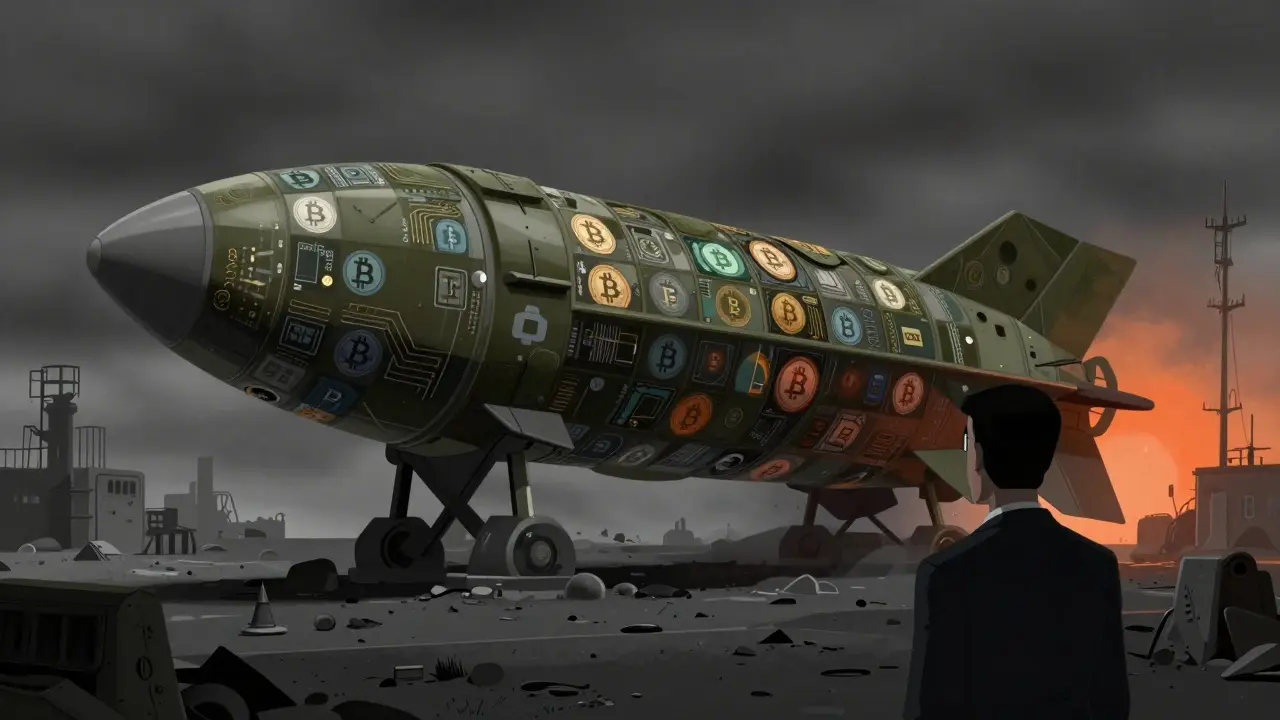
This isn't just corporate fraud; it's a matter of international security. The Multilateral Sanctions Monitoring Team (MSMT) has confirmed that the billions generated from these IT schemes are funneled directly into the development of ballistic missiles and WMDs. The regime uses stablecoins not just for salaries, but for procurement-buying raw materials like copper for munitions production.
Governments are fighting back. The U.S. Treasury's Financial Crimes Enforcement Network (FinCEN) is developing new blockchain analytics tools to identify DPRK-linked wallet clusters with high accuracy. When combined with international pressure on banks-particularly in China where many laundering accounts were identified-the regime's ability to move money is slowly shrinking.
How do North Korean IT workers trick companies during interviews?
They use a combination of stolen or fraudulent identities and advanced technology. This includes the use of VPNs to hide their actual location and AI-driven deepfake software to mimic the appearance and voice of a different person during video calls, allowing them to pass as foreign nationals.
Why do they specifically ask for payment in USDC or USDT?
Stablecoins are preferred because they are pegged to the US dollar, meaning the regime doesn't lose money to market volatility. Additionally, these assets are easier to move through OTC (Over-the-Counter) traders who can quickly convert them into fiat currency for the North Korean government.
What are the most common red flags for these schemes?
Key red flags include a request for cryptocurrency payment, inconsistent personal or educational history, bidding significantly below market rates, and logins from multiple disparate IP addresses. They also often agree to start work without a signed contract.
Can a business recover funds paid to these workers?
Recovering funds is extremely difficult once they have been sent via cryptocurrency, as blockchain transactions are generally irreversible. Most businesses report significant challenges in recovery, which is why prevention and rigorous identity verification are critical.
Who is monitoring these activities globally?
Monitoring is conducted by several international bodies and agencies, including the Multilateral Sanctions Monitoring Team (MSMT), the U.S. Treasury's Office of Foreign Assets Control (OFAC), the FBI, and the Royal Canadian Mounted Police (RCMP).




Robert Smith
Wild stuff 🤯