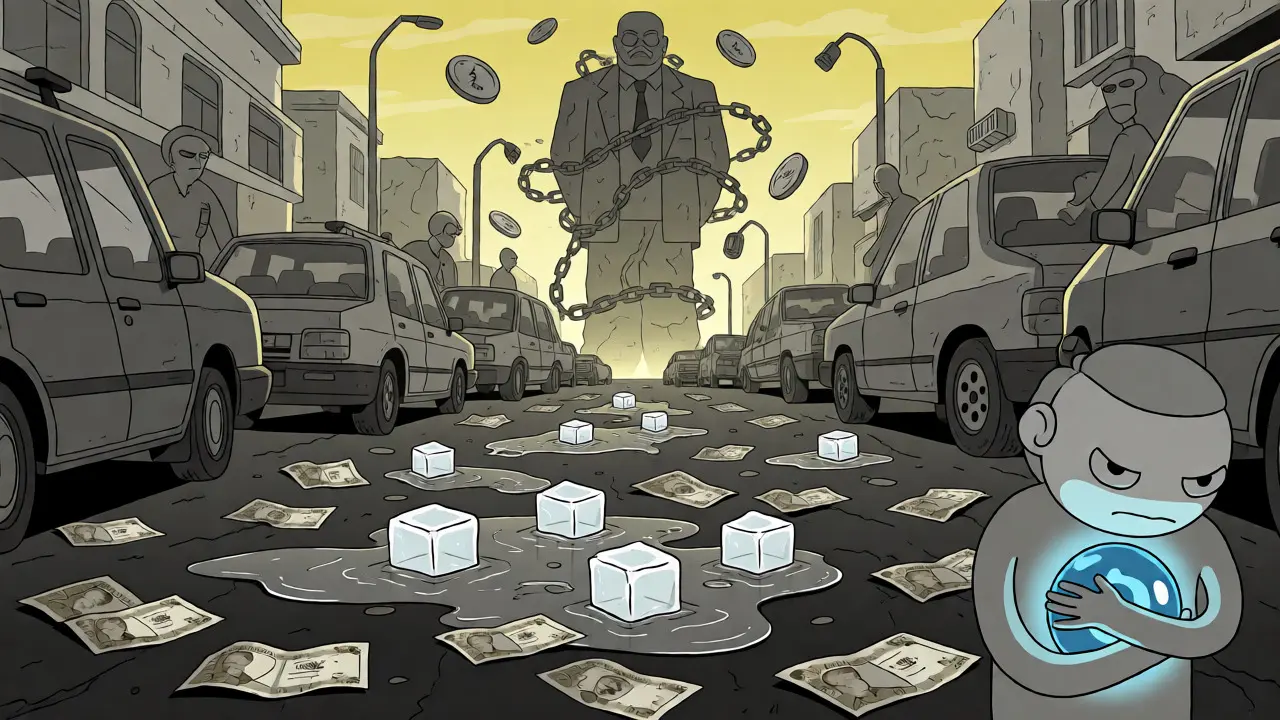
Imagine watching your savings evaporate because the local currency lost 40% of its value in a single year. That’s not a hypothetical nightmare for millions of Iranians; it’s their daily reality. While the government pushes hard to control capital flows and keep the rial stable, citizens are finding clever ways to protect their wealth using digital assets. But here’s the catch: accessing these assets isn’t as simple as downloading an app. The Central Bank of Iran (CBI) has tightened the screws significantly since 2025, blocking payment gateways and cracking down on exchanges. So, how do people actually move money without getting flagged? It comes down to technical agility and knowing which tools still work.
Why Everyone is Moving Off Rial
The driving force behind this mass migration to digital assets is pure survival. With inflation consistently hovering above 40%, holding cash feels like holding ice cubes in the sun. The Iranian Rial is the official currency of Iran, which has suffered severe devaluation due to economic sanctions and internal monetary policy issues has hit record lows, making traditional banking options risky. People aren’t just speculating; they’re hedging. According to World Bank estimates, the purchasing power of those who stuck with physical US dollars dropped by nearly half due to black market premiums. In contrast, those who shifted into cryptocurrency preserved about 85% of their value over six months. This isn’t about getting rich quick anymore; it’s about keeping what you have.
The government knows this pressure exists. Their response has been a mix of legalization and restriction. They allow mining-mostly to generate state revenue-but ban domestic payments in crypto. This creates a weird paradox where you can mine Bitcoin legally but can’t easily buy bread with it. As a result, Cryptocurrency in Iran refers to the use of digital assets for wealth preservation and cross-border transactions within the Islamic Republic, often operating outside formal regulatory frameworks has become less about spending and more about storing value and moving funds internationally.
The VPN Lifeline
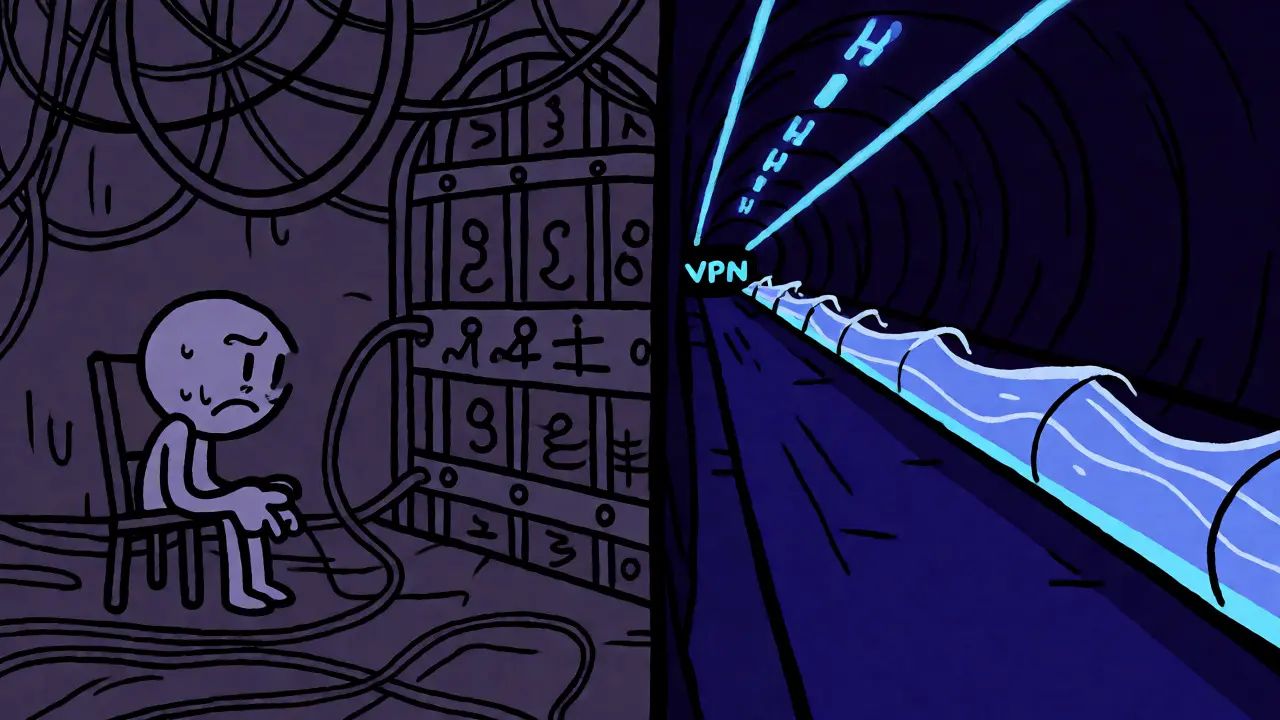
If you try to access Binance or Bybit from Tehran without protection, you’ll likely hit a wall. The CBI blocks known exchange IP ranges aggressively. To get around this, almost every serious user relies on a Virtual Private Network (VPN). TRM Labs reports that roughly 78% of Iranian crypto users tunnel through encrypted protocols to reach foreign platforms. But not all VPNs are created equal. The government uses deep packet inspection to detect standard VPN traffic, so users need services with strong obfuscation features. NordVPN, ExpressVPN, and Surfshark dominate the market here, capturing about 63% of usage among crypto traders. Without one of these, your connection stability drops to about 68%, meaning you might lose access right when the market moves.
Using a VPN isn’t just about hiding your location; it’s about maintaining uptime during internet throttling events. In late 2025 alone, there were 17 documented instances of nationwide slowdowns or shutdowns. Users who had robust VPN setups could still execute trades, while others were locked out completely. It’s a basic requirement, but choosing the right provider makes the difference between a smooth transaction and a failed one.
Switching Stablecoins: The Rise of DAI
For years, Tether (USDT) was the go-to stablecoin for Iranians. Then, on July 2, 2025, Tether froze 42 wallets linked to Iranian users. Suddenly, over 1.2 million people couldn’t access their liquidity. This event triggered a rapid shift toward decentralized alternatives, specifically DAI is a decentralized stablecoin pegged to the US dollar, managed by MakerDAO, which offers censorship-resistant properties compared to centralized issuers. Within 28 days, DAI usage among Iranian users jumped from 3% to 67% of all stablecoin transactions.
Why the switch? DAI doesn’t rely on a central company that can freeze your funds at the click of a button. Plus, it runs efficiently on the Polygon network, which offers near-instant finality and negligible fees. Compare that to Ethereum mainnet, where fees can spike to $1.75 per transaction, or even TRC-20 USDT, which is faster but still carries some centralization risk. For a country dealing with high inflation, saving even a few cents on fees matters when you’re making frequent small transfers. The migration wasn’t just ideological; it was practical. Polygon’s speed (4.3 seconds per transaction vs. USDT’s 13.7 seconds on some networks) helps avoid slippage during volatile market hours.
Peer-to-Peer Trading Takes Over
With major exchanges like Nobitex restricting trading hours to 10 AM-8 PM and suffering a massive $90 million exploit in June 2025, many users stopped trusting centralized platforms entirely. Instead, they turned to Peer-to-Peer (P2P) trading via Telegram. Today, P2P accounts for 52% of all Iranian crypto transactions. It’s slower, yes, but it keeps the government’s eyes off the direct flow of funds between individuals.
Telegram groups act as informal marketplaces. You find a buyer, agree on a price, send crypto to their wallet, and they transfer rials to your bank account. No KYC headaches, no trading hour limits. However, this method requires trust. Scams happen, so users often rely on reputation scores within these communities or use escrow bots. Tools like @IranCryptoBridge help automate the conversion from USDT to DAI before transferring to a non-custodial wallet like MetaMask. This process takes about seven minutes and costs under $0.50, offering a level of privacy that centralized exchanges simply can’t match.
Underground Mining Economics
You might think mining is dead in Iran given the energy tariffs. The government raised rates from 0.004 cents/kWh to 0.03 cents/kWh in March 2025, making legal mining unprofitable for most. Yet, underground operations thrive. About 65% of Iran’s estimated $1 billion annual mining revenue now comes from unlicensed rigs that bypass these tariffs. How? Many miners tap into subsidized residential electricity or operate in remote areas with lax enforcement.
This shadow sector survives because the potential reward outweighs the risk of fines. For individual operators, setting up a rig in a garage or basement remains a viable side hustle, provided they manage heat and noise. The key is staying off the grid regarding reporting. Since the CBI mandates real-time monitoring for licensed providers, unlicensed miners avoid these data trails entirely. It’s a cat-and-mouse game, but for now, the mice are winning by adapting quickly.
| Method | Cost Efficiency | Privacy Level | Risk Factor |
|---|---|---|---|
| VPN + Foreign Exchange | Medium ($7.80/mo VPN) | Low (KYC required) | High (IP Blocking) |
| P2P via Telegram | High (No fees) | Medium (Social Trust) | Medium (Scam Risk) |
| DAI on Polygon | Very High (<$0.01 fees) | High (Decentralized) | Low (Smart Contract) |
| Digital Rial Pilot | Low (High friction) | Low (ID Linked) | Low (Govt Backed) |
Navigating the Digital Rial Trap
The government introduced a pilot for the Digital Rial on Kish Island to reduce dollar dependency. Sounds good in theory, right? In practice, adoption is abysmal. Only 12,400 active users participated as of late 2025, representing less than 0.02% of the crypto-active population. Why? Because it links directly to national ID systems. Every transaction is tracked, and you can’t transfer value internationally. For Iranians used to the freedom of Bitcoin or DAI, the Digital Rial feels like a surveillance tool rather than a financial asset. Most experts predict it will capture less than 5% of the market share long-term because it fails to solve the core problem: capital flight and inflation hedging.
Practical Tips for Staying Safe
If you’re planning to navigate this landscape, start with the basics. First, secure your device. Use a dedicated phone or computer for crypto activities if possible. Second, master your wallet. MetaMask is popular, but ensure you back up your seed phrase offline. Third, diversify your exit strategies. Don’t rely on a single exchange or P2P partner. If one goes down or gets blocked, you need a backup route.
Timing matters too. Internet throttling intensifies between 4 PM and 6 PM local time. Schedule your critical transactions outside this window to avoid failures. Also, keep an eye on community forums like CoinJan or Reddit’s r/IranCrypto. Regulations change fast-sometimes overnight. What worked last week might be blocked today. Staying informed through decentralized channels is part of the job description.
Is cryptocurrency illegal in Iran?
No, owning and mining cryptocurrency is generally legal, especially for export purposes. However, using crypto for domestic payments is prohibited, and strict regulations govern exchanges and advertising.
Which stablecoin is best for Iranian users?
DAI on the Polygon network is currently preferred due to its decentralization, low fees, and resistance to freezing compared to centralized options like USDT.
Do I need a VPN to trade crypto in Iran?
Yes, if you want to access international exchanges like Binance or Bybit. The CBI blocks many foreign IPs, so a reliable VPN with obfuscation is essential for consistent connectivity.
What are the risks of P2P trading?
The main risks are scams and lack of recourse. Always verify the counterparty's reputation in Telegram groups and consider using escrow services to mitigate fraud.
Can the government freeze my crypto wallet?
They can freeze funds held on centralized exchanges or those issued by centralized entities like Tether. Decentralized wallets holding native coins or DAI are much harder to freeze directly.






Kinsey Morrison
People need to stop complaining about the government trying to stabilize the economy. You can't just print money forever without consequences and expect the rial to hold value while everyone runs to crypto.