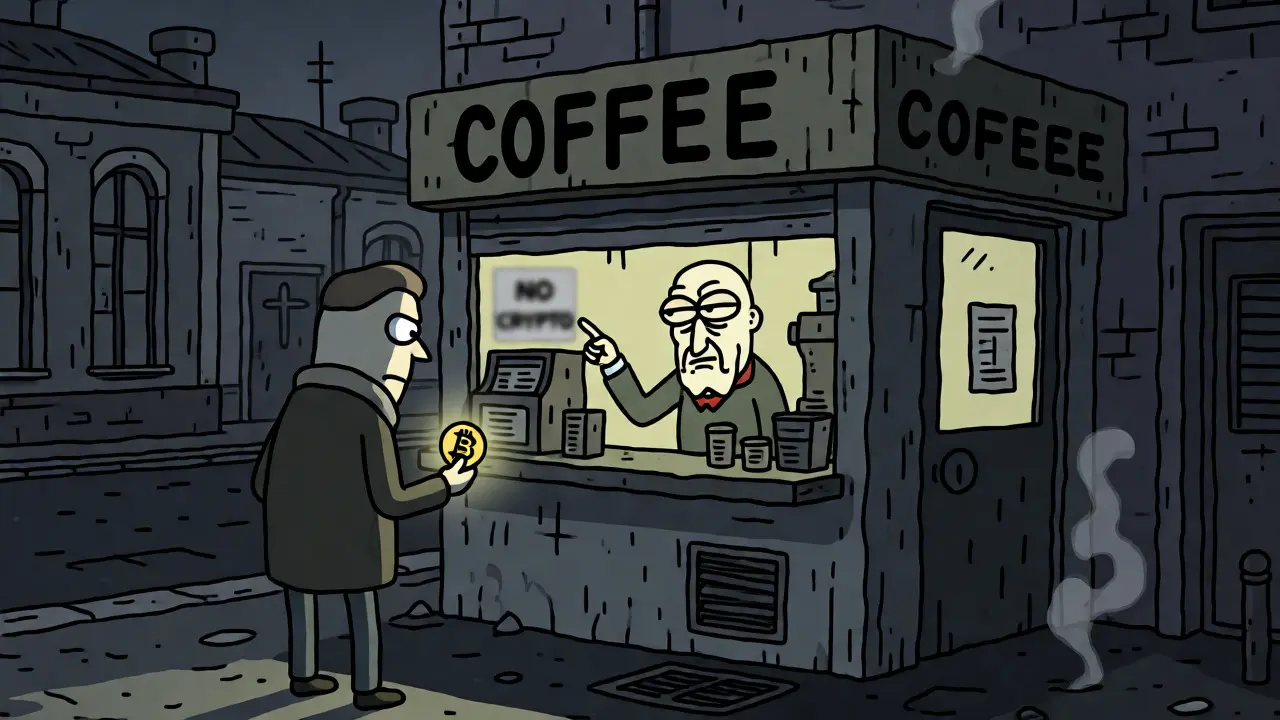
Imagine trying to buy a coffee with Bitcoin in Moscow today. You can’t. In fact, if you try to pay for goods or services with cryptocurrency inside Russia, you’re technically breaking the law. But here’s the twist: Russians are still using crypto heavily. They just aren’t paying for their groceries with it. Instead, they are moving money across borders, protecting savings from inflation, and bypassing banking sanctions. If you live in Russia or do business there, understanding how to navigate these crypto restrictions is no longer optional-it’s essential for financial survival.
The situation changed drastically after 2022, but the rules tightened further in 2025. The Central Bank of Russia (CBR) has locked down domestic payments while opening narrow channels for international settlements. This guide breaks down exactly what you can and cannot do, where the legal landmines are, and how savvy users keep their funds accessible without triggering account freezes.
The Core Rule: No Domestic Payments, Yes to Ownership
Let’s clear up the biggest misconception first. Owning cryptocurrency is not illegal in Russia. You can hold Bitcoin, Ethereum, or USDT in your wallet. What is illegal is using these assets as a medium of exchange for goods and services within the country. Under the Digital Financial Assets Law, any payment made in crypto for a product sold by a Russian merchant is void. This means if you hand over BTC for a car, the seller isn’t legally obligated to give you the title, and you have little recourse if things go wrong.
This ban on domestic circulation is strict. The CBR argues that allowing crypto payments would undermine the ruble and complicate monetary policy. So, while you can trade crypto-to-crypto or crypto-to-fiat, you cannot treat it like cash at the checkout counter. This distinction forces most Russian users to view crypto primarily as an investment asset or a tool for cross-border transfers, rather than daily currency.
Navigating the "Experimental Legal Regime" (ELR)
If you are a business owner or a qualified investor, you might have heard about the Experimental Legal Regime (ELR). Think of this as a special sandbox zone. Launched to help companies bypass Western sanctions, the ELR allows specific entities to use cryptocurrencies for international settlements. It’s not open to everyone-ordinary citizens generally can’t join-but it has become a lifeline for importers and exporters.
For example, a Russian tech firm needing to pay a software provider in the US might use stablecoins through an ELR-approved channel. This keeps the transaction off traditional SWIFT rails, which are often blocked or delayed. The volume here is massive; reports suggest crypto-facilitated trade hit 1 trillion rubles in 2025. If you qualify as a "highly qualified investor," you gain access to certain derivatives and broader market tools that remain closed to the average user. However, for the vast majority of people, the ELR remains out of reach, leaving them to rely on peer-to-peer (P2P) markets.
The P2P Minefield: Why Your Bank Might Freeze Your Account
Since centralized local exchanges are scarce and foreign platforms often restrict Russian IPs or require complex KYC workarounds, Peer-to-Peer (P2P) trading is the dominant method for buying and selling crypto. You find a buyer on a platform like Bybit or Binance, send them rubles via bank transfer, and receive USDT. Sounds simple, right? It’s actually where most people get into trouble.
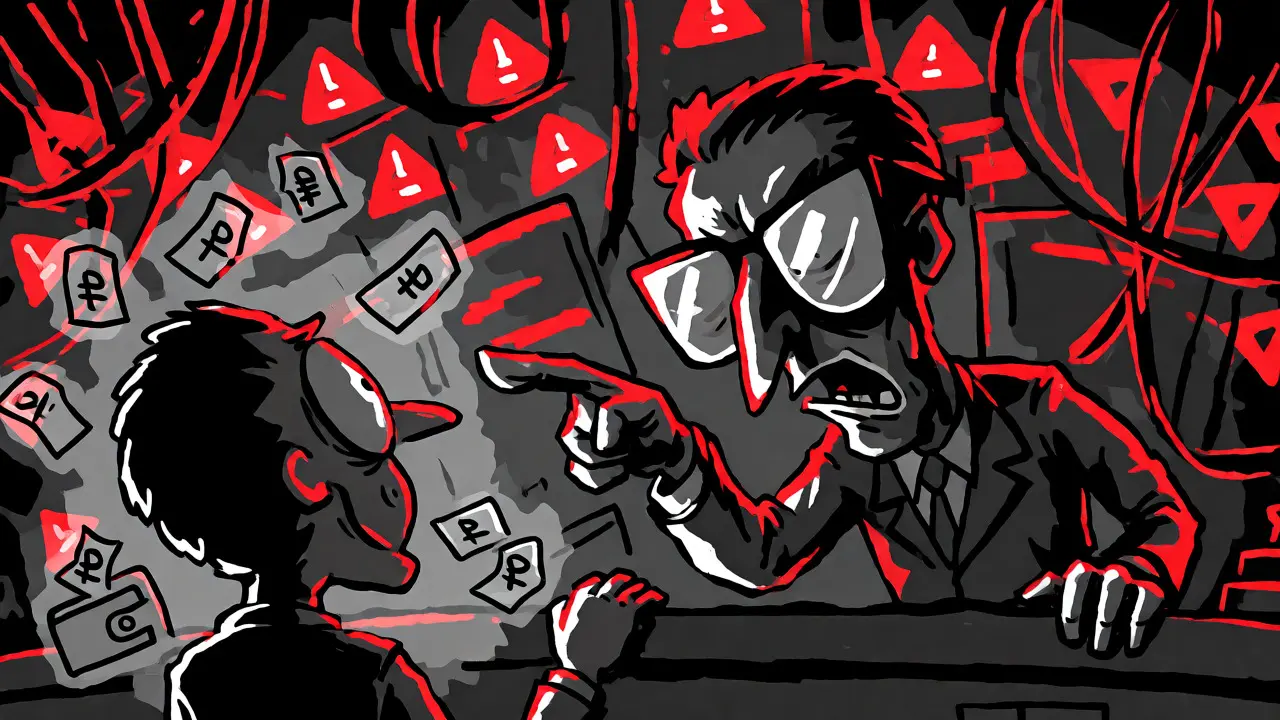
Russian banks are under intense pressure to monitor suspicious activity. As of September 2025, new regulations require banks to flag transactions that look like unlicensed money laundering or illegal crypto arbitrage. If you suddenly receive five different transfers from strangers totaling ₽400,000, your bank will likely freeze your account for 48 hours. They will demand proof of income. If you can’t explain why ten random people sent you money, you risk having your card blocked indefinitely.
Key red flags for banks include:
- Withdrawals at unusual times (e.g., 3 AM).
- Using QR codes instead of standard card transfers for large sums.
- Sudden changes in phone usage patterns before a withdrawal.
- Cash withdrawals immediately following a loan approval.
- Transfers over ₽200,000 via the Faster Payments System (SBP) from unknown parties.
To avoid this, many experienced traders limit their daily inflows, spread transactions across multiple accounts, and keep meticulous records of every P2P trade. Some even use separate cards exclusively for crypto operations to isolate risk.
Mining and Infrastructure: The Hidden Costs
You might think mining is a safe harbor since it produces an asset rather than spending one. Not exactly. While mining itself is regulated and taxed, the infrastructure surrounding it faces scrutiny. Illegal mining operations-those running without proper registration or using residential electricity rates for industrial loads-face fines up to 200,000 rubles. More importantly, the grid capacity in major mining hubs is strained, leading to occasional regional bans on new connections.
Additionally, international enforcement actions have hit Russian crypto infrastructure hard. The U.S. Treasury sanctioned Garantex, a major Russian-friendly exchange, in early 2025. The U.S. Secret Service seized its domain and froze $26 million in assets. This wasn’t just a slap on the wrist; it signaled that offshore platforms serving Russians are now targets. When Garantex tried to migrate users to a successor, Grinex, it faced continued uncertainty. For users, this means keeping funds on smaller, less scrutinized platforms carries higher counterparty risk.
The Digital Ruble Threat: What Changes in 2026
Looking ahead, the biggest shift on the horizon is the full rollout of the digital ruble. Set to expand significantly in 2026, this state-backed digital currency aims to centralize control over all digital transactions. Unlike decentralized cryptocurrencies, the digital ruble is programmable. The government could theoretically set expiration dates on funds, restrict who can spend them, or automatically tax transactions in real-time.
Why does this matter for crypto holders? Because the digital ruble competes directly with stablecoins. If the state makes digital rubles easy to use for domestic payments, the incentive to hold USDT or other dollar-pegged coins for daily liquidity drops. Furthermore, regulators may tighten capital controls, making it harder to move fiat out of the country to buy crypto. The finance ministry has hinted at easing some restrictions to attract investment, but the Central Bank remains skeptical. Until the dust settles, expect more friction, not less.
Practical Strategies for Compliance and Access
So, how do you operate effectively in this environment? Here are concrete steps based on current best practices.
- Separate Your Finances: Do not mix salary deposits with crypto P2P flows. Use a dedicated bank account for crypto-related transfers. This simplifies audits if the bank asks questions.
- Document Everything: Keep screenshots of every P2P chat, receipt, and transfer confirmation. If your account is frozen, you need to prove the source of funds quickly.
- Avoid Large Lump Sums: Break large purchases into smaller chunks. Receiving ₽50,000 five times looks different than receiving ₽250,000 once. Banks watch for round numbers and sudden spikes.
- Use Trusted Platforms: Stick to exchanges that still accept Russian passports or offer flexible KYC options. Be aware that some platforms may delist Russian users due to secondary sanctions risks.
- Diversify Custody: Don’t keep all your eggs in one basket. Split holdings between hardware wallets, non-sanctioned exchanges, and perhaps gold or other tangible assets. Remember, if a platform is sanctioned, your funds could be frozen regardless of your personal status.
| Activity | Legal Status | Risk Level | Notes |
|---|---|---|---|
| Holding Crypto | Legal | Low | No taxes on holding, only on profit realization. |
| Paying for Goods | Illegal | High | Transactions are void; merchants cannot accept. |
| P2P Trading | Gray Area | Medium-High | Bank freezes common; requires careful documentation. |
| Mining | Regulated | Medium | Fines for illegal setups; energy costs rising. |
| International Settlements | Permitted (ELR) | Low | Only for qualified investors/companies. |
Common Pitfalls to Avoid
One major mistake users make is assuming that because a platform works today, it will work tomorrow. Sanctions lists update frequently. Another pitfall is ignoring tax obligations. While enforcement has been lax, the Federal Tax Service is improving its data analytics capabilities. Failing to report profits from crypto sales can lead to penalties later.
Also, beware of "no-KYC" scams. Some shady operators promise anonymity but lack liquidity or solvency. If an exchange offers too-good-to-be-true rates for RUB/USDT pairs, check their order book depth. Thin liquidity means you might not be able to exit your position when you need to.
Frequently Asked Questions
Is it illegal to own Bitcoin in Russia?
No, owning Bitcoin and other cryptocurrencies is legal. You can buy, sell, and hold them. However, using them to pay for goods and services domestically is prohibited.
Can I use my Russian bank card to buy crypto abroad?
It is difficult. Most foreign cards don't work in Russia, and Russian cards face restrictions on international transfers. Many users rely on P2P transfers to convert rubles to stablecoins first, then move those coins to international platforms.
What happens if my bank freezes my account for crypto trades?
The bank typically freezes the account for 48 hours initially. You must provide documentation proving the legitimacy of the funds (e.g., sale contracts, P2P receipts). If the explanation is unsatisfactory, the account may remain blocked pending further investigation.
Are there taxes on crypto profits in Russia?
Yes, individuals must pay income tax (NDFL) on profits from selling cryptocurrency. The rate is typically 13% for residents earning under 5 million rubles annually. Failure to declare profits can result in fines.
Will the digital ruble replace crypto in Russia?
Unlikely to fully replace it, but it will compete strongly for domestic utility. The digital ruble offers state-backed stability and ease of use for payments, potentially reducing the need for stablecoins for everyday transactions, though crypto will remain popular for investment and cross-border value storage.
Next Steps for Russian Crypto Users
If you are actively trading, audit your recent transactions. Identify any large, unexplained inflows and gather supporting documents now, before a freeze occurs. Consider setting up a secondary account specifically for crypto operations to limit disruption to your primary salary account.
Stay informed about regulatory updates from the Central Bank and the Ministry of Finance. The tension between these two bodies suggests that rules may shift rapidly. Joining community forums focused on Russian crypto compliance can provide real-time alerts on which banks are currently aggressive with P2P blocks.