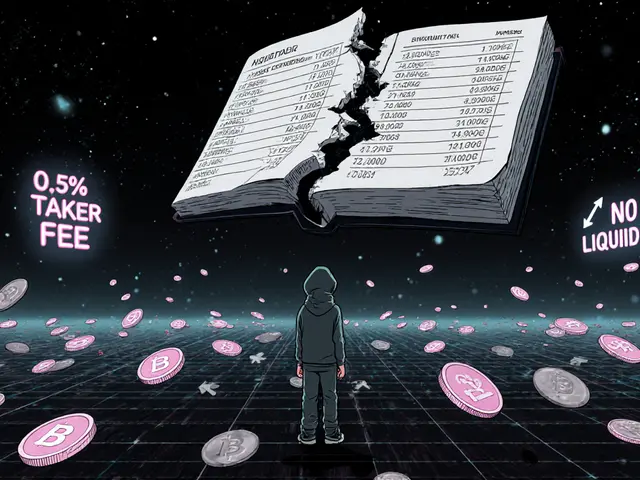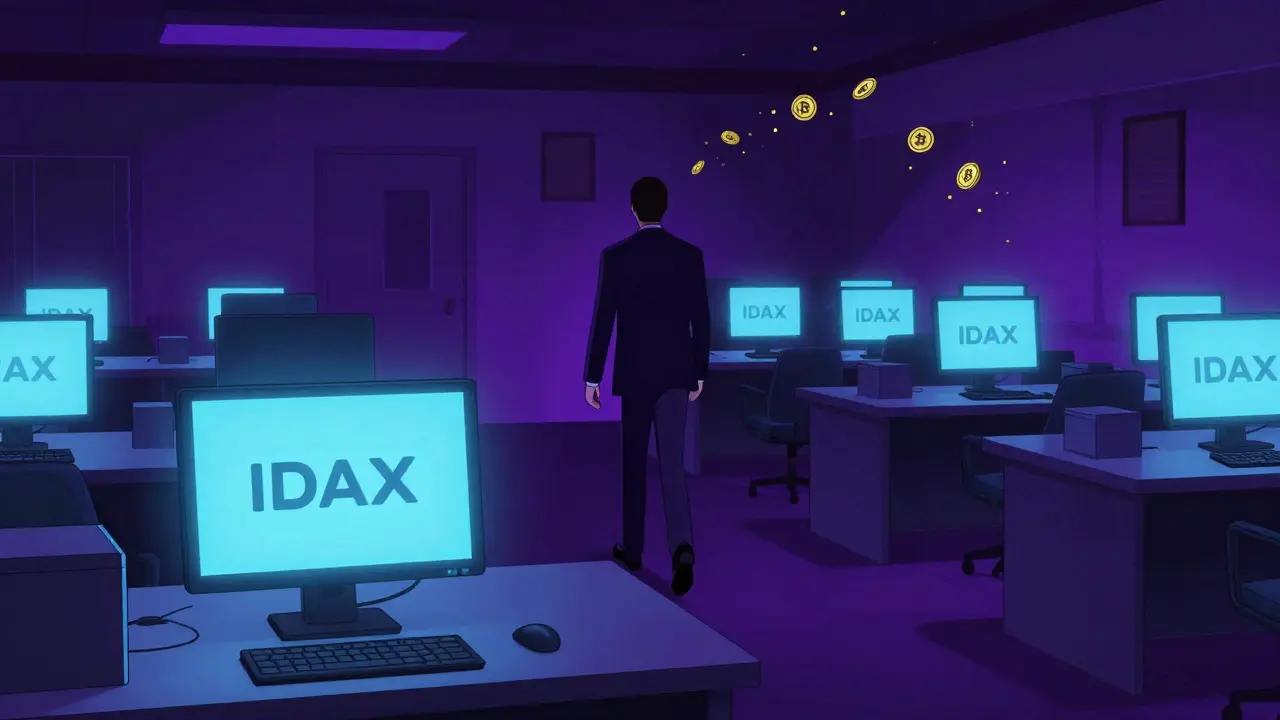
You might be searching for an IDAX crypto exchange review because you found an old tutorial, heard a name in passing, or-worst case scenario-you still have funds stuck on the platform from years ago. Here is the hard truth right up front: IDAX is dead. It has been since late 2019. If you are looking to deposit money there today, stop. If you are trying to recover lost assets, the path is incredibly difficult, but not entirely impossible if you know where to look.
This isn't just another standard review of fees and features. This is a post-mortem analysis of one of the most cautionary tales in cryptocurrency history. We will break down what IDAX was, how it collapsed, why your money likely vanished, and what you can do now. More importantly, we’ll look at how to avoid making the same mistake with your next exchange.
The Rise and Fall of IDAX
To understand the disaster, you first need to understand the promise. IDAX (International Digital Asset Exchange) was launched in December 2017. It positioned itself as a global hub for trading, with operational bases in Mongolia and China. The pitch was simple: low fees, high security, and access to hundreds of altcoins that were hard to find elsewhere.
At its peak, IDAX claimed to offer over 300 token listings. Their marketing highlighted a "superlative trading experience" with maker fees ranging from 0.10% to 0.15%. They even boasted about partnerships with security firms like Slowmist and Beosin. For traders in 2018 and early 2019, this sounded legitimate. The interface looked professional, featuring order books, price charts, and a mobile app that promised instant deposits and withdrawals.
But beneath the shiny surface, red flags were waving. IDAX operated without oversight from major financial authorities. Its incorporation in Mongolia was widely seen as a move to avoid strict regulatory requirements found in the US, Europe, or Japan. Unlike established platforms that held proof-of-reserves audits, IDAX relied on trust. And in crypto, blind trust is expensive.
The Collapse: November 2019
The end came abruptly in late November 2019. One day, the site worked. The next, all deposits and withdrawals were frozen. No email warning. No maintenance page. Just silence.
Then came the explanation that sent shockwaves through the community. IDAX announced that its global CEO, Lei Guorong, had "gone missing." The exchange claimed they had restricted access to cold wallets storing user assets as a precautionary measure. In plain English? They couldn't get into the vaults where the money was kept.
By March 2020, the situation had devolved into chaos. Industry watchdogs like Cryptowisser issued urgent updates confirming that all transactions were suspended. Rumors swirled that Lei Guorong hadn't just disappeared-he had taken the private keys with him. This scenario mirrored the infamous QuadrigaCX collapse, where $190 million in user funds became inaccessible after the founder's death (and alleged embezzlement).
For IDAX users, the implication was devastating. Without the private keys to the cold wallets, the Bitcoin, Ethereum, and altcoins sitting on the exchange were effectively locked forever. There was no insurance fund. There were no segregated accounts. There was just a broken website and a missing executive.

Why IDAX Failed: A Security Autopsy
What went wrong? It wasn't a hack. It wasn't a market crash. It was a fundamental failure of governance and security design. Let’s look at the specific flaws that led to this outcome.
| Feature | IDAX (Defunct) | Modern Regulated Exchange |
|---|---|---|
| Custody Model | Centralized; CEO held sole key access | Multisig wallets; distributed key management |
| Regulatory Status | Unregulated (Mongolia registration) | Licensed (e.g., FinCEN, FCA, ASIC) |
| Proof of Reserves | None provided | Regular third-party audits |
| User Recourse | Terms allowed suspension "for any reason" | Legal frameworks for dispute resolution |
| Insurance | No custody insurance | Cold storage insurance available |
The most critical flaw was the single-point-of-failure architecture. By giving one person-the CEO-exclusive control over the cold wallet keys, IDAX created a massive risk. When Lei Guorong vanished, the liquidity dried up instantly. Compare this to modern standards where multisignature (multisig) wallets require multiple people to authorize a transaction. Even if one executive disappears, the funds remain accessible by the remaining authorized parties.
Furthermore, IDAX’s Terms of Service contained a terrifying clause (Section 9.1). It granted the exchange the right to "immediately suspend your DAX Account... freeze or lock the Digital Assets... for any reason." Legally, users had almost zero protection. They were gambling, not investing.

Can You Recover Your Lost Funds?
If you are reading this because you have unsent emails from IDAX support, here is the reality check. As of 2026, IDAX is definitively defunct. Blockspot.io and CoinGecko list it as inactive. There is no operational recovery team.
However, "no hope" is too strong. Some users have managed to trace their lost funds using blockchain explorers. Since Bitcoin and many other cryptocurrencies operate on public ledgers, the coins didn't disappear-they just moved to a wallet controlled by the missing CEO or his associates.
Here is what you can try:
- Trace the Wallet: Use blockchain explorers (like Blockchain.com for BTC or Etherscan for ETH) to identify the cold wallet addresses associated with IDAX during the time of your deposit. Look for large outflows from those addresses around November 2019.
- Check for Legal Action: Search for any class-action lawsuits or legal proceedings initiated against IDAX or Lei Guorong. While rare in cross-border crypto cases, some jurisdictions have pursued similar fraudsters.
- Beware of Recovery Scams: This is crucial. After a collapse, scammers flood social media claiming they can "hack back" your funds for a fee. They cannot. If someone DMs you promising recovery, block them immediately.
The OpenPR investigation noted that investors could potentially trace funds, but tracing is not recovering. Unless the private keys are surrendered voluntarily or seized by law enforcement, the assets remain locked. Most users accepted their losses as a painful lesson in self-custody.
How to Avoid the Next IDAX
The fall of IDAX serves as a textbook example of why due diligence matters. You don't need to be a tech expert to spot a risky exchange. Here is a checklist to ensure your next platform doesn't vanish overnight.
- Check Regulatory Licenses: Does the exchange hold licenses in reputable jurisdictions? Look for registrations with bodies like the US FinCEN, UK FCA, or Australian ASIC. Unregistered offshore entities are higher risk.
- Demand Proof of Reserves: Legitimate exchanges publish monthly or quarterly proof-of-reserves reports audited by third-party firms. These prove they actually hold the user assets they claim to.
- Understand Custody: Do they use multisig wallets? Do they store most funds in cold storage? If the CEO holds the only key, run away.
- Read the Fine Print: Look for clauses that allow unilateral freezing of accounts. While common, extreme language should raise eyebrows.
- Use Self-Custody for Long-Term Holds: The golden rule of crypto: "Not your keys, not your coins." Only keep on the exchange what you are actively trading. Move long-term holdings to a hardware wallet like Ledger or Trezor.
In 2026, the landscape is much safer than it was in 2019. Platforms like Coinbase, Kraken, and Binance (where available) have implemented rigorous compliance and security measures. But complacency kills. Always verify, always audit, and never trust blindly.
Is IDAX still operating in 2026?
No. IDAX ceased operations in late 2019 and is considered defunct. All deposits and withdrawals have been suspended since then, and there is no evidence of the platform resuming activity.
Where did the IDAX CEO go?
The global CEO, Lei Guorong, reportedly "went missing" in November 2019. Industry analysts believe he may have absconded with the private keys to the exchange's cold wallets, leading to the loss of user funds.
Can I withdraw my money from IDAX now?
It is highly unlikely. Withdrawals have been frozen since 2019. Without access to the cold wallet private keys, which are believed to be in the possession of the missing CEO, the funds are currently inaccessible.
Was IDAX a scam?
While IDAX started as a legitimate-looking exchange, its collapse is widely characterized as exit fraud. The lack of regulatory oversight, combined with the CEO disappearing with the keys, mirrors other fraudulent collapses like QuadrigaCX.
What happened to IDAX users' funds?
User funds were locked in cold wallets controlled by the CEO. When he disappeared, the exchange could not access these wallets to process withdrawals. Many users suffered total financial loss.
Are there any alternatives to IDAX?
Yes. Since IDAX is defunct, traders use regulated and secure alternatives such as Coinbase, Kraken, Binance, or KuCoin. Always choose exchanges with verifiable proof of reserves and regulatory licenses.
How can I prevent losing money like IDAX users?
Use self-custody solutions like hardware wallets for long-term storage. Only trade on regulated exchanges with transparent proof-of-reserves audits. Never leave large amounts of crypto on centralized platforms.