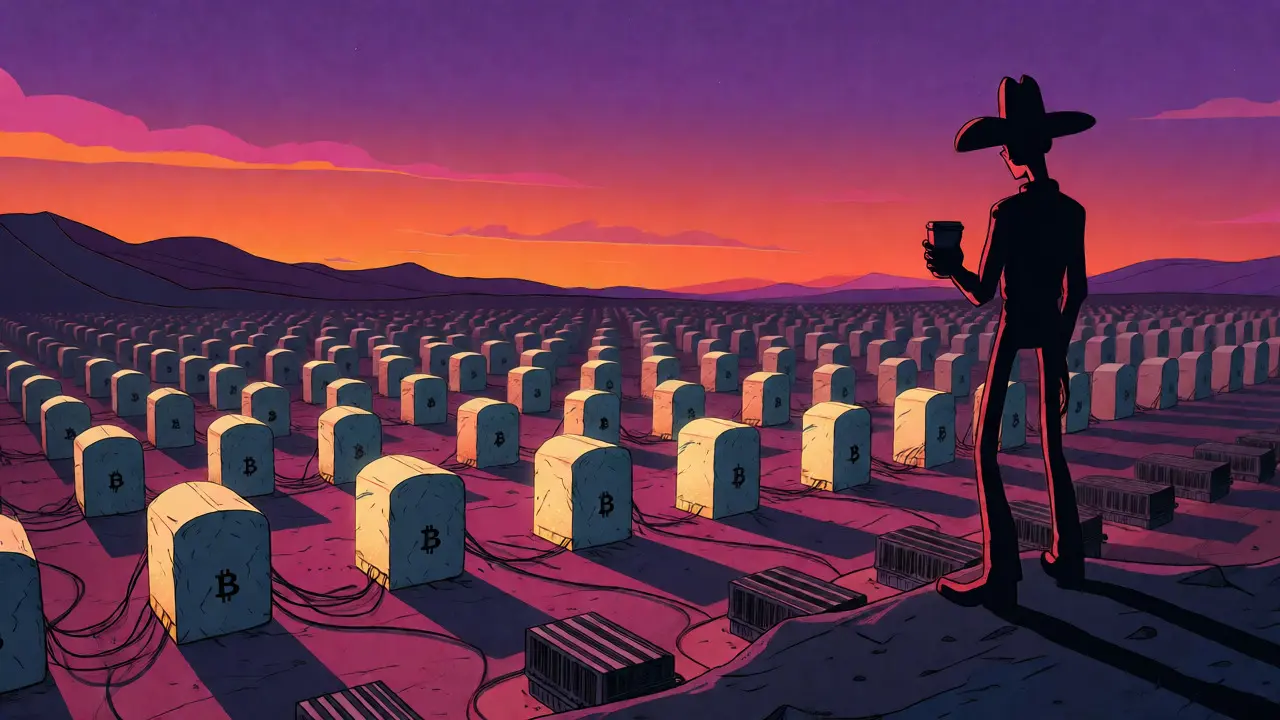
Did you know that the United States now controls more global Bitcoin hashrate than any other nation? It’s a massive shift from just a few years ago. If you are thinking about setting up a rig or scaling up an industrial farm, picking the right location is arguably more important than buying the latest ASICs. The wrong country can eat your profits with taxes, shut you down overnight with new laws, or leave you stranded without reliable power. In 2025, the landscape for crypto mining is defined by three things: regulatory clarity, energy costs, and political stability.
You might be wondering which places actually welcome miners rather than just tolerating them. It’s not just about cheap electricity anymore. You need a government that understands blockchain technology enough to create fair rules. We’ve analyzed the current market leaders to help you decide where your next operation should live. Whether you are a hobbyist looking for a quiet corner of the world or an institutional player needing gigawatts of power, this ranking breaks down who is winning the race for miner adoption.
Why Location Matters More Than Ever
Before we jump into the list, let’s talk about why you can’t just pick a random spot on the map. Mining is essentially an arbitrage game between electricity costs and coin value. But there’s another layer: risk. A jurisdiction might offer dirt-cheap power but have a history of seizing assets. Or it might have great laws but terrible grid reliability.
The best destinations balance these factors. They offer what experts call "regulatory certainty." This means you know exactly how much tax you’ll pay, you won’t get banned tomorrow, and you can actually open a bank account to cash out your earnings. Without banking access, your mined coins are just digital numbers on a screen. With clear laws, they become real money.
The Undisputed Leader: United States
It might surprise some people that the US tops the list, especially given its size and complex federal system. But according to Hashrate Index, the US offers the best risk-adjusted returns for large-scale operations. Why? Because of institutional maturity. When you mine in Texas or Wyoming, you aren’t guessing if the government will change its mind. The legal framework is established. Banks understand crypto. The grid, while stressed, is robust and competitive.
United States is currently the largest Bitcoin mining market globally. Its dominance comes from a combination of free-market energy trading and state-level incentives. States like Texas allow miners to act as flexible load balancers, shutting down when prices spike and running when wind power is abundant. This isn't just good for miners; it stabilizes the grid. For investors, this predictability is worth paying a premium for.
Central Asia’s Powerhouse: Kazakhstan
If the US is the corporate giant, Kazakhstan is the aggressive challenger. It accounts for roughly 6% of global hashrate, making it a critical hub. The Kazakh government has actively courted miners, seeing them as a way to diversify away from oil. They offer lower energy prices and specific tax breaks. Miners registered in the Astana International Financial Centre can even enjoy corporate tax exemptions until 2066.
However, it’s not all smooth sailing. The infrastructure struggles to keep up with the boom. Blackouts happen. But the government is investing heavily in renewable sources to support sustainable mining. If you’re willing to tolerate some operational hiccups for better margins, Kazakhstan remains a top-tier choice.
Geothermal Gold: Iceland
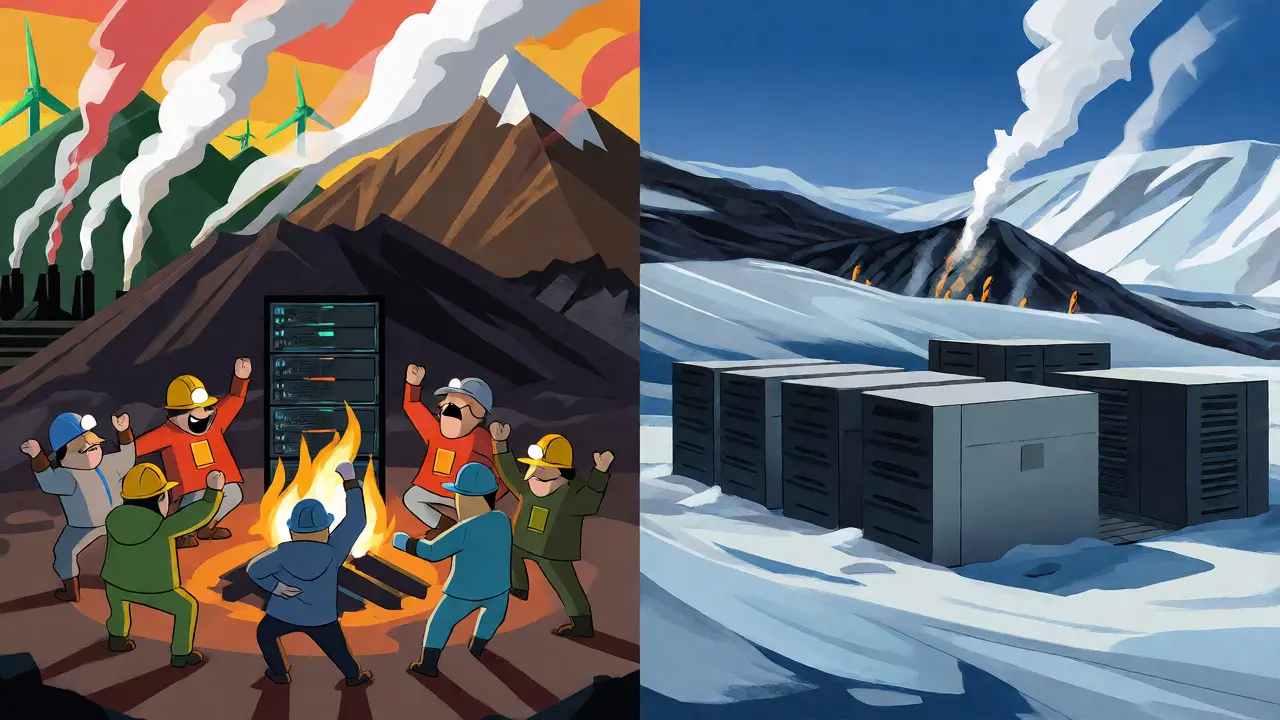
Iceland has been a miner’s dream for over a decade, and it hasn’t lost its luster. Why? Two words: cool climate. Your equipment doesn’t need expensive air conditioning systems because the outside air does the job for you. Combine that with abundant geothermal and hydroelectric power, and you have one of the cheapest and greenest energy profiles in the world.
The downside? Space. Iceland is small. Land is limited, and the local population sometimes pushes back against industrial farms altering the landscape. But for those who can secure a permit, the operational efficiency is unmatched. You spend less on cooling and less on power, directly boosting your profit margin per terahash.
The Regulatory Haven: Switzerland
Switzerland consistently ranks as the most crypto-friendly nation globally. This isn’t just hype. The Swiss Financial Market Supervisory Authority (FINMA) has created a clear, comprehensive framework for everything from initial coin offerings to mining operations. If you want to run a business that interacts with both traditional finance and blockchain, Switzerland is the safest bet.
Banks here are generally receptive to working with blockchain firms. You won’t face the hostility seen in some other jurisdictions. While energy costs aren’t the lowest in the world, the stability and legal protection make it ideal for headquarters and high-value operations where reputation matters more than squeezing every last cent from electricity bills.
Emerging Contenders: Canada and Norway
Canada offers vast resources, particularly in provinces like Quebec and British Columbia. These areas have surplus hydropower, which is attractive for miners. However, the regulatory landscape is fragmented. One province might encourage you, while the next imposes strict environmental reviews. You have to navigate this patchwork carefully. Still, with over six crypto ETFs trading domestically, the financial ecosystem is supportive.
Norway is similar. Cool climate, lots of renewable hydro power. But don’t assume it’s a free-for-all. There are ongoing debates about the environmental impact of energy-intensive industries. The government wants to lead in green tech, so miners who can prove their sustainability credentials will find a friendlier reception than those who just plug in and burn coal.
The Wild Card: El Salvador
El Salvador made headlines by making Bitcoin legal tender. That was a bold move. For miners, it means zero capital gains tax on Bitcoin holdings. You mine Bitcoin, you hold Bitcoin, you spend Bitcoin. No conversion headaches. The challenge is infrastructure. The grid isn’t as robust as in the US or Europe, and volcanic activity poses physical risks to data centers. But for true believers and those seeking maximum tax efficiency, it’s a unique playground.
Comparison of Top Mining Jurisdictions
| Country | Energy Source | Tax Environment | Regulatory Stability | Best For |
|---|---|---|---|---|
| United States | Mixed (Gas, Wind, Nuclear) | State-dependent, generally clear | High | Institutional Scale |
| Kazakhstan | Coal, Hydro, Wind | Low, with special zones | Medium | Cost Efficiency |
| Iceland | Geothermal, Hydro | Standard Corporate | High | Green Mining |
| Switzerland | Hydro, Nuclear | Cantonal, often favorable | Very High | Corporate HQs |
| El Salvador | Geothermal, Volcanic | Zero Capital Gains | Medium | Tax Optimization |

What About China?
You can’t talk about mining without mentioning China. Officially, mining is banned. Yet, Chinese miners still account for a significant portion of global hashrate. How? Underground operations. They leverage historical expertise in hardware manufacturing and access to cheap hydro power in provinces like Sichuan during rainy seasons. But the regulatory risk is extreme. You could wake up tomorrow to find your operation seized. For most legitimate businesses, this uncertainty is too high. It’s a gamble, not a strategy.
How to Choose Your Location
Don’t just look at the price per kilowatt-hour. Ask yourself these questions:
- Can I open a bank account? If you can’t cash out easily, cheap power doesn’t matter.
- Is the law stable? Check recent news. Has the government changed its stance on crypto in the last two years?
- What is the total cost of ownership? Include cooling, internet redundancy, and security guards.
- Is the energy green? Institutional investors increasingly demand proof of sustainable sourcing.
For beginners, start small. Test the waters in a stable jurisdiction like the US or Canada before committing millions to a frontier market. For pros, look at emerging hubs like Georgia, which offers no capital gains tax and low electricity costs, provided you can handle the logistical challenges.
Frequently Asked Questions
Which country has the cheapest electricity for mining in 2025?
While rates fluctuate, Paraguay and parts of Russia often offer some of the lowest industrial rates due to excess hydro capacity. However, the US and Kazakhstan frequently offer better net profitability when factoring in infrastructure reliability and legal safety.
Is mining legal in the USA?
Yes, mining is fully legal in the United States. Regulations vary by state, but federal law recognizes cryptocurrency as property. Most states require standard business licensing and tax reporting, but do not ban mining operations outright.
Why is Iceland considered good for mining?
Iceland combines naturally cold temperatures, which reduce cooling costs significantly, with an abundance of renewable geothermal and hydroelectric power. This makes it one of the most energy-efficient locations for mining operations globally.
Does El Salvador really have no capital gains tax on Bitcoin?
Yes, El Salvador implemented a policy where Bitcoin transactions are exempt from capital gains tax. Since Bitcoin is legal tender, using it for purchases or holding it as currency avoids the tax triggers associated with selling assets in many other jurisdictions.
What are the biggest risks of mining in emerging markets?
The primary risks include sudden regulatory changes, unreliable power grids leading to downtime, and difficulties in accessing international banking services. Political instability can also lead to asset seizures or harsher enforcement actions.
Final Thoughts on Next Steps
The map of crypto mining is rewriting itself every year. What was friendly five years ago might be hostile today. The smartest move isn’t necessarily finding the absolute cheapest power, but finding the place where you can sleep at night knowing your operation won’t be disrupted by a midnight decree. Start with the US for stability, look to Kazakhstan for growth, and consider Iceland or Switzerland if sustainability and reputation are your top priorities. Do your homework, check the local laws, and maybe test a small setup before going all-in.




John Morgan
Finally someone admits the US is the king. We built this industry while everyone else was banning it. Texas alone has more power infrastructure than half of Europe combined and they actually let us use it without asking for permission every five minutes. The rest of the world can keep their regulations and their blackouts. We have the grid, we have the laws, and we have the capital. If you aren't mining in America you are just gambling with your hardware.